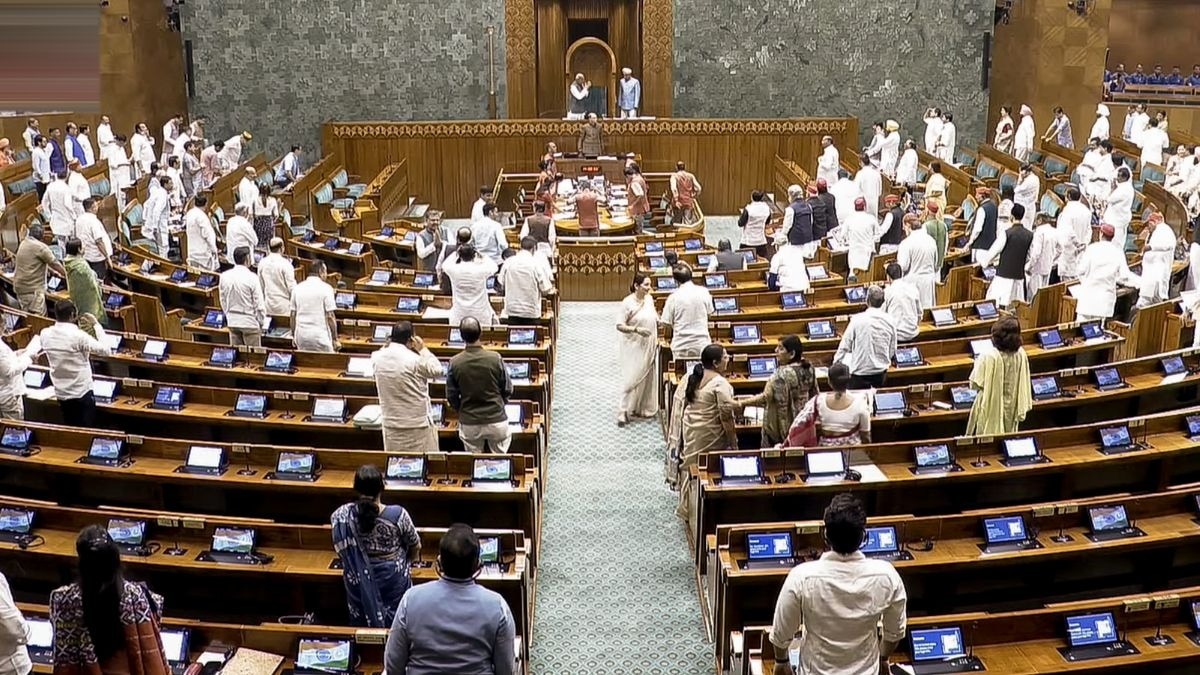
The 2026 Monsoon Session has raised alarms as critical bills were passed through voice votes without meaningful debate, highlighting a decline in legislative scrutiny.
- The Lok Sabha functioned for only 15% of its scheduled time during the 2026 Monsoon Session.
- Nine out of twelve Bills passed in the Lok Sabha saw zero parliamentary discussion.
- Critical amendments were passed in as little as two to four minutes via voice vote.
- The cycle of disruption by the Opposition and haste by the Government is undermining constitutional values.
The 2026 Monsoon Session of the Indian Parliament has ignited a fierce debate over the declining quality of law-making in the country. While the freedom struggle was defined by the defiance of unjust laws, modern Indian democracy is facing a different crisis: the systemic bypass of legislative debate during the creation of new laws.
According to data from PRS Legislative Research, the productivity of the House has reached alarming lows. The Lok Sabha operated for a mere 15% of its scheduled time, while the Rajya Sabha managed only 33%. Most devastatingly, the 'Question Hour'—the cornerstone of executive accountability—functioned for only 1% of its scheduled time in the Lok Sabha.
The Speed of Legislation vs. The Quality of Law
There is a fundamental distinction between passing a law and making a *good* law. While a majority can pass any Bill, high-quality legislation requires scrutiny, dissent, and refinement. During this session, twelve Bills were passed, but nine in the Lok Sabha were disposed of without a single word of debate. For instance, the Supreme Court (Number of Judges) Amendment Bill took just four minutes, while the Registration of Births and Deaths (Amendment) Bill was pushed through in a mere two minutes.
Parliament's purpose is not merely to pass Bills; it is to examine them, question their provisions, and hear competing viewpoints.
BozokMedia analysis shows that the increasing reliance on 'voice votes' to bypass protests is turning the legislature into a mere voting machine. The passage of the Bankers’ Books Evidence Bill, 2026 and the Mines and Minerals (Development and Regulation) Amendment Bill, 2026 amid heavy protests exemplifies this trend, where political convenience often supersedes constitutional duty.
A Vicious Cycle of Political Convenience
The current parliamentary paralysis is not a one-sided issue. History shows that when the Opposition is in power, they utilize disruption as a political weapon; when the Government is in power, they utilize speed to bypass scrutiny. This creates a vicious cycle: the Opposition disrupts because they feel unheard, and the Government proceeds without debate because they claim the Opposition is obstructing. In this tug-of-war, the public interest is the ultimate loser.
Frequently Asked Questions
1. What is the significance of the 'Question Hour' in Parliament?
Question Hour is the primary mechanism through which Members of Parliament hold the government accountable for its actions and policies.
2. Why is 'Voice Voting' controversial in this context?
While legitimate, using voice votes to bypass sustained protests and prevent meaningful deliberation undermines the democratic necessity of scrutiny.
| Metric | Ideal Parliamentary Function | 2026 Monsoon Session Reality |
|---|---|---|
| Legislative Scrutiny | Deep deliberation & Committee review | Rapid voting (2-4 minute sessions) |
| Question Hour Utility | High (Accountability tool) | Extremely Low (1% in Lok Sabha) |
| Role of Opposition | Constructive scrutiny & Protest | Disruption & Adjournment |