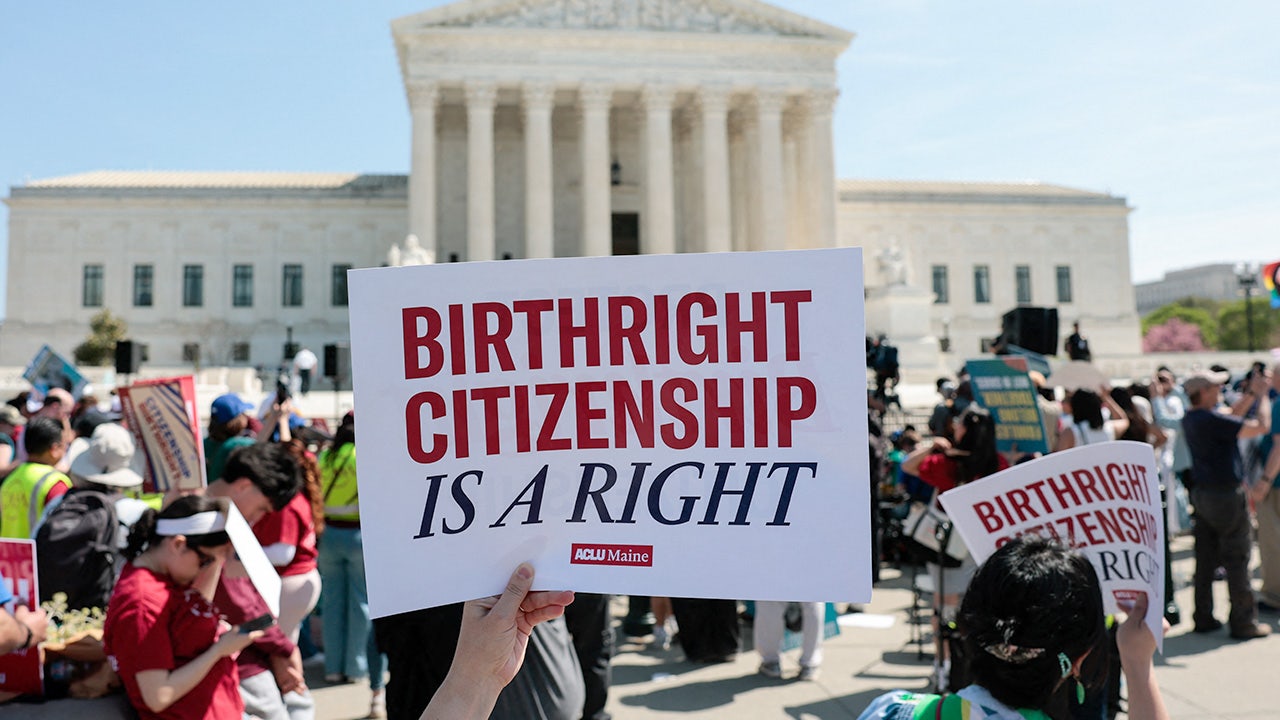
President Donald Trump has launched a new legal offensive to restrict birthright citizenship by targeting specific exceptions like foreign terrorists and diplomats. Experts debate if this executive power grab will stand.
- President Trump issued new executive orders to narrow the scope of birthright citizenship.
- The strategy focuses on exceptions for children of foreign terrorists and government employees.
- Legal scholars are divided on whether the President has the authority to redefine 'alien enemies.'
President Donald Trump is mounting a sophisticated second round in his battle over birthright citizenship. Following a significant setback in June, where the Supreme Court ruled 6-3 that children born to unlawfully present parents are citizens under the 14th Amendment, the administration is now pivoting toward a much narrower, more surgical legal strategy.
The new executive orders, signed on August 6, direct federal agencies to withhold citizenship recognition from children whose parents are members of foreign terrorist organizations, employees of foreign governments, or individuals involved in fraud to obtain citizenship. This approach moves away from a blanket restriction and instead leans heavily on long-standing legal exceptions.
Why This Matters
BozokMedia analysis shows that this shift represents a fundamental test of executive versus legislative power in the United States. By utilizing historical exceptions originally intended for diplomats and invading armies, the Trump administration is attempting to bypass the Supreme Court's recent ruling without directly overturning it, creating a complex constitutional standoff.
The Supreme Court has long recognized that there are exceptions to the 14th Amendment's birthright citizenship clause for aliens considered children of invading armies or ambassadors.
Conservative legal experts from organizations like the Manhattan Institute and the America First Policy Institute argue that this new direction has a much stronger legal footing. They contend that since members of hostile foreign organizations do not enjoy the same protections as ordinary residents, they may fall under the 'enemy exception' established in historical precedents like United States v. Wong Kim Ark.
However, the strategy has met stiff resistance from libertarian and academic circles. David Bier of the Cato Institute warns that the administration is attempting a 'radical expansion' of executive power by trying to define who is subject to U.S. jurisdiction—a power traditionally reserved for Congress.
Furthermore, legal scholars like Amanda Frost from the University of Virginia School of Law point out a critical distinction: the 1898 precedent applied to children of enemies 'occupying' U.S. territory. Applying this to terrorists residing within the country could be seen as a legal stretch that invites immediate constitutional challenges.
Frequently Asked Questions
1. How is this different from Trump's first attempt?
The first attempt tried to deny citizenship to all children of undocumented parents; this new attempt targets specific categories like terrorists and foreign officials.
2. Can the President redefine 'alien enemies'?
Critics say only Congress can define jurisdiction, while the administration argues they are simply applying existing legal exceptions.
| Approach | Initial Strategy | New Executive Order |
|---|---|---|
| Scope | Broad (All undocumented parents) | Narrow (Terrorists/Diplomats/Fraud) |
| Legal Basis | Direct challenge to 14th Amendment | Utilization of historical exceptions |