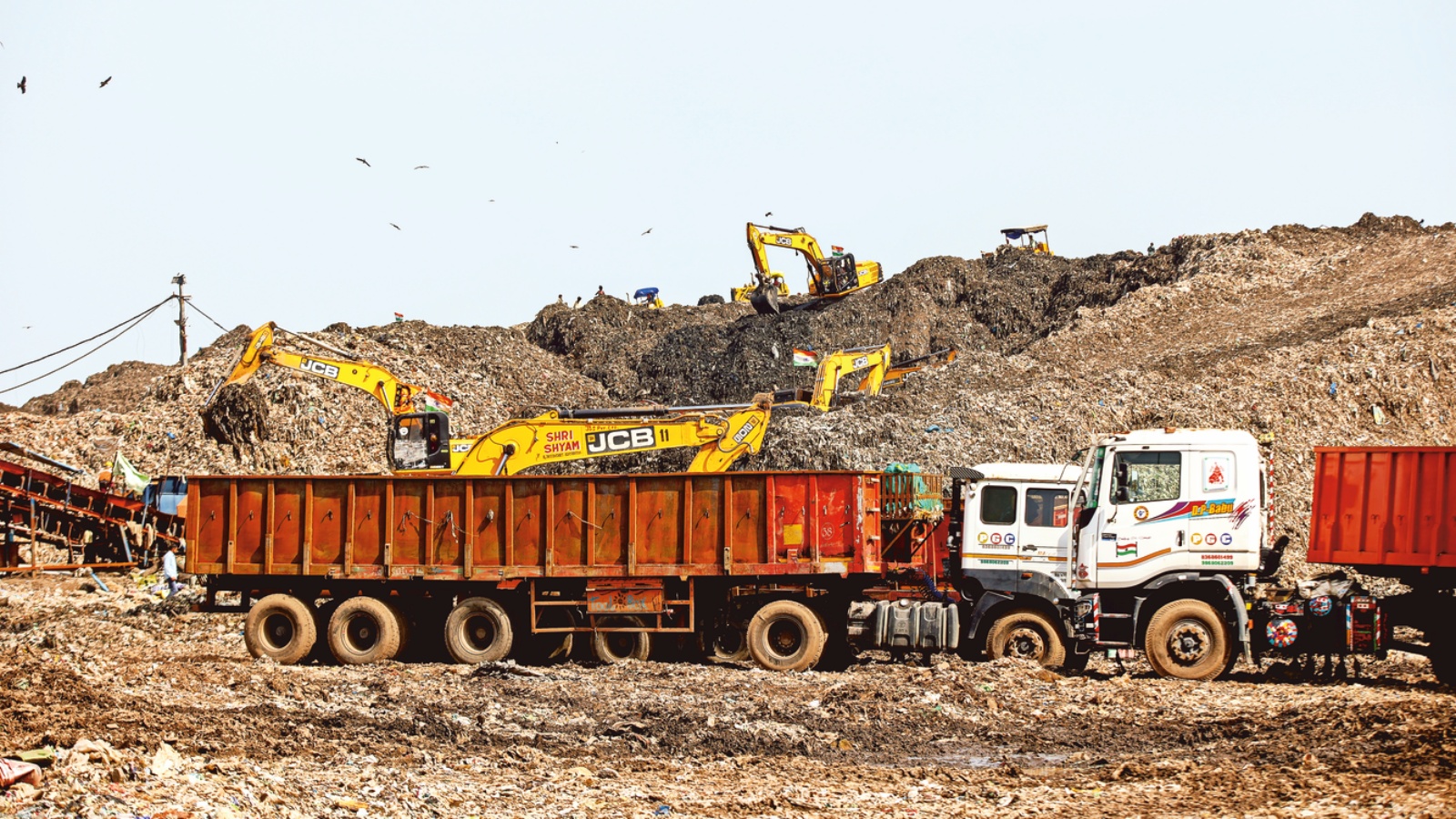
The Municipal Corporation of Delhi (MCD) is exploring global waste management strategies from Tokyo, New York, and Barcelona to tackle the massive legacy waste piles at its landfills. A three-pronged approach has been proposed to improve efficiency and sustainability.
- MCD is studying global waste management models from Tokyo, New York, and Barcelona.
- A three-pronged strategy focuses on decentralized processing, sustainable treatment, and institutional strengthening.
- Heavy rainfall and continuous fresh waste accumulation are hindering cleanup deadlines.
- Integration of informal waste pickers and utility tariffs are under discussion.
In a desperate race against time to clear decades of accumulated legacy waste, the Municipal Corporation of Delhi (MCD) has turned to global expertise. During a high-level meeting chaired by MCD Commissioner Sanjeev Khirwar, officials discussed advanced waste management systems with World Bank experts to address the mounting crisis at the capital's landfills.
The discussions pivoted around three world-class models. Tokyo's technology-driven approach, featuring 23 Waste-to-Energy facilities, was highlighted for its scientific processing capabilities. The New York model, which externalizes waste management through private agencies for transport and processing, was also evaluated. Additionally, Barcelona’s 'Zero Waste Plan 2021–2027' provided insights into decentralized facilities and driving behavioral changes among citizens to reduce pressure on centralized plants.
Why This Matters
BozokMedia analysis shows that Delhi's current waste management infrastructure is struggling to keep pace with the city's rapid urbanization. Transitioning from a centralized dumping system to a decentralized, resource-recovery-based model is not just an environmental necessity but a critical step toward urban resilience and public health safety.
Adopting suitable global best practices according to Delhi’s local requirements and conditions is essential for a sustainable strategy.
The proposed three-pronged approach for Delhi focuses on: 1) Decentralized processing and transport, 2) Development of a sustainable waste treatment mix, and 3) Institutional strengthening. This includes the ongoing biomining efforts to clear the Bhalswa and Okhla landfills by December this year, and the Ghazipur landfill by December next year.
However, significant hurdles remain. Recent heavy rainfall has slowed the progress of cleaning operations, while fresh waste continues to pour in. Data from the civic body's dashboard reveals a concerning trend: at the Bhalswa site, while 787 tonnes of waste are lifted daily, a staggering 4,243 tonnes are being dumped, creating a massive deficit in waste management capacity.
| Landfill Site | Waste Lifted (TPD) | Waste Dumped (TPD) |
|---|---|---|
| Bhalswa | 787 | 4,243 |
| Okhla | 575 | 2,115 |
| Ghazipur | 3,382 | 2,541 |
Frequently Asked Questions
1. What are the main landfills in Delhi?
The primary landfill sites in Delhi are Bhalswa, Okhla, and Ghazipur.
2. What is 'Legacy Waste'?
Legacy waste refers to the massive piles of garbage that have accumulated at landfill sites over many years or decades.