Leader of Opposition Rahul Gandhi is pivoting his political strategy to target Dalits, women, and Gen Z by challenging the 'Manusmriti mindset'. This bold shift aims to reshape the electoral landscape for 2027 and 2029.
- Rahul Gandhi is targeting a coalition of Dalits, OBCs, women, and Gen Z, termed as '90% of India'.
- The critique of Manusmriti is a strategic bridge to connect feminist discourse with Dalit liberation movements.
- A visible shift in communication style and personal branding is being used to attract urban, educated youth.
The Indian political landscape is witnessing a calculated strategic pivot by the Leader of Opposition, Rahul Gandhi. Moving beyond traditional political rhetoric, Gandhi has introduced a new narrative centered around four pillars: Shudhikaran (purification), the Manusmriti, 'Chhatron ki Goonj', and the caste census. This approach is designed to consolidate a massive constituency comprising Dalits, women, Gen Z, Other Backward Classes (OBCs), and minorities.
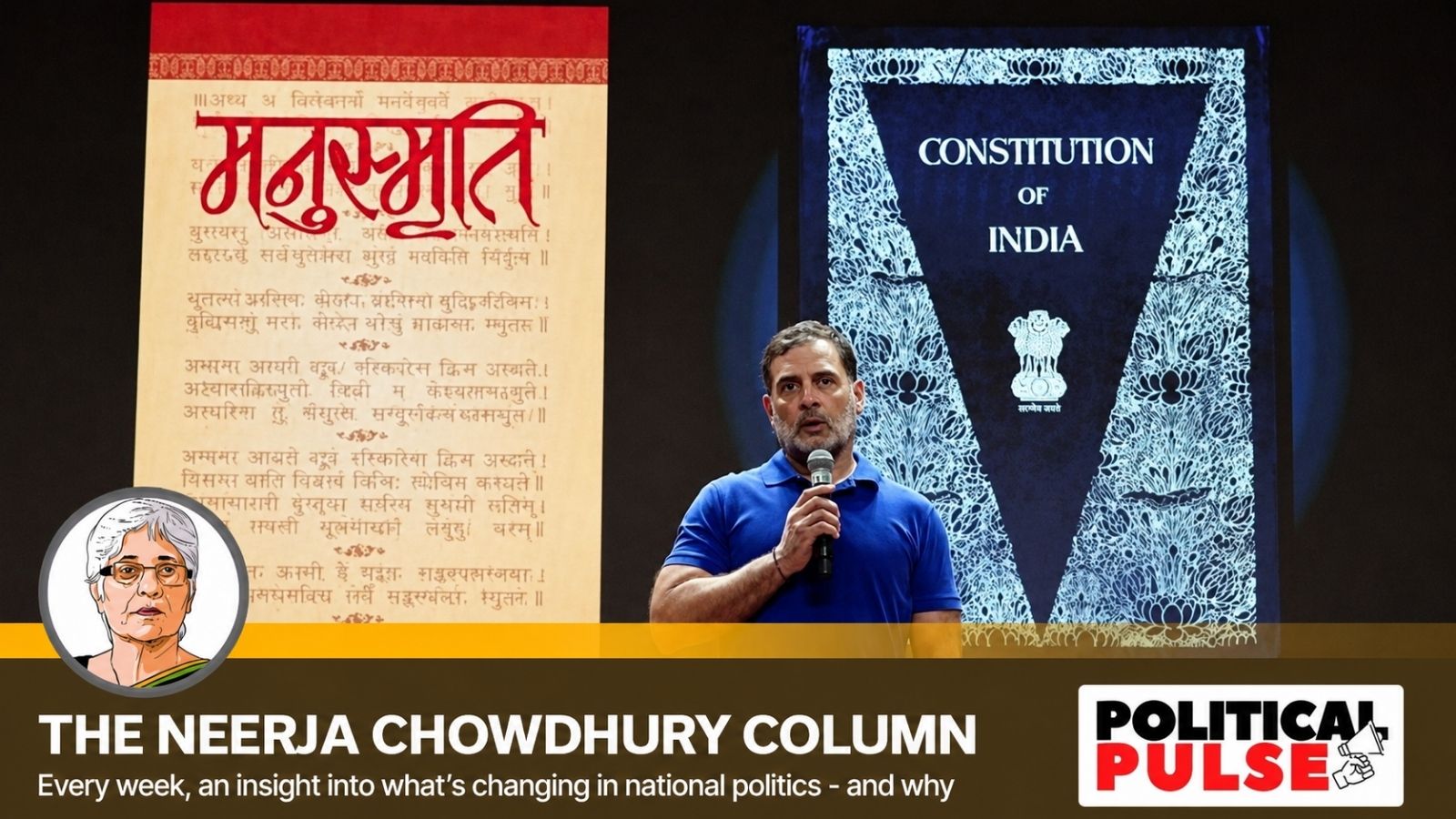
Recently, Gandhi sparked a fierce confrontation with the BJP by criticizing the Manusmriti, an ancient Hindu text. He argued that the text views women merely as extensions of their fathers, husbands, or sons. While the BJP has dismissed this as an attack on the Hindu faith, the move is a deliberate attempt to frame the ruling party and the RSS as possessing a 'Manusmriti mindset'—one rooted in patriarchy and social hierarchy.
Why This Matters
BozokMedia analysis shows that this is not merely a cultural critique but a sophisticated electoral gambit. By linking women's rights to the Manusmriti, Gandhi is attempting to merge the grievances of urban feminist Gen Z with the historical struggle of Dalits. A century ago, B.R. Ambedkar burnt the Manusmriti to protest against untouchability and gender inequality; by reviving this theme, Gandhi is signaling to the Dalit community that the Congress is the true custodian of their dignity.
The shift is also evident in Gandhi's personal branding. During the 'Chhatron ki Goonj' event in Pune, he abandoned his customary white T-shirt for stylish, colorful shirts, signaling a 'modern' persona. His engagement style has evolved—walking among the crowd, inviting young women on stage, and discussing real-world constraints like safety and financial independence. This 'unconventional' approach resonates with a generation that values authenticity and fitness over 24/7 political machinery.
The fusion of caste identity and gender liberation is a high-risk, high-reward strategy to dismantle the BJP's social coalition.
Further escalating the tension, Gandhi highlighted the 'purification' (shudhikaran) of a stage used by Congress President Mallikarjun Kharge in Haldwani. By framing this as a manifestation of untouchability, Gandhi is attempting to paint the BJP as a 'Brahmin-Bania' party, despite its efforts to court OBCs and Dalits since 2014. He is leveraging the fear among Dalits regarding the potential loss of constitutional reservations to pull them back into the Congress fold.
However, a significant challenge remains: the internal decay of the Congress organizational machinery. While the narrative is gaining traction on social media and among urban youth, the ability to convert this 'buzz' into actual votes at the booth level remains questionable. Without a robust ground organization, the most brilliant narrative can fail to deliver electoral victory.
Frequently Asked Questions
Q1: Why is Rahul Gandhi focusing on the Manusmriti now?
He is using it as a symbol to unite women's rights movements with Dalit struggles, positioning the BJP as a party of traditionalist social hierarchies.
Q2: What is the '90% of India' strategy?
It is a strategy to build a broad coalition of marginalized groups—Dalits, OBCs, minorities, and women—who together constitute the vast majority of the population.