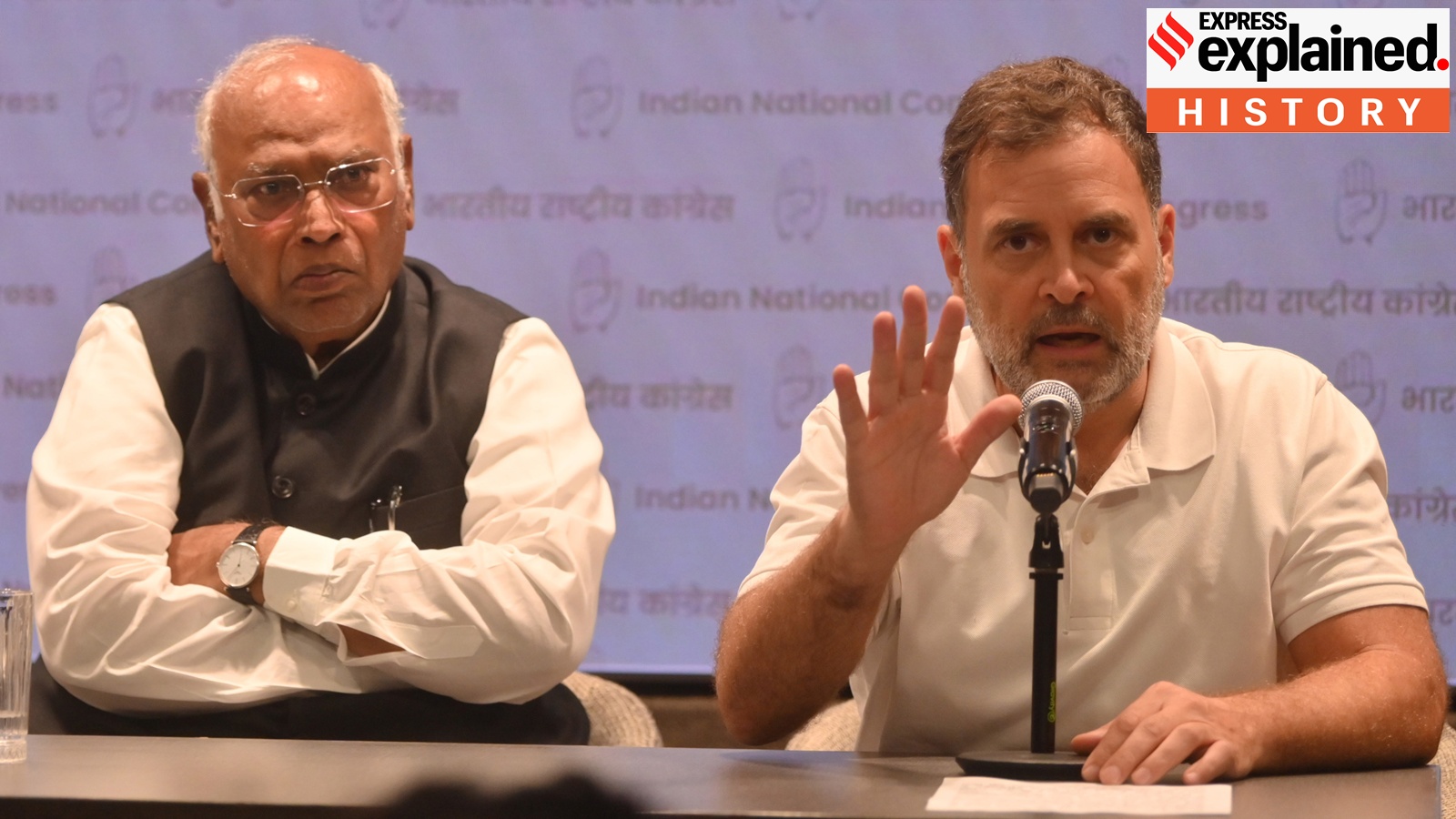
The recent political row sparked by Rahul Gandhi over a 'purification ceremony' in Haldwani has brought the century-old practice of 'Shuddhi' back into the spotlight. We trace its roots from the Arya Samaj movement to its modern-day implications.
- Rahul Gandhi has condemned the 'Shuddhikaran hawan' in Haldwani, labeling it an act of 'untouchability'.
- The practice of 'Shuddhi' was popularized by the Arya Samaj in the late 19th century to counter religious conversions.
- Historically, the movement was driven by demographic concerns highlighted by British census data.
A recent incident in Haldwani, Uttarakhand, has ignited a fierce political debate. Following a speech by Congress President Mallikarjun Kharge, a 'shuddhikaran' (purification) ceremony was held at Ramlila Maidan, prompting Leader of the Opposition Rahul Gandhi to demand an FIR against the state government. Gandhi characterized the act as an instance of "untouchability."
This controversy has reopened discussions on the concept of 'Shuddhi' (purity), a term deeply embedded in Indian socio-religious history since the late 19th century. While originally intended as a religious mechanism, its contemporary usage has become increasingly polarized and pejorative.
Historical Context: Census and Identity
The roots of the Shuddhi movement lie in the demographic shifts recorded during the British Raj. Starting from the first complete census in 1881, the quantification of caste and community numbers became central to mass politics. As conversion rates in Islam and Christianity rose, the Hindu community perceived a loss of demographic weight.
The Arya Samaj, led by figures like Swami Shraddhanand, developed 'Shuddhi' as a formal method to reconvert individuals to Hinduism. Shraddhanand was deeply influenced by the fear that the Indo-Aryan population was at risk of being numerically overwhelmed, a concern fueled by contemporary colonial writings.
Why This Matters
BozokMedia analysis shows that the Shuddhi movement was never purely theological; it was a strategic response to the changing landscape of identity and power in colonial India. Today, the term has transitioned from a ritual of religious reintegration to a potent political symbol that can be used to assert social dominance or marginalize specific groups.
The Shuddhi movement was a complex intersection of religious reform, demographic anxiety, and the burgeoning politics of identity in colonial India.
The movement also triggered significant friction among other religious groups. In Punjab, it led to the rise of counter-movements like the Jamiat-i-Tanzim. Furthermore, it created rifts within the Sikh community, particularly regarding the rituals involving the 'Rahtia' community. Even within the Hindu fold, the movement saw the emergence of the 'Aad Dharm' by Dalits who sought to distance themselves from the Arya Samaj's definition of Aryan identity.
Frequently Asked Questions
1. What was the original purpose of the Shuddhi movement?
The movement aimed to provide a mechanism for Hindus to reconvert individuals who had converted to other religions, thereby maintaining the community's demographic strength.
2. Why is the term controversial today?
In modern political discourse, 'Shuddhi' is often viewed through the lens of social hierarchy and exclusion, leading to accusations of practicing modern forms of untouchability.