Chief Minister Suvendu Adhikari has unveiled a dual strategy to maintain BJP dominance in West Bengal, focusing on the democratic defeat of the TMC and preventing a CPI(M) resurgence.
- CM Suvendu Adhikari advocates for a democratic victory over TMC while blocking CPI(M)'s return.
- Significant infrastructure push in Nandigram with 32 new roads and a promised railway station by March next year.
- Announcement of ₹300 crore in development projects, including enhanced healthcare via Ayushman Bharat.
- Promise to withdraw thousands of legal cases against activists of the Nandigram movement.
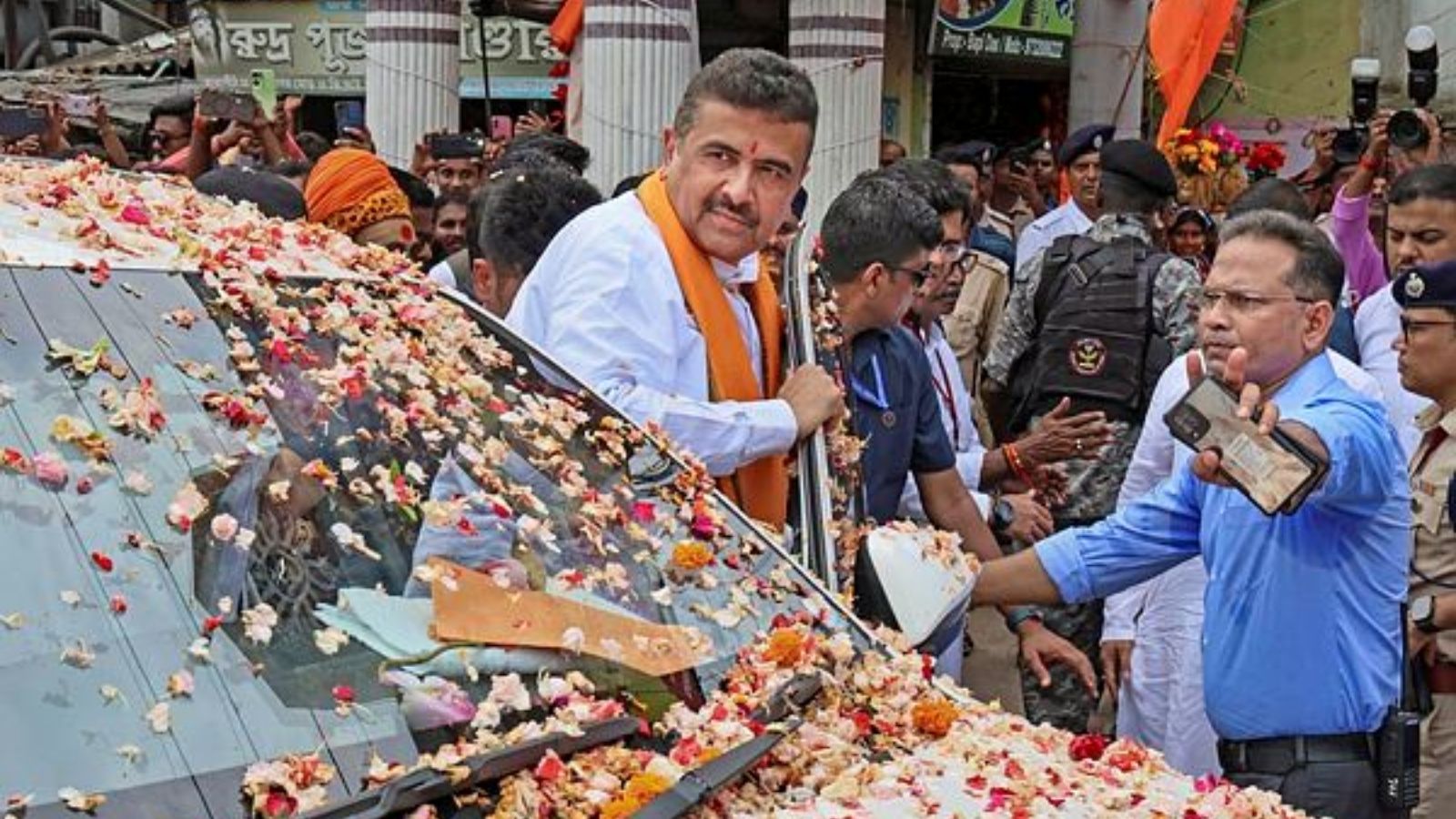
In a high-stakes public address in Nandigram, West Bengal's Chief Minister Suvendu Adhikari has articulated a clear roadmap for the Bharatiya Janata Party (BJP) to retain its grip on the state. Three months into his tenure, Adhikari emphasized a two-pronged political approach: ensuring the democratic defeat of the Trinamool Congress (TMC) and simultaneously ensuring that the CPI(M) does not regain its former footing in the region.
Addressing the electorate in one of his key constituencies, the Chief Minister highlighted the rapid pace of development under his administration. Despite the short duration of his government, Adhikari noted that 32 new roads are already under construction or renovation. He specifically urged the voters of Nandigram to break previous records in the upcoming Assembly bypoll, recalling his previous victory margin of 82,000 votes.
Why This Matters
BozokMedia analysis shows that Adhikari is pivoting from a purely oppositional narrative to a 'governance-first' model. By linking central schemes like Ayushman Bharat and Annapurna Yojana with local infrastructure, the BJP is attempting to create a tangible 'development dividend' to neutralize the TMC's grassroots machinery. This strategy is designed to prove that the BJP can govern effectively, not just contest aggressively.
A major point of contention remains the railway project in Nandigram. Adhikari accused his predecessor, Mamata Banerjee, of intentionally delaying the project. He claimed that his government has already expedited land acquisition and vowed that he would personally board a train at the Nandigram railway station by March of next year, signaling a symbolic victory over the previous administration.
The shift toward resolving legacy legal cases from the 2007 agitation is a calculated move to win over the old guard of the anti-land acquisition movement.
Furthering his social welfare agenda, the CM announced projects worth nearly ₹300 crore. He highlighted the superiority of the CM’s Health Insurance Scheme and Ayushman Bharat over the former government's 'Swasthya Sathi', noting that benefits now extend to premier institutions like AIIMS Delhi and Tata Cancer Hospital. He also mentioned the direct transfer of ₹3,000 to 67,000 women under the Annapurna Yojana.
The Chief Minister also addressed the historical trauma of the 2007 Nandigram violence, promising that the state would resolve pending issues regarding death certificates and employment for the families of the deceased. He further declared that the process of withdrawing thousands of cases registered against local protesters has already begun, aiming to clear the legal slate for thousands of citizens.
Frequently Asked Questions
Q1: What is the 'two-pronged approach' mentioned by Suvendu Adhikari?
It involves defeating the TMC through democratic means while ensuring the CPI(M) does not make a political comeback in West Bengal.
Q2: What healthcare improvements were announced for Nandigram?
The CM announced the expansion of the Reapara Rural Health Centre (beds increased from 30 to 60), a new police morgue, and the 'Matri Maa' building at the District Hospital.