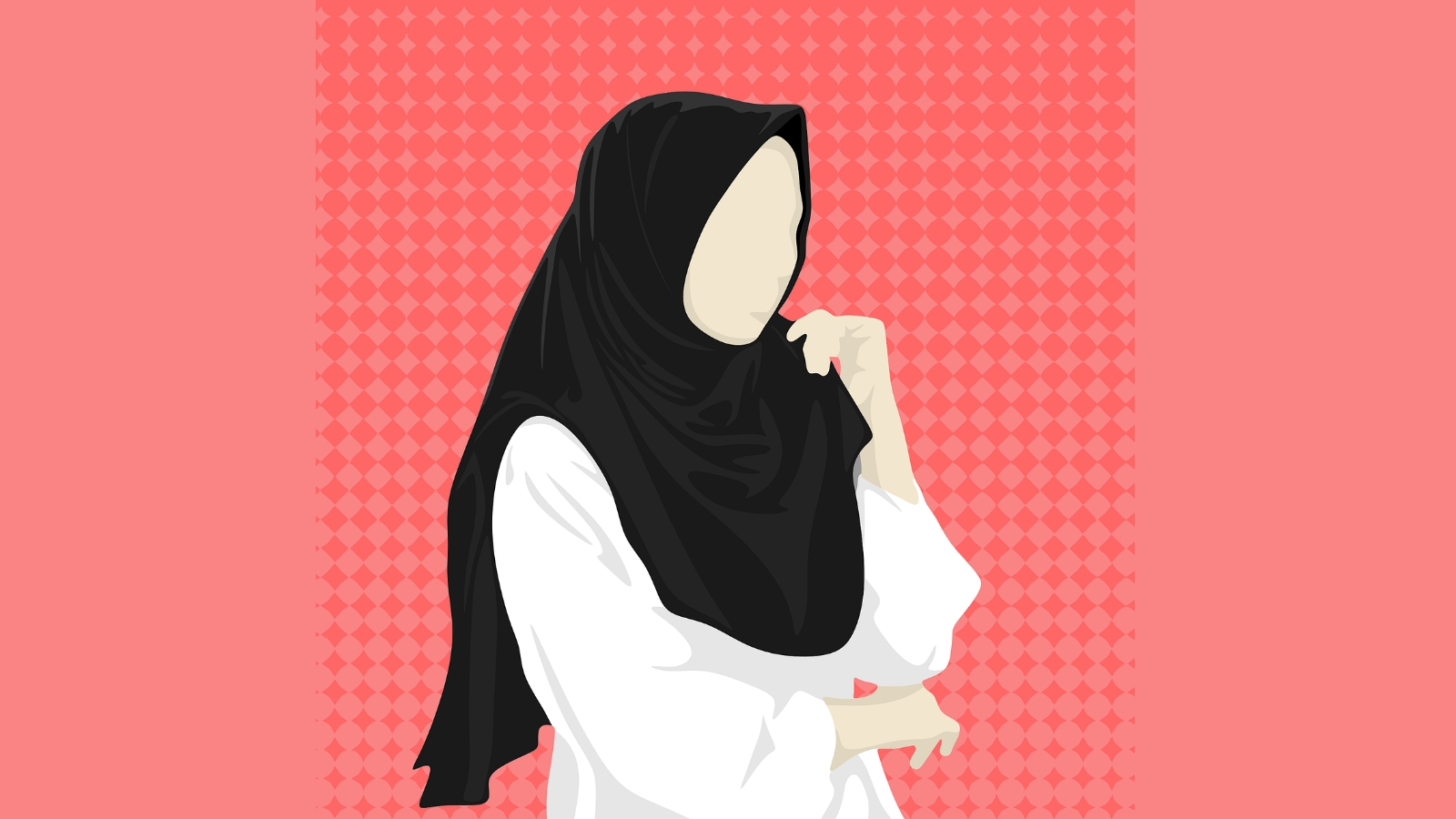
Following the Allahabad High Court's dismissal of a student's plea to wear a headscarf, a critical debate has emerged on whether rigid dress codes are hindering the educational access of Muslim girls in India.
- The Allahabad High Court dismissed Sukaina Rizvi's petition to wear a headscarf at Tagore Public School.
- UDISE+ data reveals a significant drop in Muslim girls' enrollment from primary to higher-secondary levels.
- The core conflict lies between the institutional goal of 'uniformity' and the constitutional right to education.
On August 21, the Allahabad High Court dismissed a petition filed by Sukaina Rizvi, a student of Tagore Public School in Prayagraj, who sought permission to wear a headscarf with her school uniform. Rizvi pointed out that she had worn the scarf from Class VI to Class X without any objection from the school authorities. However, the Court ruled that schools are entitled to insist on a bona fide and non-discriminatory dress code to maintain discipline.
While the legal ruling focuses on institutional autonomy, the broader implication concerns the access to education for Muslim girls. According to 2024-25 UDISE+ data, Muslim girls account for 18% of female enrollment at the primary level nationally, but this figure plummets to 12.9% at the higher-secondary level. In Uttar Pradesh, the drop is even more pronounced, falling from 20.3% to 13.3%. The fact that Rizvi's dispute arose exactly at the transition to Class XI is not a coincidence but a reflection of a systemic trend.
Why This Matters
BozokMedia analysis shows that education serves as the primary catalyst for breaking generational cycles of poverty and marginalization. Research from the World Bank and UNICEF indicates that secondary schooling leads to higher earnings, delayed marriage, and improved health outcomes for the next generation. When a rule justified in the name of 'equality' becomes a barrier to continuing education, the institutional benefit of a uniform is outweighed by the societal cost of exclusion.
"The real test of a true democracy is whether even an insignificant minority could find its identity under the Constitution."
Historically, the Sachar Committee highlighted various deterrents affecting Muslim girls' education, including inadequate facilities and an atmosphere of marginalization in some schools. The struggle for Sukaina Rizvi highlights the tension between a student's identity and an institution's desire for visual homogeneity.
A middle ground of 'reasonable accommodation' could have been explored. By allowing a headscarf that matches the school's color palette, institutions could maintain their identity and discipline without forcing students to choose between their beliefs and their books. The Karnataka High Court previously rejected such a notion, arguing that a uniform ceases to be a uniform if variations are allowed, prioritizing visual sameness over functional inclusivity.
The split verdict in Aishat Shifa v. State of Karnataka by the Supreme Court encapsulates this philosophical divide. While one judge saw the uniform as an 'equalizer of inequalities,' Justice Sudhanshu Dhulia suggested that for some girls, the hijab could be their 'ticket to education,' acting as a facilitator rather than a barrier.
Indian constitutional jurisprudence has precedent for such accommodation. In the Bijoe Emmanuel case, the Supreme Court protected the rights of Jehovah's Witness students who stood respectfully but did not sing the National Anthem due to their conscience, emphasizing that identity should not be sacrificed at the altar of conformity.
Frequently Asked Questions
Question 1: Can schools legally enforce a dress code?
Yes, as long as the code is bona fide, non-discriminatory, and applied consistently to maintain institutional discipline.
Question 2: What is the impact of secondary education on girls?
According to global research, it leads to higher economic independence, better maternal health, and increased decision-making power within the family.