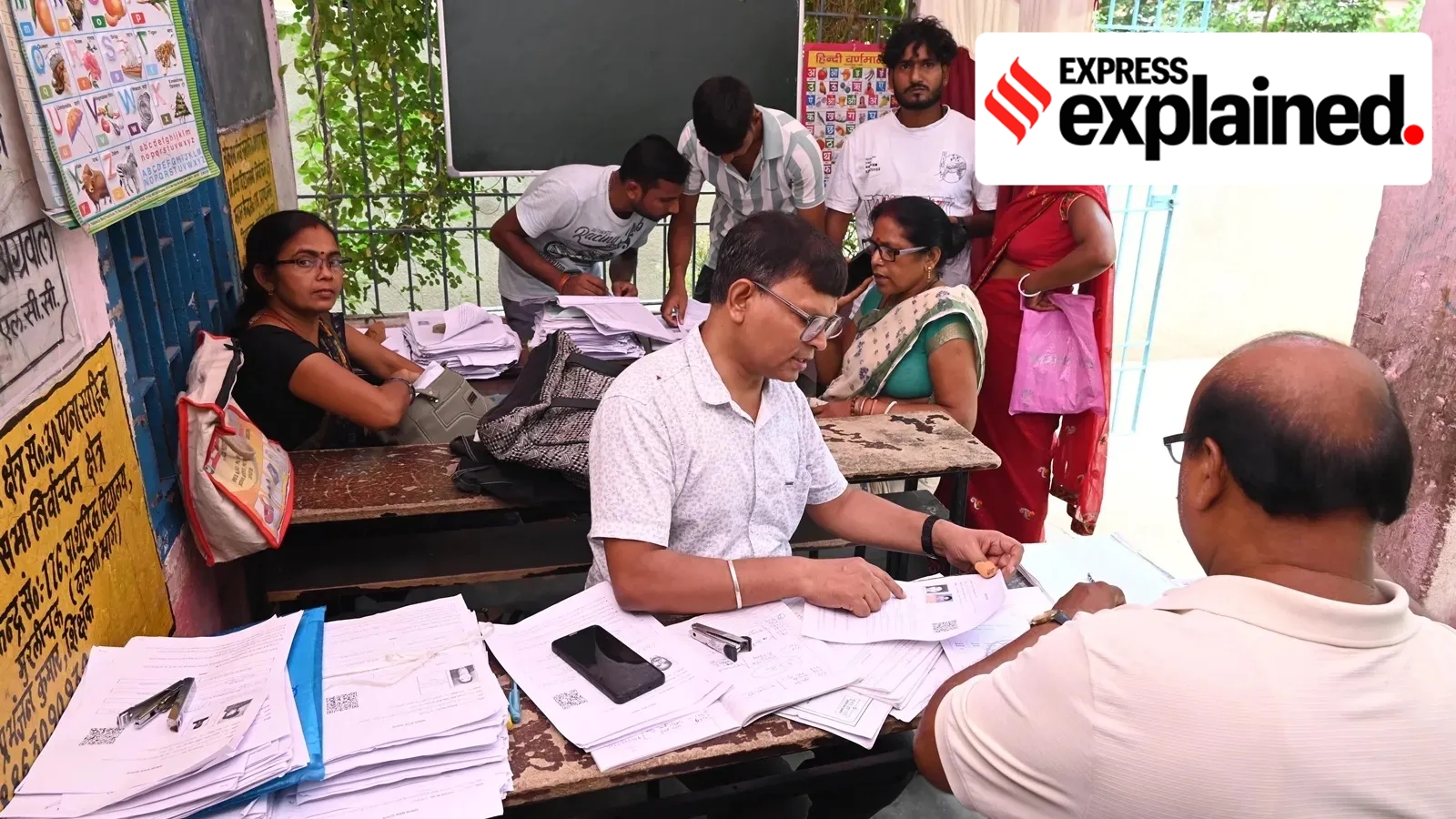
As controversies arise over mass Form 7 submissions, we explain the legal safeguards, the role of EROs, and why a probe is mandatory before any name deletion.
- Form 7 is used to object to the inclusion or deletion of a name in the existing electoral roll.
- Deletion cannot happen instantly; it requires a mandatory inquiry and hearing by the ERO.
- Valid grounds for deletion include death, being underage, permanent shifting, or non-citizenship.
Recent reports from Godda, Jharkhand, have highlighted tensions regarding the mass submission of Form 7 by political workers. Booth Level Officers (BLOs) claimed that numerous forms were submitted seeking the deletion of multiple names, many of which were rejected due to improper formatting and procedural errors.
Legal Provisions for Electoral Roll Deletion
Under Section 22 of the Representation of the People (RP) Act, 1950, Electoral Registration Officers (EROs) hold the authority to correct or delete entries in the electoral roll. This power can be exercised either suo motu or upon receiving an application.
However, the law provides strict safeguards to prevent arbitrary deletions. An ERO cannot simply strike off a name upon receiving a form. They are legally obligated to conduct a formal inquiry, issue a notice to the concerned elector, allow them time to respond, and conduct a hearing before passing a final order.
Why This Matters
BozokMedia analysis shows that while digital tools like the ECINet portal have streamlined the application process, the human element of verification remains the ultimate bulwark against electoral fraud. The ability to mass-file objections poses a systemic risk if not met with rigorous field verification.
The integrity of the voter list relies not on the ease of filing a form, but on the rigor of the subsequent investigation.
The Digital Transition: From ERONet to ECINet
Historically, electoral management was fragmented across different state-specific applications. Since 2018, the ERONet portal has standardized this process nationwide. In 2025, the Election Commission of India (ECI) upgraded this ecosystem by launching the ECINet portal, which integrates approximately 40 different applications into a single interface for both voters and officers.
| Reason for Objection | Legal Definition/Context |
|---|---|
| Death | The elector is deceased. |
| Under Age | The individual is below 18 years of age. |
| Shifted | The person is no longer an ordinary resident of the constituency. |
| Not a Citizen | The person does not hold Indian citizenship. |
When filing Form 7 online via the voters' portal, applicants must provide their own EPIC number and contact details, along with the details of the person they are objecting against. While no physical evidence is required at the moment of filing, the applicant must sign a legal declaration. Providing false information is a punishable offense under the law.
Frequently Asked Questions
1. Can a person delete their own name using Form 7?
Yes, Form 7 can be used by an elector to request the deletion of their own name from the roll.
2. Does the online portal verify the truthfulness of the objection immediately?
No, the portal accepts the form, but the actual verification is done through field visits by BLOs and inquiries by EROs.