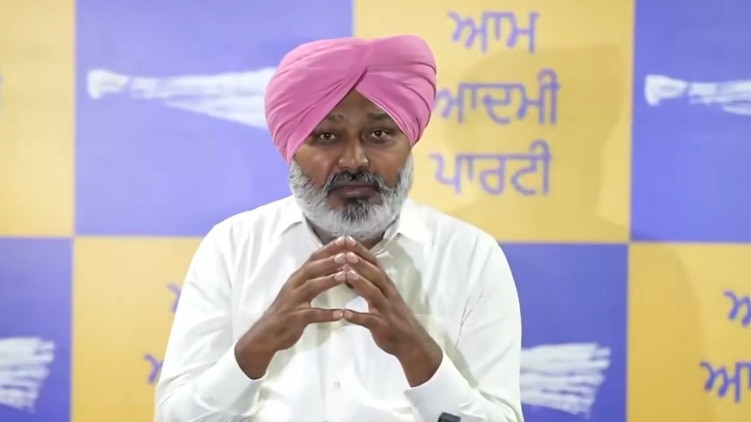
The Punjab government has expressed readiness to match the Central Government's overall salary and Dearness Allowance (DA) package for its employees. Finance Minister Harpal Singh Cheema emphasized that the state aims for total compensation parity.
- Punjab is willing to match the Central Government's overall compensation package, not just the DA percentage.
- Finance Minister Harpal Singh Cheema accused the opposition of spreading misinformation.
- Employee unions demand the withdrawal of disciplinary actions related to the August 27 strike.
- The state faces a massive ₹14,191 crore arrears challenge.
In a significant development regarding the ongoing Dearness Allowance (DA) dispute, the Punjab government has signaled its intent to ensure salary parity with Central Government employees. Finance Minister Harpal Singh Cheema announced on Thursday that the state is prepared to match the Centre's overall compensation package, including dearness allowance, if that is the primary demand of the employees. He clarified that the objective is to match the total package rather than merely replicating the DA percentage.
Accompanying Cheema were Industries and Commerce Minister Aman Arora and Social Security Minister Baljit Kaur. The ministers asserted that Punjab already provides some of the highest salaries in the country. They further criticized opposition parties for allegedly misleading the public and pensioners regarding the actual DA disbursements made by the current administration.
Why This Matters
BozokMedia analysis shows that this standoff is a critical intersection of labor rights and fiscal responsibility. While matching central salaries could pacify a restless workforce, the sheer scale of the financial commitment poses a systemic risk to Punjab's ability to fund essential public services like healthcare and education.
The Punjab government's stance reflects a delicate balancing act between maintaining administrative stability and managing a precarious state exchequer.
The tension escalated after the Punjab government moved the Supreme Court to challenge a High Court order. The High Court had directed the state to release all pending DA and relief dues within a fortnight. The state government argued that paying arrears totaling approximately ₹14,191 crore in such a short timeframe is constitutionally and financially impossible. Cheema noted that while previous governments left behind massive arrears, the AAP government has already cleared ₹4,500 crore.
Employee unions, however, remain steadfast in their demands, including the release of a pending 18% DA. They have also demanded that the government withdraw disciplinary actions against those who participated in the statewide strike on August 27. Sukchain Singh Khera, leader of the Punjab Sanjha Mulzam Morcha, stated that dialogue is only possible if the government drops its stance on 'unauthorized absences' during the strike.
Minister Aman Arora highlighted the fiscal implications, noting that a mechanical hike to 60% DA would impose an additional annual burden of ₹6,500 crore on the state. He emphasized that the government must balance employee welfare with the needs of the three crore citizens of Punjab who rely on public infrastructure.
Salary Context Comparison
| Metric | Punjab Government | Other States (Avg) |
|---|---|---|
| Basic Pay + DA Status | Targeting Central Parity | Higher than HR, RJ, UP, BH |
| Revenue Allocation for Salaries | 51% | 38% |
| DA Progress (AAP Govt) | Increased from 28% to 42% | N/A |
Minister Baljit Kaur clarified that employee compensation is governed by the Punjab Civil Services (Revised Pay) Rules, 2021, framed under Article 309 of the Constitution, which does not mandate an automatic formula to match the Central Government's DA rates.
Frequently Asked Questions
1. What is the core demand of the Punjab employees?
Employees are primarily seeking the release of the pending 18% Dearness Allowance and the withdrawal of disciplinary actions following the August strike.
2. Why is the state government contesting the High Court order?
The state argues that paying ₹14,191 crore in arrears within 14 days is financially impossible and would disrupt the state's fiscal stability.


