RSS chief Mohan Bhagwat is redefining the organization's stance on minorities and multiculturalism, aiming for India to become a 'Vishwaguru' rather than just a superpower.
- Mohan Bhagwat has redefined RSS's positioning regarding minorities and multiculturalism.
- The organization aims for India to be a 'Vishwaguru' (Global Teacher) rather than merely a superpower.
- The RSS promotes a 'Meeting Pot' concept to preserve diverse cultural identities.
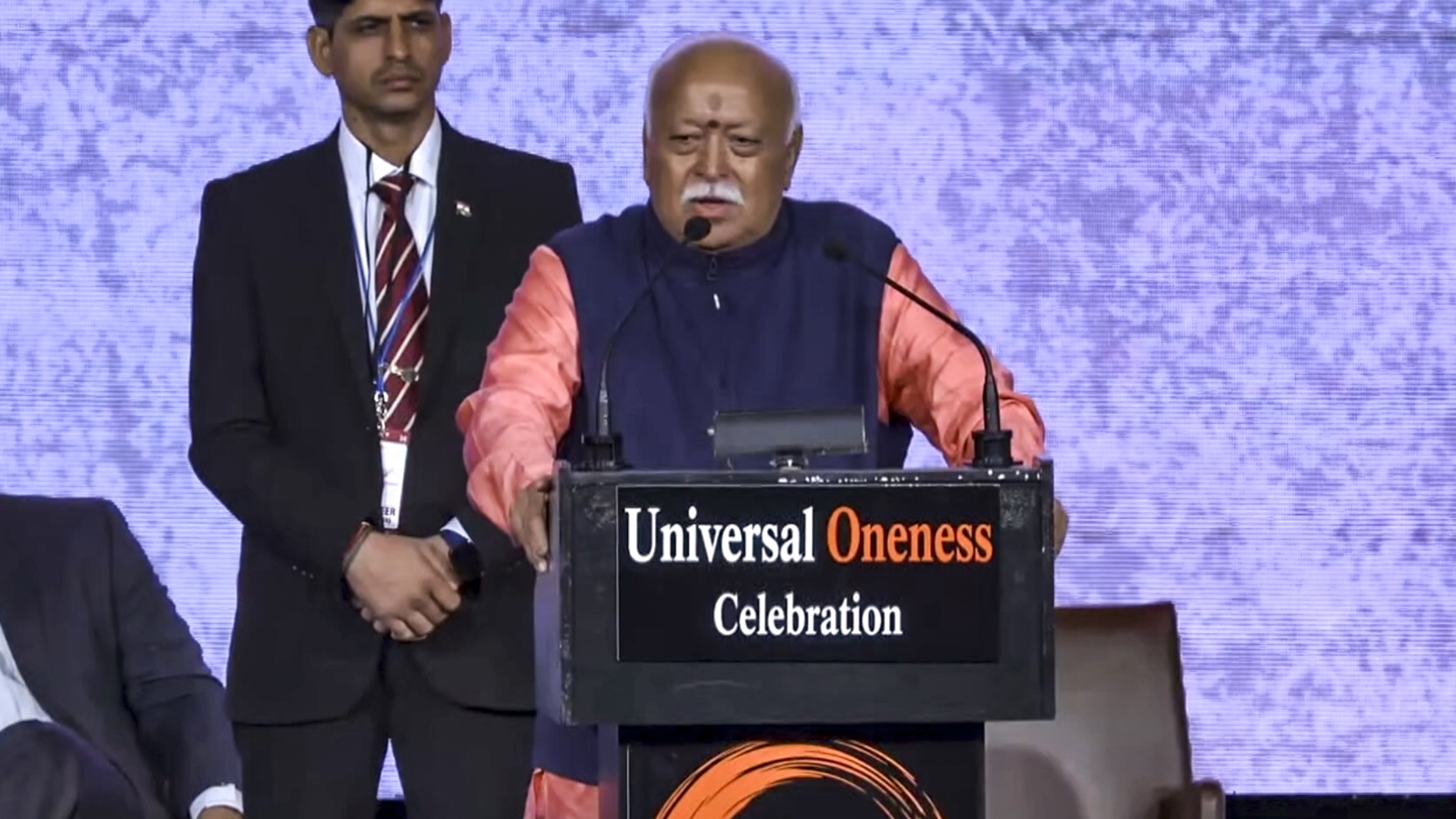
The recent speeches by Rashtriya Swayamsevak Sangh (RSS) Sarsanghchalak Mohan Bhagwat, particularly his address in New York, serve as a strategic communication tool for both domestic and international audiences. Bhagwat has effectively redefined the RSS’s stance on minorities, addressing long-standing questions regarding its legitimacy in a secular democracy.
Beyond Superpower Status
In a significant philosophical shift, Bhagwat critiqued the foundations of neoliberalism, which often prioritizes wealth and coercive superiority over morality. He articulated that India’s ultimate ambition is not just to achieve the status of a global superpower, but to emerge as a 'Vishwaguru'—a spiritual and cultural leader for the world.
The 'Meeting Pot' Philosophy
A core element of Bhagwat's recent discourse is the distinction between a 'melting pot' and a 'meeting pot'. While a melting pot implies the assimilation of all distinct identities into one, a 'meeting pot' suggests a space where diverse cultures can coexist and interact without losing their unique essence. This approach aims to convey to minorities that Hindu multiculturalism allows for cultural flexibility within the framework of India's spiritual democracy.
The RSS is positioning itself as a civilizational movement rather than a purely political one.
Historical Context and Flexibility
Historically, the RSS has avoided the trap of becoming a personality-driven cult. Founder K B Hedgewar intentionally established a collective leadership model, ensuring that the movement was not tied to a single individual's whims. This structural nimbleness has allowed the RSS to interpret its core ideas in evolving modern contexts, a trait often missing in other ideological movements.
Why This Matters
BozokMedia analysis shows that this shift is crucial for bridging the social and cultural divides that have historically fractured the Indian polity. By moving away from the perception of being a rigidly doctrinaire movement, the RSS is attempting to engage in a 'war of position' to strengthen the social fabric of the nation.
Frequently Asked Questions
1. What is the difference between a melting pot and a meeting pot?
A melting pot absorbs differences to create a single identity, whereas a meeting pot allows different identities to coexist and interact.
2. How does the RSS view India's role in the world?
The RSS views India's role as a 'Vishwaguru,' focusing on spiritual and civilizational leadership rather than just military or economic dominance.