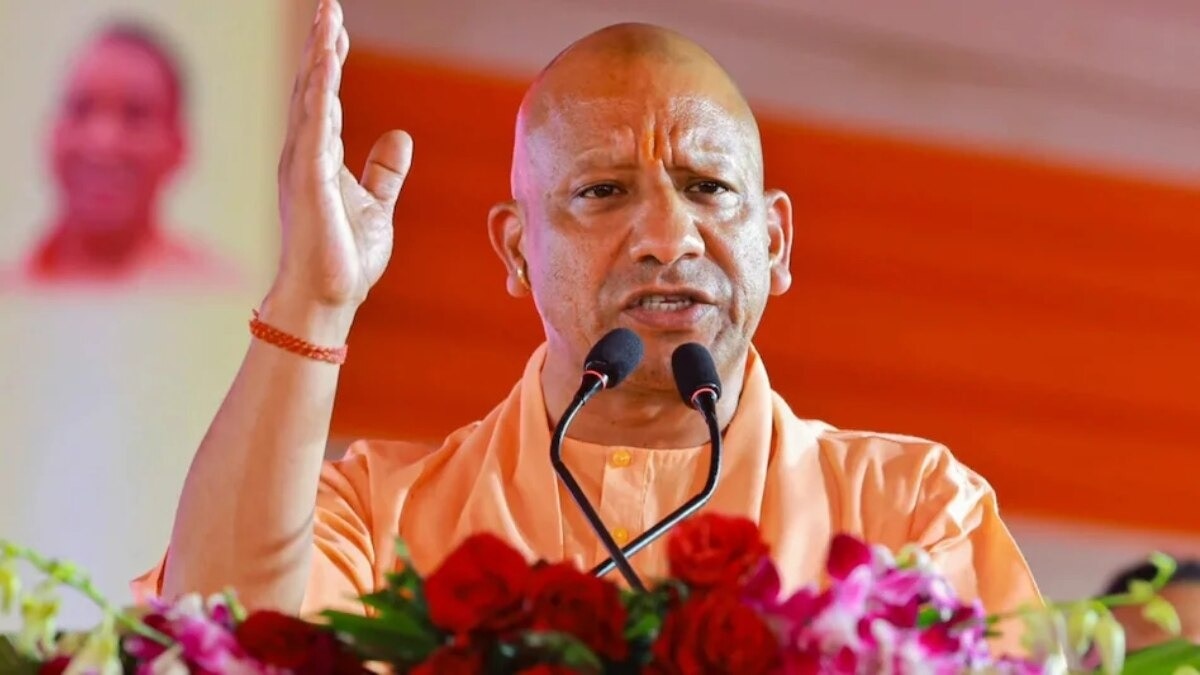
UP Chief Minister Yogi Adityanath has expressed high confidence in the BJP's return to power with a landslide majority in the 2027 elections, citing welfare schemes and religious tourism as key drivers.
- CM Yogi Adityanath predicts a comfortable BJP victory in the 2027 UP Assembly elections.
- Welfare beneficiaries, youth, women, and farmers are identified as the core support base.
- Religious tourism and economic prosperity linked to faith were highlighted as major successes.
- Strict laws against paper leaks and investment-friendly policies were emphasized.
In a significant political declaration, Uttar Pradesh Chief Minister Yogi Adityanath has predicted that the Bharatiya Janata Party (BJP) will secure a grand majority in the upcoming 2027 Assembly elections. Speaking at the 'Aaj Tak Panchayat' in Mathura, the Chief Minister expressed unwavering confidence that the 'double-engine' government would return to power with a massive mandate.
Adityanath attributed this potential victory to the widespread impact of various government welfare schemes. He asserted that the beneficiaries of these programs—spanning across youth, women, farmers, and Dalit communities—would serve as the bedrock of the party's support in the next election cycle. He emphasized that the public's trust in the state is now deeply intertwined with its economic prosperity.
Why This Matters
BozokMedia analysis shows that Adityanath is strategically pivoting from traditional governance metrics to a narrative that blends 'development with divinity.' By linking economic growth directly to religious tourism and cultural revival, the BJP is attempting to solidify a voter base that values both material progress and cultural identity.
'The convergence of faith-based tourism and economic infrastructure is setting a new benchmark for regional governance in India.'
A major highlight of his speech was the transformation of the state through religious tourism. The Chief Minister cited the Braj region as a prime example of this shift, noting that 11 crore devotees and tourists visited the area last year alone. Expanding this to the state level, he claimed that in 2025, a staggering 156 crore devotees visited Uttar Pradesh, creating a unique synergy between faith and the economy.
The Chief Minister also launched a scathing attack on the previous Samajwadi Party (SP) administration. He alleged that prior to 2017, religious celebrations like Krishna Janmashtami were restricted even in public spaces like police stations and jails. He claimed his government has not only reinstated these traditions but has also ensured they are celebrated with traditional fervor, such as the playing of conch shells and bells during the Kanwar Yatra.
Addressing concerns regarding employment and education, Adityanath highlighted the government's efforts to curb paper leaks through stringent new laws. He mentioned that these laws include provisions for life imprisonment and the confiscation of property for those involved in fraudulent recruitment practices. Furthermore, he claimed that the state has successfully provided employment to 9.5 lakh youths and has made the investment process entirely transparent and digital.
Historical Background
The political landscape of Uttar Pradesh has undergone a massive shift since 2017. The BJP's ascent marked a departure from the previous era of coalition politics and identity-based struggles, moving towards a model focused on law and order and centralized welfare distribution. The 2022 elections reaffirmed this trend, and the upcoming 2027 polls are expected to be a decisive test of this governance model.
Frequently Asked Questions
1. What is the basis of Yogi Adityanath's confidence for 2027?
He believes that welfare schemes, job creation, and religious tourism have built a massive, loyal voter base.
2. How has the government addressed paper leaks?
The government has implemented strict laws that allow for life imprisonment and property seizure for those guilty of recruitment fraud.