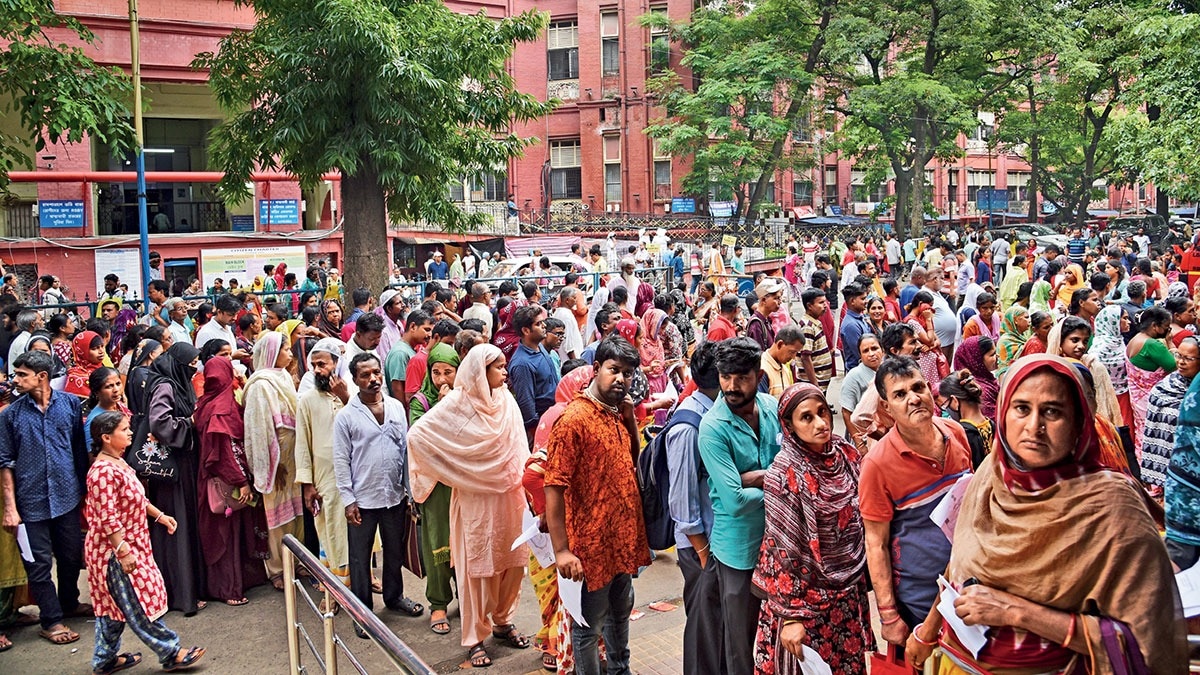
A recent audit by the Comptroller and Auditor General (CAG) has cast significant doubt on the efficacy of West Bengal's flagship Swasthya Sathi health insurance scheme.
- The CAG audit has highlighted significant operational inefficiencies in the Swasthya Sathi scheme.
- The scheme was the centerpiece of Mamata Banerjee's welfare-centric governance.
- West Bengal had previously rejected the central Ayushman Bharat scheme in favor of this model.
For nearly a decade, the Swasthya Sathi scheme has served as the cornerstone of Chief Minister Mamata Banerjee's welfare politics in West Bengal. Launched on December 30, 2016, the scheme was designed to provide a ₹5 lakh annual health cover to all permanent residents of the state, excluding those under other public health schemes. However, a recent audit by the Comptroller and Auditor General (CAG) has cast a long shadow over this flagship initiative, exposing deep-seated inefficiencies.
The Trinamool Congress (TMC) administration had famously chosen to distance itself from the central government's Ayushman Bharat rollout, asserting that the state's indigenous program was superior and more comprehensive. This political stance made the success of Swasthya Sathi vital to the TMC's credibility.
Why This Matters
BozokMedia analysis shows that the CAG's findings are not merely administrative critiques but represent a potential crisis in the state's social safety net. While the scheme operates on a 'cashless' model, the audit suggests that being cashless does not equate to being 'spotless' or free from systemic flaws.
The CAG report suggests that a digital, cashless framework is insufficient if the underlying administrative mechanisms lack transparency and rigorous oversight.
Historically, Swasthya Sathi was positioned as a revolutionary step toward universal healthcare in West Bengal. By offering substantial coverage to millions, the state government aimed to insulate its most vulnerable citizens from catastrophic healthcare costs. The rejection of the central scheme was a high-stakes gamble on state-led welfare.
The implications of this report are far-reaching. As the political discourse intensifies between the state and the center, the efficacy of state-run welfare programs will come under unprecedented scrutiny. The audit highlights a disconnect between the ambitious policy goals and the actual ground-level execution.
Frequently Asked Questions
1. What is the Swasthya Sathi scheme?
It is a flagship health insurance scheme by the West Bengal government providing ₹5 lakh annual coverage to eligible residents.
2. What did the CAG report conclude?
The CAG report identifies various inefficiencies and operational gaps in how the scheme is being implemented.