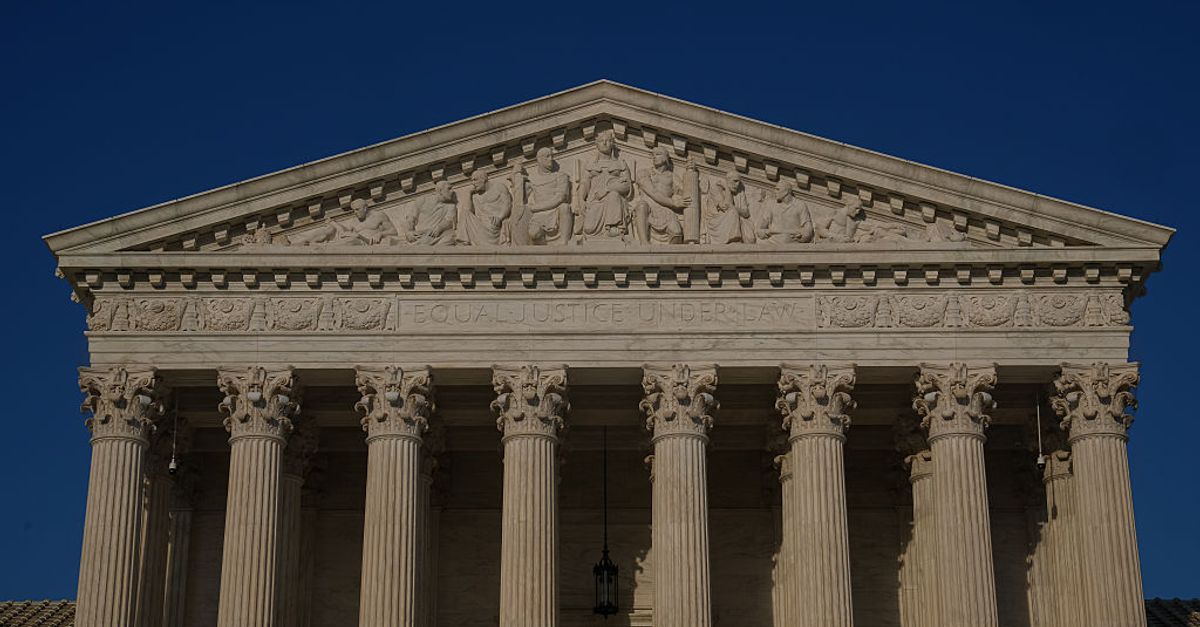
The U.S. Supreme Court has temporarily stayed a lower court's decision that restricted preferential advertising rates to individual candidates, allowing political parties and fundraising committees to access cheaper rates for the upcoming elections.
- The Supreme Court has paused a federal appeals court ruling regarding political broadcasting rates.
- Political parties and joint fundraising committees can now potentially access favorable advertising rates.
- Justice Ketanji Brown Jackson was the sole dissenter in the decision.
- The dispute centers on whether 'preferential rates' apply only to candidates or extend to their affiliated parties.
In a significant legal development on Friday, the Supreme Court cleared the path for political parties and joint fundraising committees to benefit from favorable advertising rates during the upcoming midterm elections. The justices issued an unsigned, four-page opinion temporarily pausing a ruling from the U.S. Court of Appeals in Richmond, Virginia, which had limited these preferential rates strictly to individual candidates for federal office.
The legal battle traces back to a public notice issued by the Federal Communications Commission (FCC) Media Bureau this spring. The notice suggested that the preferential rates—legally available to candidates during specific windows before primary and general elections—would also extend to political parties and their fundraising committees. This move was immediately challenged by Democratic candidates, including Senator Jon Ossoff of Georgia, who argued the notice violated federal election laws.
Why This Matters
BozokMedia analysis shows that this decision could fundamentally shift the financial landscape of American elections. By allowing party committees to utilize discounted broadcasting rates, the court has potentially granted large political organizations a massive logistical advantage over individual challengers, enabling much higher-volume messaging at a fraction of the standard cost.
The distinction between a candidate's personal use and a party's authorized use of media is the pivot point upon which modern campaign finance battles turn.
The 4th Circuit Court had previously ruled in favor of the Democratic challengers. Judge Robert King wrote that the law was "unambiguous," stating that preferential rates are reserved for a candidate's personal use and do not extend to the authorization of use by others. However, the Republican groups, including the NRSC and NRCC, argued that the appeals court lacked jurisdiction because the FCC's notice was merely an interpretive guidance document rather than a final agency action.
The Republican committees contended that the 4th Circuit's decision was legally flawed, arguing that the identity of the payer is irrelevant so long as the advertisement is authorized by the candidate. The Trump administration also filed a brief supporting the Republican position, asserting that the FCC's guidance offers equal benefits to all sides and does not grant unfair treatment to any specific entity.
| Feature | 4th Circuit Ruling | Supreme Court Stay |
|---|---|---|
| Beneficiaries | Individual Candidates Only | Parties & Committees Included (Temporary) |
| Legal Basis | Strict interpretation of 'Candidate' | Jurisdictional/Procedural pause |
Frequently Asked Questions
1. What was the core disagreement between the judges?
The disagreement centered on whether the FCC's public notice was a 'final agency action' subject to court review and whether 'candidate rates' should legally extend to the organizations that fund them.
2. Does this mean parties can now spend unlimited money on ads?
No, this only affects the *rate* at which they can purchase advertising time, not the total amount they are permitted to spend under campaign finance laws.


