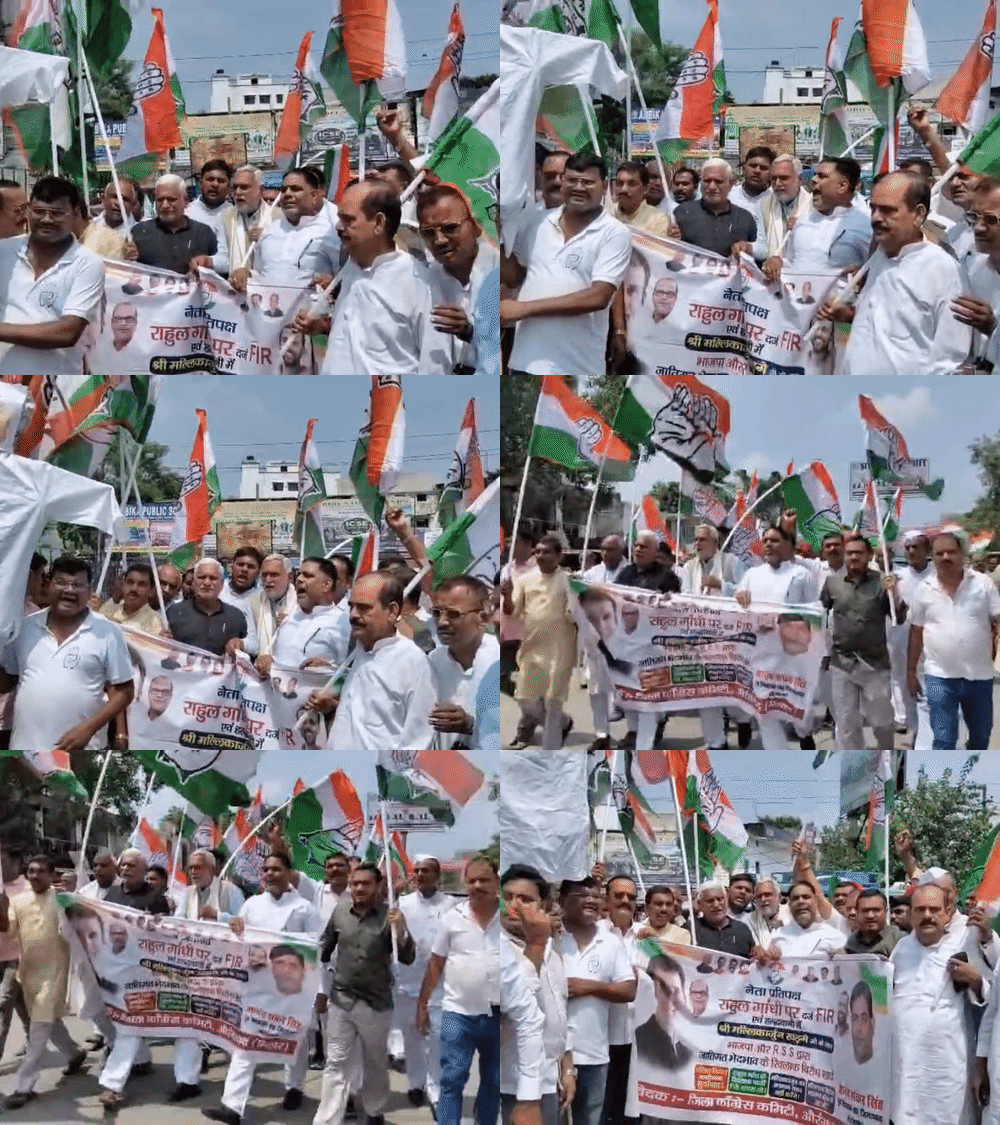
In a massive show of defiance, Congress workers in Aurangabad, Bihar, burnt the effigy of PM Narendra Modi, protesting against the FIR against Rahul Gandhi and alleged discrimination against Mallikarjun Kharge.
- Congress protested against the FIR filed against Rahul Gandhi and alleged bias towards Mallikarjun Kharge.
- Led by former MLA Anand Shankar Singh, workers burnt the effigy of PM Narendra Modi.
- The protest highlighted issues of Dalit rights, inflation, and economic mismanagement.
The political atmosphere in Aurangabad, Bihar, turned volatile on Saturday as Congress leaders and workers staged a massive protest against the Central Government. Under the leadership of former MLA and District Congress President Anand Shankar Singh, a procession was taken out from the Anugrah Smarak complex, which culminated at Ramesh Chowk. Protesters expressed their fury by burning an effigy of Prime Minister Narendra Modi and chanting slogans against the ruling dispensation.
The protest was primarily triggered by two significant developments: the registration of an FIR against Leader of Opposition Rahul Gandhi and the alleged discriminatory treatment faced by Congress National President Mallikarjun Kharge. The Congress party maintains that these actions are part of a larger pattern to stifle the voice of the opposition in India.
Why This Matters
BozokMedia analysis shows that this protest signifies a deepening rift between the ruling BJP and the opposition Congress, moving beyond parliamentary debates to grassroots street agitations. The allegations of 'anti-Dalit' sentiments regarding the treatment of Mallikarjun Kharge suggest that identity politics and social justice remain the most potent battlegrounds in Indian politics.
'The government's actions are perceived as an attempt to suppress dissent and marginalize key leaders of the opposition.'
During the march, Anand Shankar Singh accused the BJP-led government of practicing 'politics of division.' He specifically pointed out that whenever Rahul Gandhi raises issues regarding the welfare of the Dalit community, legal repercussions follow. He also slammed the government for the alleged 'purification' rituals following Kharge's meetings, labeling it as an affront to Dalit dignity.
Beyond political vendettas, the Congress leaders also targeted the government on economic grounds. They highlighted the skyrocketing prices of petrol, diesel, and cooking gas, which have severely impacted the common man. Furthermore, they criticized the government for presenting misleading economic data, arguing that a significant portion of the population still relies heavily on government food subsidies.
Historical Background
Political demonstrations through street marches and effigy burning have long been a staple of Indian democratic dissent. Historically, the Congress party has utilized mass mobilization to challenge central authority, a tactic that has evolved from the independence movement to modern-day protests against economic policies and perceived constitutional threats.
Frequently Asked Questions
1. What was the main reason for the Congress protest in Aurangabad?
The protest was held to oppose the FIR against Rahul Gandhi and the alleged bias against Mallikarjun Kharge.
2. Which key issues were raised by the protesters?
Protesters raised issues regarding Dalit rights, rising inflation, and the misuse of government machinery.