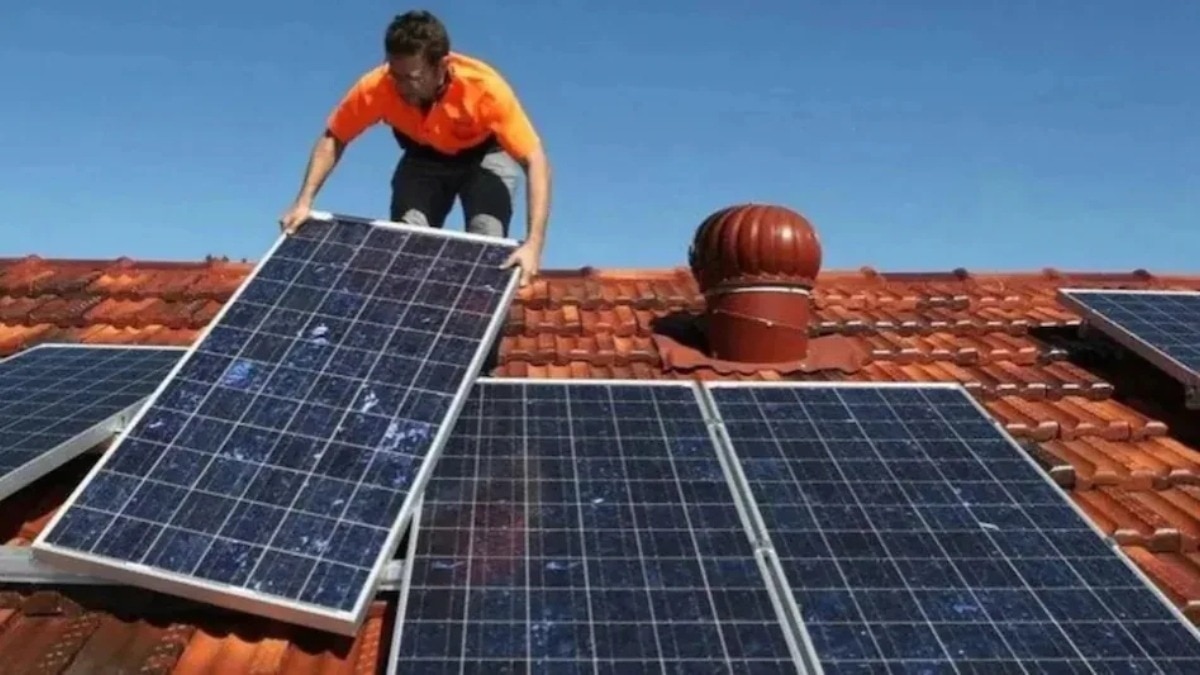
The PM Surya Ghar Muft Bijli Yojna has successfully brought electricity bills to zero for over 1.9 million households. Learn how the government's massive subsidy is revolutionizing residential energy.
- Over 1.9 million households have achieved a zero electricity bill.
- The scheme provides up to 300 units of free electricity per month.
- Subsidies of up to ₹78,000 are available for solar panel installation.
- The lifespan of installed solar panels is approximately 25 years.
As heatwaves and rising temperatures drive up the demand for air conditioners and coolers, the PM Surya Ghar Muft Bijli Yojna has emerged as a massive financial relief for Indian citizens. Recent reports indicate that more than 1.9 million households have successfully reduced their electricity bills to zero by adopting rooftop solar technology under this flagship government scheme.
Expansion and National Targets
Launched by Prime Minister Narendra Modi in February 2024, the scheme aims to install solar panels on 10 million (1 crore) homes by 2027. The progress has been remarkably swift; as of August 2026, over 5 million households have already been energized through this initiative, putting the government well on track to meet its ambitious targets.
Subsidies and Financial Incentives
The cornerstone of this scheme is the substantial financial support provided by the central government. To encourage adoption, the government offers a subsidy of up to ₹78,000 for solar rooftop installations. Furthermore, several state governments are adding their own incentives. For instance, in Uttar Pradesh, an additional subsidy of ₹30,000 is provided, bringing the total benefit to a staggering ₹1.08 lakh for residents.
Why This Matters
BozokMedia analysis shows that this scheme is transforming passive consumers into active 'prosumers.' In FY25 alone, over 1.2 million families earned a combined ₹421 crore by selling their surplus electricity back to the government grid. This creates a circular economy that empowers households while stabilizing the national grid.
The shift toward decentralized solar energy is not just an environmental necessity but a profound economic empowerment tool for the Indian middle class.
From a long-term investment perspective, the scheme is highly lucrative. Since solar panels typically have a lifespan of 25 years, a single installation provides decades of energy security and protection against rising utility tariffs.
| Consumption (Units) | Recommended Solar Capacity |
|---|---|
| 0-150 Units | 1-2 kW |
| 150-300 Units | 2-3 kW |
How to Apply
The application process is streamlined and entirely digital via the official portal pmsuryaghar.gov.in. Applicants must select their state DISCOM, provide their consumer number, and register their details. Once feasibility is approved, installation can be carried out by registered vendors. Following installation and inspection, the subsidy is credited directly to the beneficiary's bank account.
Frequently Asked Questions
Question 1: How much subsidy can I expect?
Answer: The central government provides up to ₹78,000, with additional state-level benefits available in many regions.
Question 2: Can I earn money from this scheme?
Answer: Yes, through net metering, you can sell excess electricity generated by your panels back to the grid.