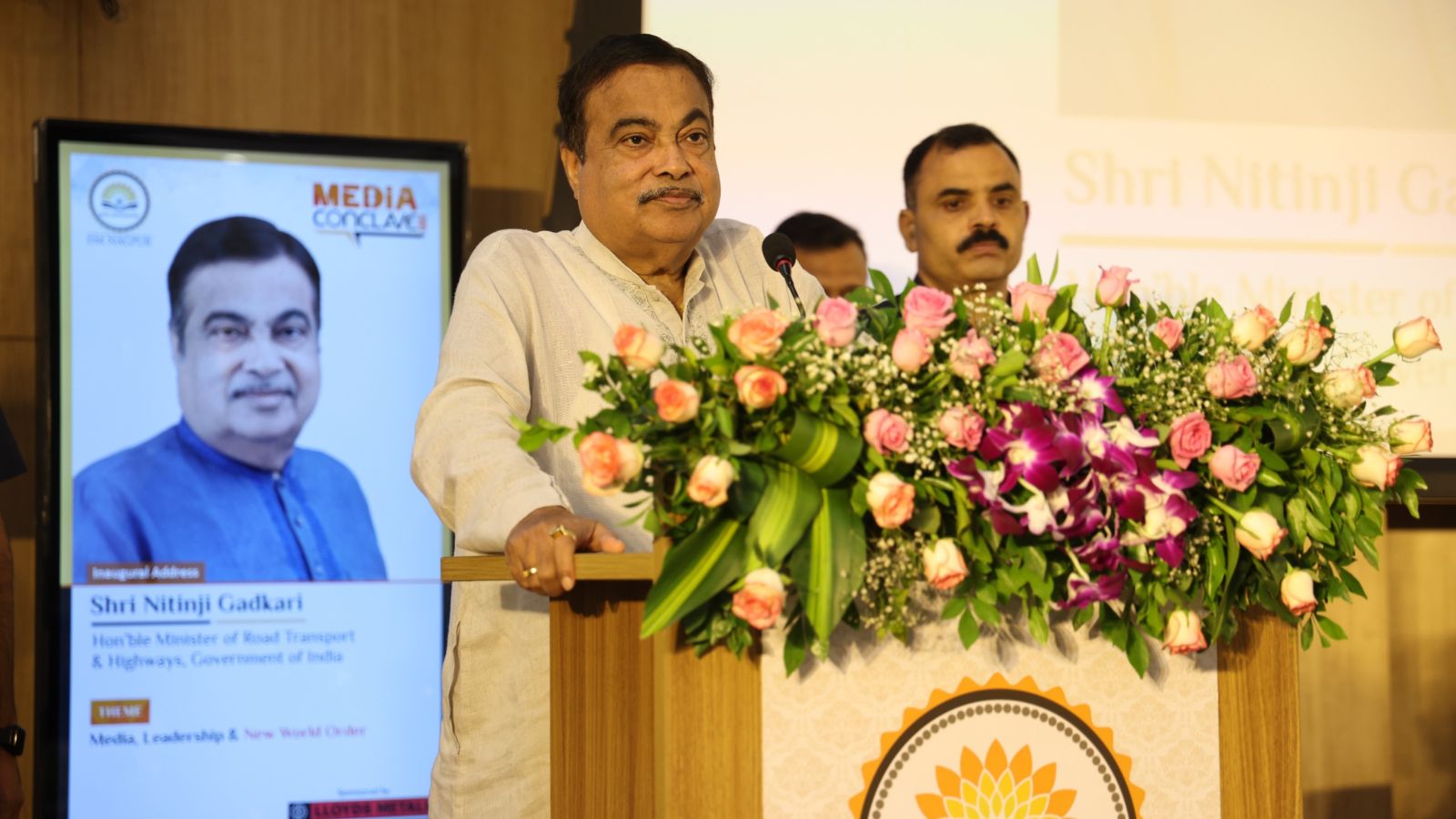
Union Minister Nitin Gadkari shared startling insights into his political journey at IIM Nagpur, noting a massive 92% vote share in criminal-associated areas, while clarifying his developmental focus.
- Nitin Gadkari reported a 92% vote share in areas associated with the criminal underworld.
- He clarified that the support was due to road construction and social work, not criminal ties.
- Gadkari criticized 'ideological emptiness' as a major threat to democracy.
- He admitted his past experimentation with caste-based politics yielded no real benefits.
Union Minister for Road Transport and Highways, Nitin Gadkari, provided a candid reflection on his political trajectory during the inaugural session of the IIM Nagpur Media Conclave 2026. In a striking revelation, Gadkari noted that while he secured approximately 70-75% of the votes in highly educated demographics, his support surged to a staggering 92% in regions he described as being linked to the criminal underworld in Nagpur.
Immediately following this revelation, the Minister issued a crucial disclaimer to prevent any misinterpretation. "Do not infer from this that I have very close relations with them," Gadkari stated. He emphasized that the overwhelming mandate in those specific areas was a direct result of his commitment to infrastructure development, specifically road construction, and consistent social work.
Why This Matters
BozokMedia analysis shows that Gadkari's comments highlight a profound shift in voter behavior where tangible developmental outcomes often supersede ideological or social affiliations. His ability to maintain high credibility across diverse—and even controversial—territories underscores the power of 'delivery-based politics' in modern India.
Ideological differences are not the problem. Ideological emptiness is the problem.
Reflecting on his formative years, Gadkari mentioned being a student during the 1975 Emergency, noting how his political involvement impacted his formal education. He also spoke of his respect for the late Communist leader AB Bardhan, illustrating that in an era of strong convictions, political opponents could still maintain mutual respect for scholarship and honesty.
Furthermore, Gadkari addressed the complexities of identity politics. He admitted to having experimented with caste-based cells during his tenure as a party president to secure electoral gains. However, he concluded that such strategies were ultimately counterproductive, creating political nuisances rather than sustainable growth.
Historical Background
Nitin Gadkari has been a central figure in the Bharatiya Janata Party (BJP) for decades, rising from local Nagpur politics to becoming one of India's most influential Union Ministers. His tenure has been defined by massive budgetary allocations for highways and a push for green technology in transport, making him a key architect of India's modern infrastructure landscape.
Frequently Asked Questions
1. Why did Gadkari receive such high votes in underworld areas?
He attributed the 92% vote share to the roads he built and the social services provided in those regions.
2. What is Gadkari's view on caste-based politics?
He stated that his past attempts to use caste-based cells were ineffective and primarily created political complications without real gains.