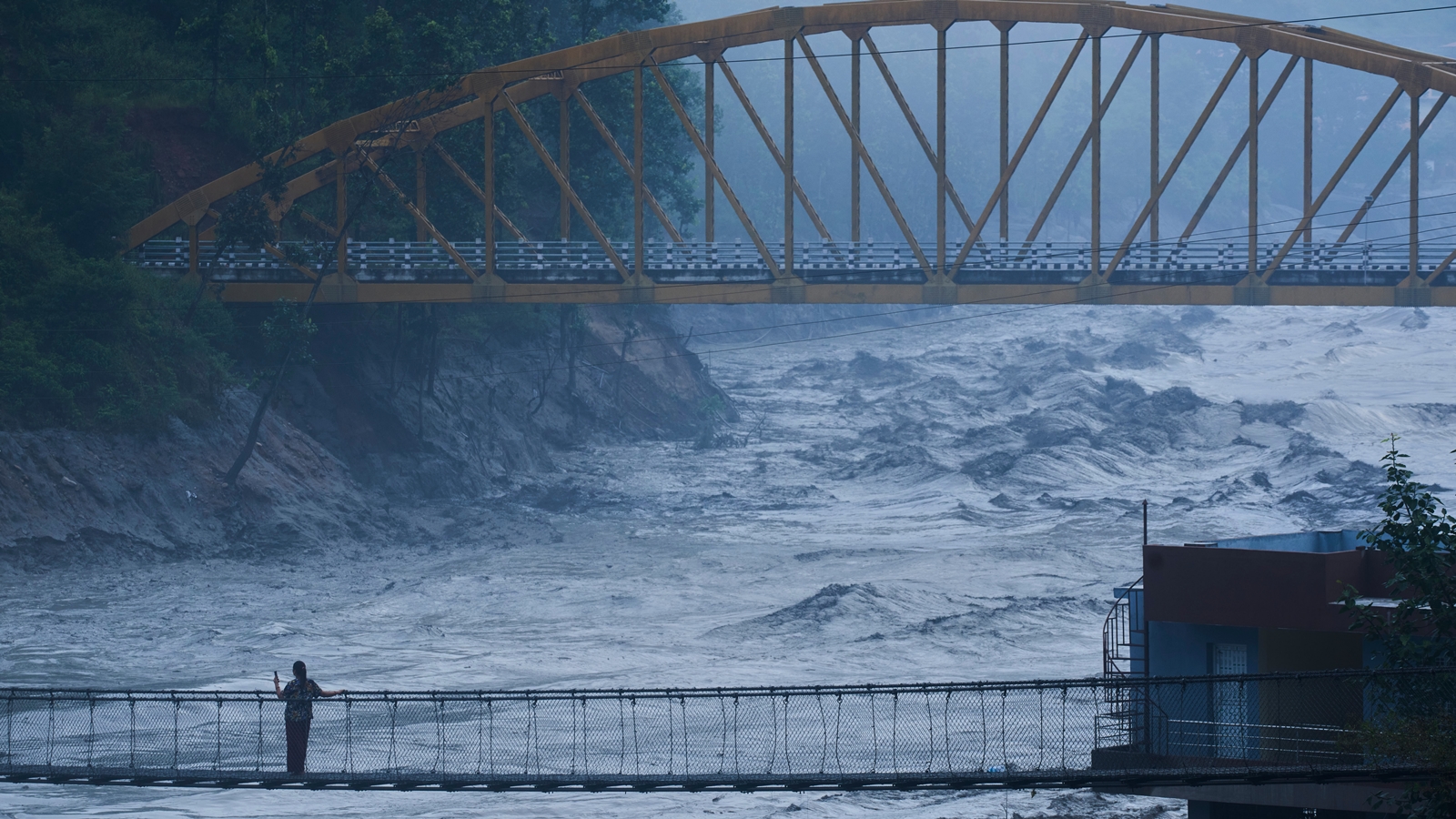
The devastating floods in Nepal serve as a critical wake-up call regarding the interconnectedness of the Himalayan ecosystem. This disaster highlights the urgent need for transboundary cooperation to manage shared hydrological risks.
- Recent floods in Nepal highlight the escalating threat of avalanches transforming into debris-flow hazards.
- Rivers in South Asia act as carriers of shared risks that transcend political boundaries.
- Current water treaties lack sufficient mechanisms for managing glacier-linked disaster risks.
- There is an urgent need for a regional Himalayan early-warning network and shared data monitoring.
The recent catastrophic flooding in Nepal has sent shockwaves through the region, bringing the term GLOF (Glacial Lake Outburst Flood) into the mainstream consciousness. While social media was flooded with terrifying visuals of seven-meter-high walls of water and debris, emerging evidence suggests the event was actually an avalanche that cascaded into a massive debris-flow hazard. This distinction is crucial for understanding the complex mechanics of Himalayan disasters.
Beyond the immediate destruction, the disaster demands a shift in how we perceive our neighbors. We often view South Asia through the lens of disparate political territories, but the geography tells a different story. Rivers are the central nervous system of this region, acting not just as resources to be allocated, but as conduits for shared ecological risks. When a disaster strikes the northern reaches of Nepal, the implications ripple far beyond its borders.
Why This Matters
BozokMedia analysis shows that the traditional approach of managing water resources based purely on territorial sovereignty is becoming obsolete in the face of climate change. The increasing frequency of Himalayan hazards poses a direct threat to the stability of critical infrastructure and the long-term development goals of the entire subcontinent.
Geography determines river courses, and with them, the distribution of power and vulnerability; rivers cannot be territorial.
India has a significant stake in this regional stability. The country has witnessed similar cascading disasters, such as the 2014 Bhote Koshi landslide, the devastating 2021 Chamoli disaster, and the 2023 South Lhonak GLOF in Sikkim. These incidents demonstrate that Himalayan hazards can disrupt water supplies as far away as Delhi and set back national development trajectories by years.
The Indian Parliamentary Standing Committee on Water Resources has already flagged these concerns. In its 2023 report, the Committee emphasized the need for systematic glacier monitoring and, more importantly, transboundary coordination. It urged the Ministry of Jal Shakti to engage with the Ministry of External Affairs to establish formal agreements with neighboring Himalayan nations to manage these emerging risks.
The core issue lies in our institutions. Most existing water treaties are designed around the allocation of volume rather than the management of risk. As climate change fundamentally alters the hydrological systems of the Himalayas, these outdated frameworks must be reimagined. We need institutions that recognize the ecological interconnectedness of the region rather than just its political divisions.
There is a strategic opportunity for India to lead the creation of a Himalayan Early-Warning Network. By fostering practical, science-based institutions for shared cryosphere monitoring, India can turn a shared vulnerability into a platform for regional cooperation and stability.
Frequently Asked Questions
1. What is the difference between a GLOF and a debris flow?
A GLOF is specifically caused by the sudden release of water from a glacial lake, whereas a debris flow involves a massive mixture of water, sediment, and rocks, often triggered by avalanches or heavy rainfall.
2. Why can't countries manage these floods individually?
Because rivers flow across borders. An event upstream in Nepal or Tibet directly affects the water levels, sediment load, and safety of downstream regions in India and Bangladesh.