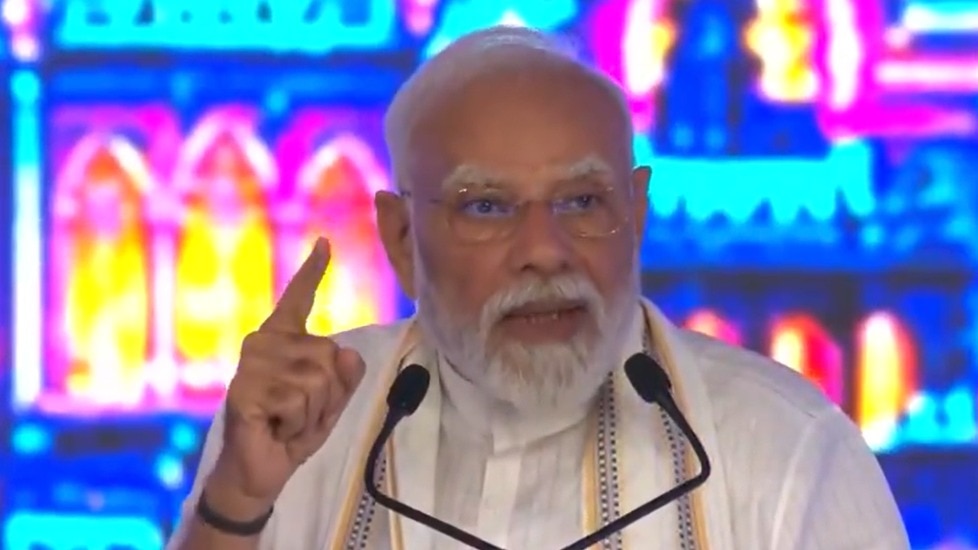
Tamil Nadu Chief Minister C. Joseph Vijay has reignited a decades-old political firestorm by invoking the Sarkaria Commission's findings on corruption against former CM M. Karunanidhi. The controversy centers on the Veeranam project and allegations of misuse of power during the 1970s.
- Chief Minister C. Joseph Vijay brought the 1976 Sarkaria Commission findings back into public discourse during an Assembly debate.
- The commission investigated 28 allegations of corruption against former CM M. Karunanidhi and his cabinet.
- Key findings included 'illegal gratification' in pesticide spraying contracts and irregularities in the Veeranam water project.
The political landscape of Tamil Nadu has been jolted once again as Chief Minister C. Joseph Vijay referenced the Sarkaria Commission Inquiry during a recent Assembly debate on home portfolio grants. This move has effectively reopened a historical chapter of corruption allegations that dated back to the 1970s, targeting the late M. Karunanidhi, the longest-serving president of the DMK, and several of his cabinet colleagues.
The Genesis of the Sarkaria Commission
The commission was established in February 1976 under the premiership of Indira Gandhi, during the height of the National Emergency. Chaired by Justice R.S. Sarkaria, a sitting Supreme Court judge at the time, the panel was tasked with investigating 28 specific charges of corruption and misuse of power. This followed the dismissal of the DMK government by the Union government, based on a report by Governor K.K. Shah, which alleged systemic maladministration and partisan misuse of power.
The Political Battleground of the 1970s
The push for the inquiry was not a solitary effort but a culmination of intense political rivalry. The Congress (Organisation), led by K. Kamaraj, was a constant critic, but the most potent blow came from M.G. Ramachandran (MGR). After exiting the DMK in 1972 over issues of public probity, MGR founded the AIADMK and submitted detailed memoranda of corruption charges to the Governor, effectively turning the tide against Karunanidhi.
The invocation of the Sarkaria report 50 years later is less about legal retribution and more about a strategic narrative shift in Tamil Nadu's current power dynamics.
The Core Allegations and the Veeranam Project
The scope of the inquiry was vast, ranging from the personal use of an imported tractor in Tiruvarur to the granting of brewery licenses to close associates. However, the Veeranam water supply project emerged as one of the most controversial points of contention, alongside sugar deals and lift irrigation schemes. The commission specifically looked into whether state machinery was leveraged to benefit DMK-affiliated trade unions and private interests.
BozokMedia analysis shows that the resurfacing of these reports serves as a powerful political tool to challenge the legacy of the DMK. By linking current political narratives to historical findings of 'illegal gratification'—such as the ₹5.75 lakhs received in pesticide spraying contracts—the current administration is attempting to frame a discourse around transparency and accountability that transcends decades.
| Entity/Case | Allegation | Commission Finding |
|---|---|---|
| Pesticide Spraying | Bribes from aircraft operators | Established (Illegal Gratification) |
| Veeranam Project | Corruption in water supply infra | Partly/Wholly Substantiated |
| Imported Tractor | Personal misuse of state gift | Under Investigation/Noted |
Frequently Asked Questions
Q1: Who was the head of the Sarkaria Commission?
The commission was headed by Justice (retd.) R.S. Sarkaria, who was a Supreme Court judge at the time of the appointment.
Q2: Why is the Veeranam project significant in this context?
The Veeranam project was one of the primary infrastructure schemes where the commission found evidence of irregularities and misuse of power for partisan ends.