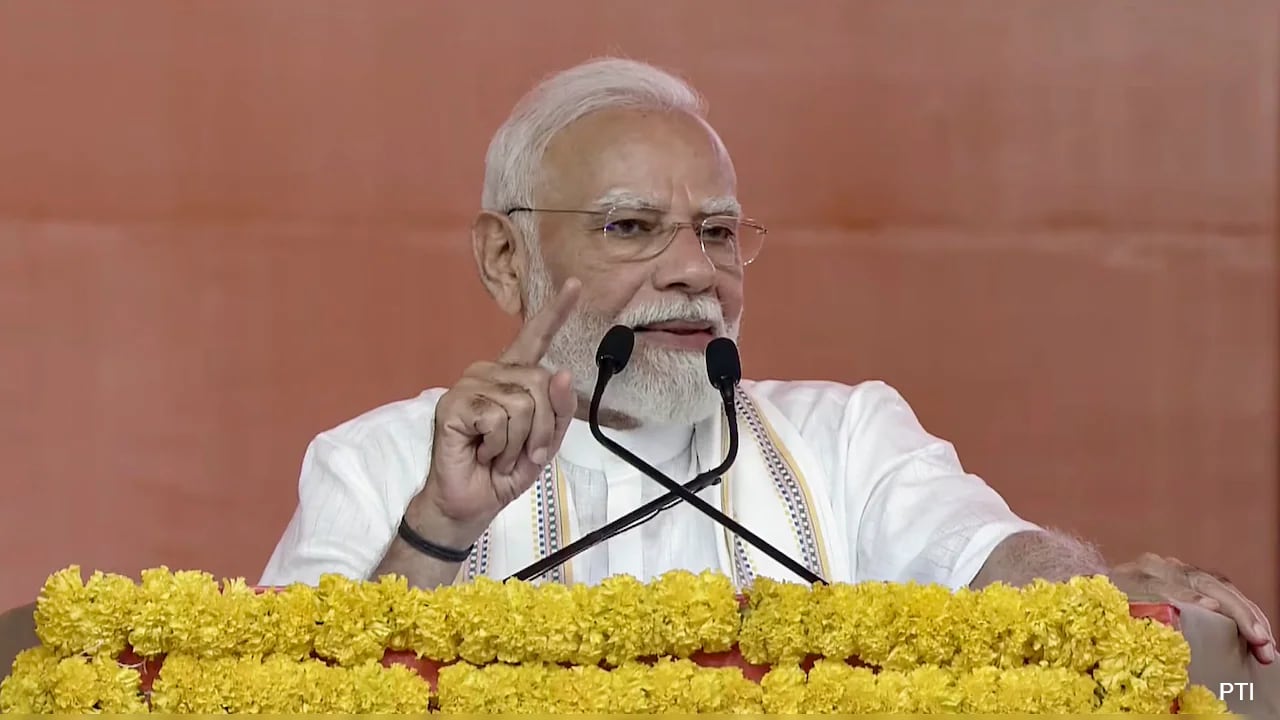
Urdu dailies have raised concerns over PM Narendra Modi's recent visit to SRCC, arguing that he prioritized political attacks over addressing student grievances and economic disparities.
- PM Modi returned to SRCC after 13 years but focused on criticizing the Opposition.
- The daily 'Siasat' questioned the equitable distribution of the 7.8% GDP growth.
- 'Salar' highlighted concerns over political influence overriding the rule of law.
Prime Minister Narendra Modi recently visited Shri Ram College of Commerce (SRCC) in Delhi, marking his first return to the institution since 2013. While the visit was intended to celebrate the college's centenary, it has sparked a critical debate across the Urdu press, focusing on the nature of the PM's interaction with the youth.
The Hyderabad-based daily Siasat, in a scathing editorial, argued that the Prime Minister missed a "golden opportunity" to connect with the students. Instead of discussing the broken education system or providing a roadmap for employment, the PM utilized the platform to label his critics as "Dimagi Naxals" (Mental Naxals) and "Naaraaz Fufa" (Angry Uncle).
Why This Matters
BozokMedia analysis shows that the rhetoric used by the administration at premier academic institutions reflects a broader trend of polarization. When educational spaces are used for political counter-attacks rather than intellectual exchange, it potentially stifles the critical thinking that institutions like SRCC are designed to foster.
The editorial contrasted this approach with that of Leader of Opposition Rahul Gandhi and his "Chhatron ki Goonj" campaign, noting that Gandhi has been engaging in interactive sessions where students are invited on stage to voice their grievances. The press suggests that a similar interactive approach from the PM would have sent a far more stirring message to the youth.
The strength of a democracy is measured not by the eloquence of its leaders' speeches, but by their willingness to listen to the dissent of the youth.
Parallelly, the Bengaluru-based daily Salar raised alarms regarding the rule of law, citing the case of Hindutva influencer Swatantra Bhardwaj. The publication questioned whether political links now grant immunity from criminal prosecution, emphasizing that the Constitution must remain supreme over any political patronage.
On the economic front, the 7.8% GDP growth figure for the first quarter of FY2027 has become a point of contention. Siasat pointed out a contradiction: while the government hails soaring growth, the fruits of this prosperity seem to be concentrated among corporates rather than reaching the common citizen.
| Feature | PM Modi's Approach (SRCC) | Rahul Gandhi's Approach (Campaign) |
|---|---|---|
| Interaction Mode | One-way address / Rhetorical | Two-way dialogue / Interactive |
| Primary Focus | Political victory & Counter-critique | Youth grievances & Employment |
Frequently Asked Questions
1. Why did the Urdu press criticize PM Modi's SRCC event?
They argued that the PM focused on attacking the opposition rather than engaging in a meaningful dialogue with students about education and jobs.
2. What was the concern raised by the daily 'Salar'?
'Salar' expressed concern that individuals with political ties might feel they are above the law, which weakens public confidence in the judicial system.