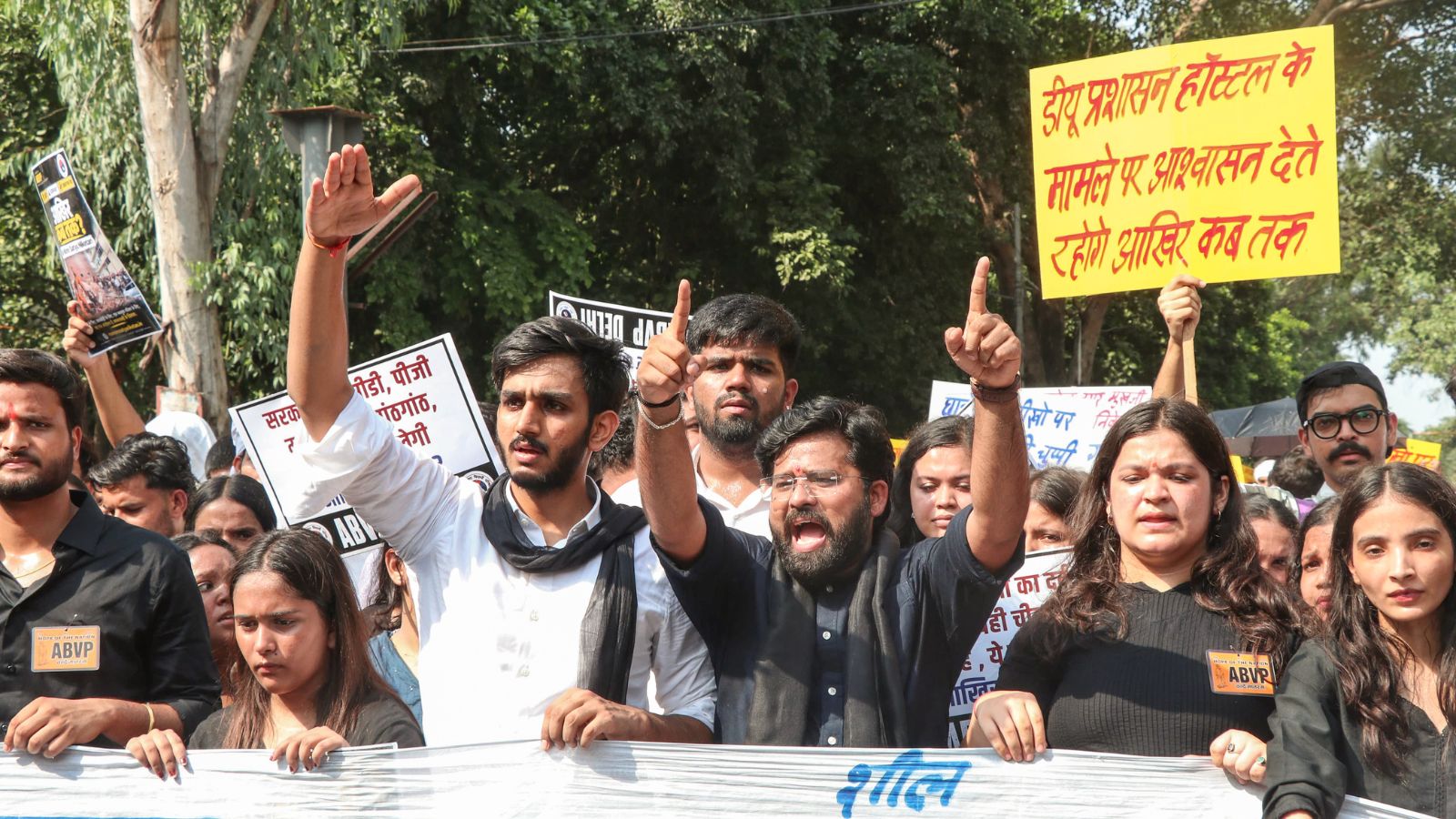
The Akhil Bharatiya Vidyarthi Parishad (ABVP) has launched aggressive protests against the BJP-run MCD following a tragic hostel collapse in Delhi. This move highlights a complex relationship where the student wing often challenges the party it is ideologically linked to.
- ABVP is demanding the suspension of MCD Commissioner Sanjeev Khirwar after 7 students died in a Satya Niketan building collapse.
- The organization has a history of protesting against BJP governments in Rajasthan, UP, and Karnataka.
- Unlike other student wings, ABVP is associated with the RSS, not directly controlled by the BJP, allowing it more autonomy.
The Akhil Bharatiya Vidyarthi Parishad (ABVP), the influential student organization associated with the Sangh Parivar, has intensified its demonstrations across Delhi University (DU) campuses. The spark for this latest unrest was the devastating collapse of a five-storey boys' PG in South West Delhi’s Satya Niketan, which claimed the lives of at least seven students and left several others injured.
The irony of the situation is not lost on political observers: the ABVP is targeting the Municipal Corporation of Delhi (MCD), which is run by the BJP, in a city where the central government is also led by the BJP. The organization is specifically demanding the immediate suspension of MCD Commissioner Sanjeev Khirwar, alleging gross negligence in building safety audits.
A Pattern of Defiance
This is far from an isolated incident. The ABVP has frequently clashed with BJP-led administrations. In Rajasthan, the outfit staged widespread protests against the Bhajan Lal Sharma government over the failure to revive student union polls. Similarly, in Uttar Pradesh, ABVP workers clashed with police while protesting against the administration of Shri Ramswaroop Memorial University, eventually leading to a standoff where they protested at the residence of a state minister.
From storming the residence of Karnataka's Home Minister in 2022 to opposing BJP membership drives on campuses in Madhya Pradesh, the ABVP has consistently positioned itself as a watchdog for student rights, regardless of the party in power.
Why This Matters
BozokMedia analysis shows that the ABVP operates under a different structural mandate than typical party wings like the NSUI (Congress) or SFI (CPI-M). Because the ABVP is an arm of the RSS and not a direct subsidiary of the BJP, it possesses a unique degree of operational autonomy. This allows it to maintain its credibility among students by appearing independent of the ruling party's political baggage.
The ABVP's ability to protest against the BJP is a strategic necessity to maintain its identity as a student-first organization rather than a mere political recruitment tool.
Historically, the ABVP predates the BJP and even the Jana Sangh, having been established in 1948. This historical seniority gives it a sense of ideological ownership that allows it to critique the BJP from a position of perceived equality or seniority within the Sangh Parivar framework.
| Feature | ABVP | NSUI / SFI / AISA |
|---|---|---|
| Primary Affiliation | RSS / Sangh Parivar | Directly linked to Political Parties |
| Autonomy | High (Ideological Link) | Low (Organizational Control) |
| Career Path | Various Sangh Org / BJP | Youth Wing → Main Party |
Frequently Asked Questions
Q1: Why does ABVP protest against the BJP if they share the same ideology? Q2: Who is the ABVP accountable to?
A2: While ideologically aligned with the RSS, the ABVP operates as an independent student body focused on educational and youth issues.