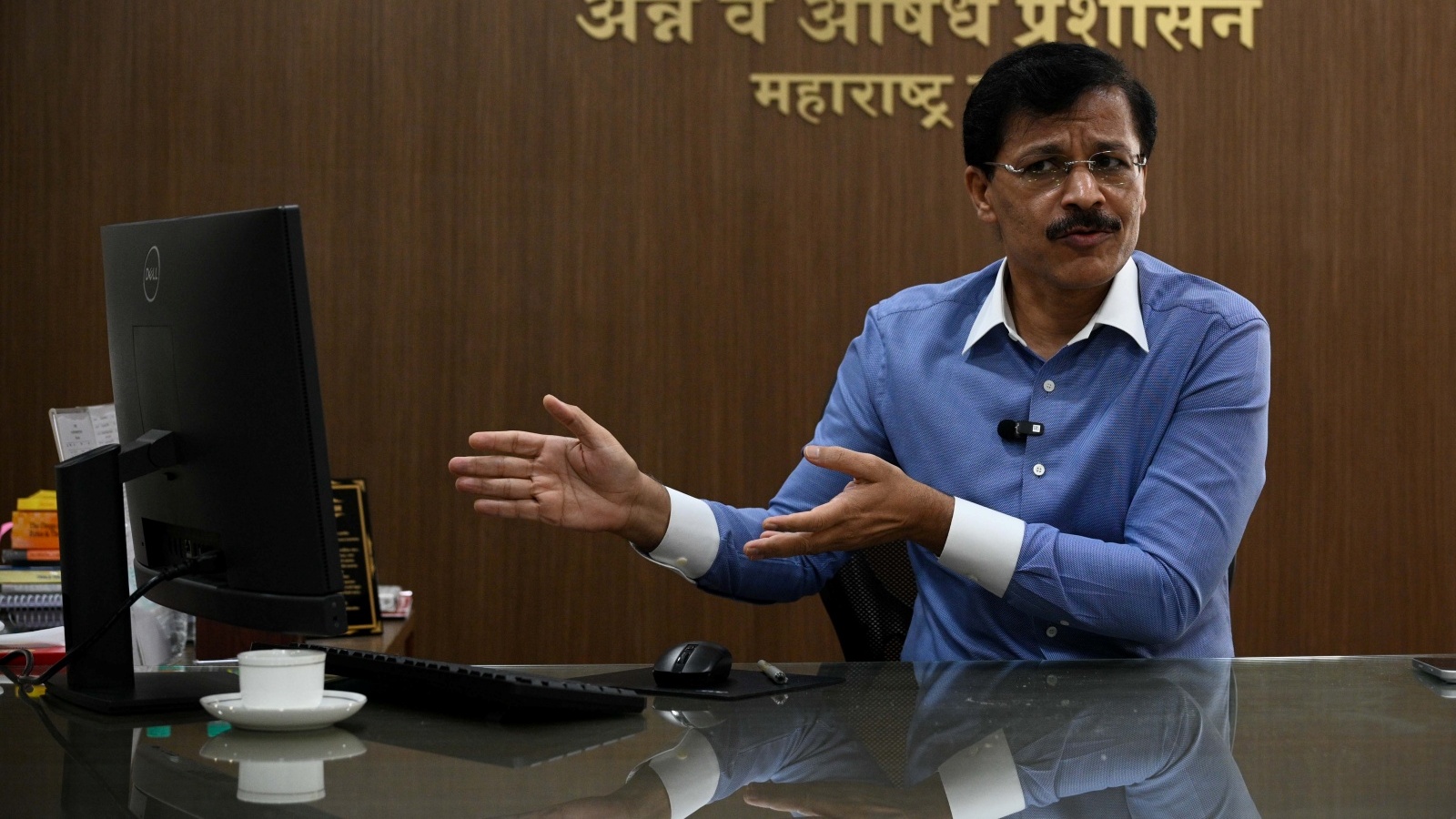
While Maharashtra FDA Commissioner Tukaram Mundhe's drive against unhygienic kitchens is winning popular acclaim, it exposes a deeper, broken infrastructure that cannot be fixed by raids alone.
- Tukaram Mundhe's aggressive crackdown on milk adulteration and restaurant hygiene.
- The disconnect between restaurant liability and failing urban infrastructure (drainage/waste).
- Financial barriers for small-scale food producers regarding shelf-life testing.
- The need for a shift from 'raid-based enforcement' to 'preventive licensing'.
In a remarkably short span, Tukaram Mundhe, the Maharashtra FDA Commissioner, has emerged as a populist hero. His relentless campaign against milk adulteration and the implementation of the 2020 Food Safety Regulations in schools has sent shivers through non-compliant vendors. However, the current wave of 'blunt heroism' is revealing a complex web of systemic failures that go far beyond a few dirty pots and pans.
The glamour of Instagram-driven 'hidden gems' often masks a grim reality. Restaurant owners, particularly in South Bombay's low-lying areas, are now questioning the fairness of their liability. While keeping a kitchen clean is non-negotiable, how does a business owner combat giant rats that burrow through ancient foundations or manage flies when the neighboring plot has been turned into a public garbage dump by the city's residents?
Why This Matters
BozokMedia analysis shows that the food safety crisis is a symptom of a larger urban collapse. When shared drainage chambers and municipal gutters are pest-infested, the restaurant is merely the most visible point of failure. Penalizing a business for a pest infestation caused by municipal negligence is a band-aid solution to a surgical problem. The responsibility is shared between the municipal corporation, landlords, and the operators.
Furthermore, the obsession with 'best-before' dates exposes a class divide in the food industry. While FMCG giants can afford rigorous, periodic shelf-life testing for every SKU, a small-scale chakki mill or a home-run masala brand cannot. For these micro-entrepreneurs, dates are often educated guesses because the cost of scientific validation is prohibitive. Penalizing them for a one-day lapse in a date that was never scientifically proven is an exercise in bureaucracy over common sense.
"Enforcement is a failure of the licensing process; if the entry barrier is too low, the cleanup cost becomes too high for the small operator."
The current FSSAI model is reactive: licenses are issued with minimal scrutiny, and enforcement happens via raids. A more sustainable approach would involve 'conditional licensing'—where specific fixes are mandated before full operation, and warnings are given within a fixed window before escalation to suspension. This would preserve livelihoods while ensuring public health.
Frequently Asked Questions
Q1: What is the primary goal of Tukaram Mundhe's current drive?
A: The drive aims to eliminate milk adulteration, enforce school food safety regulations, and improve hygiene standards in commercial kitchens across Maharashtra.
A: Because professional shelf-life testing is expensive, small vendors often use estimated dates, making them vulnerable to penalties despite the food being safe for consumption.