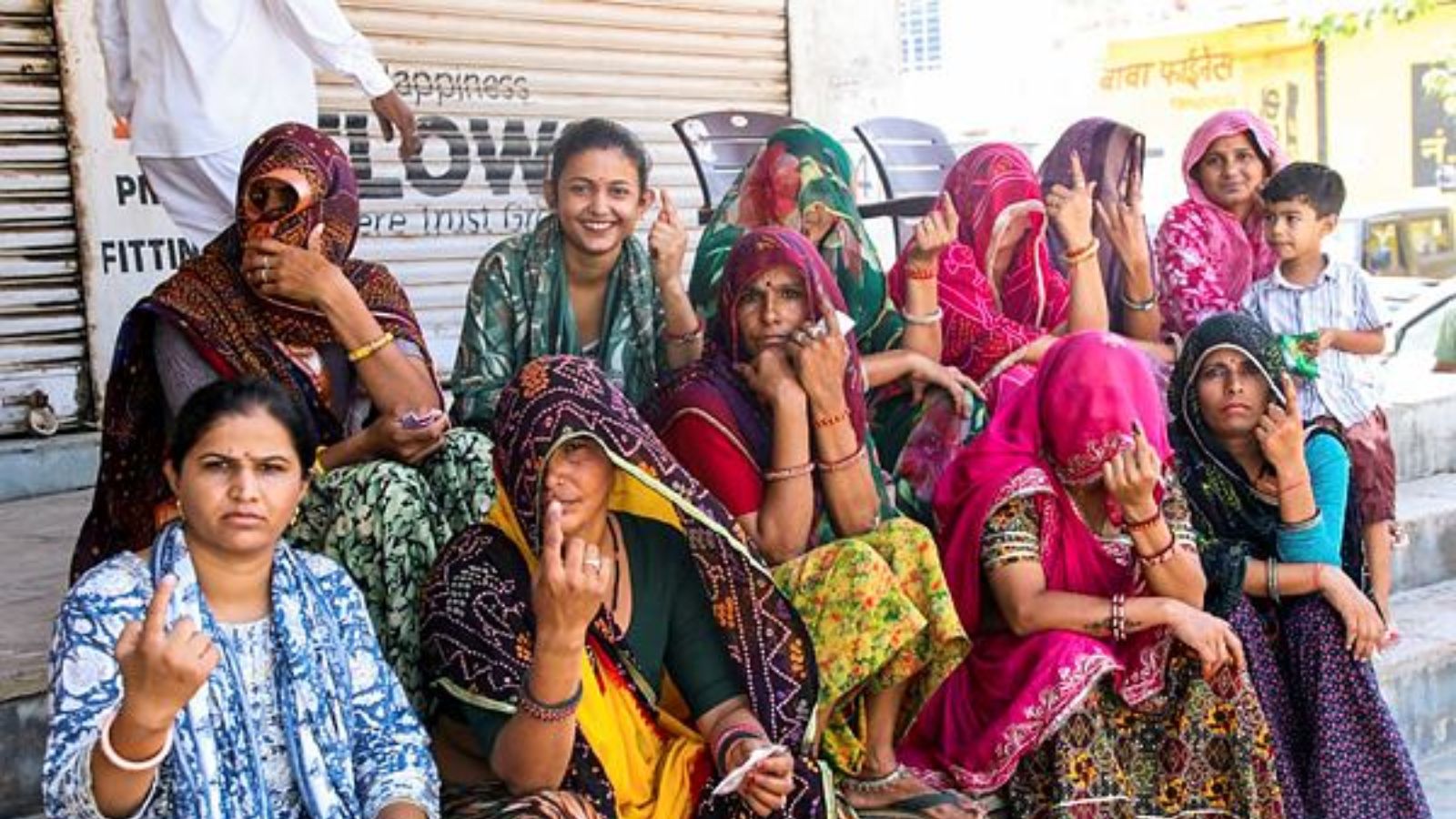
The first phase of Rajasthan's urban local body elections was marred by clashes, allegations of bogus voting, and political violence. High-profile incidents involving Independent MLA Yunus Khan and stone-pelting in Sikar have sparked widespread concern.
- Approximately 65% of 5.75 million voters cast ballots across 162 urban bodies.
- Independent MLA Yunus Khan alleged physical assault by party supporters during voting.
- Violence reported in Sikar, Jodhpur, and Jhunjhunu, including stone-pelting incidents.
The first phase of Rajasthan's urban local body elections commenced on Wednesday amidst a backdrop of volatility, marked by heated exchanges, allegations of electoral fraud, and physical altercations. Voting took place across four municipal corporations, 27 municipal councils, and 131 municipalities, with a voter turnout of roughly 65 percent from a total electorate of 57,52,278.
A major flashpoint occurred in the Didwana-Kuchaman district, where Independent MLA Yunus Khan—a former BJP member—claimed he was mauled by supporters of both the Congress and BJP while attempting to vote with his family in Ward 11 of Deedwana. The incident triggered a massive gathering of thousands in Didwana city by evening, with Khan announcing his intention to file an FIR against those who attempted to intimidate him.
The instability extended to Sikar, where stone-pelting erupted in Ward 14 of Fatehpur during a confrontation between Congress workers and an independent candidate, resulting in two injuries. In Jhunjhunu, the electoral process was compromised when a Block Level Officer (BLO) in Ward 18 was removed after allegations surfaced that he was actively influencing voters' choices.
Why This Matters
BozokMedia analysis shows that the friction observed in Phase 1 is a symptom of a fragmented political landscape in Rajasthan. The rise of influential independents, who often break away from major parties, has created a high-friction environment where traditional party machinery clashes with individual power centers, threatening the peaceful conduct of grassroots democracy.
"The presence of booth-level violence and the detention of candidates suggest a fragile security apparatus struggling to manage local political rivalries."
Further disruptions were reported in Nathdwara, where Aam Aadmi Party candidate Kan Singh was detained by police just as he arrived to cast his vote. Simultaneously, the BJP alleged that Congress workers were distributing cash to induce voters near the polling booths, prompting police intervention to clear the 100-meter perimeter. In Jodhpur, clashes between two rival groups in Balesar Durgawatan required immediate police deployment to prevent a full-scale riot.
With a total of 5,550 wards across 41 districts involved in the process, the administration is now bracing for the second phase of polling scheduled for September 11. The final results for both phases will be announced on September 14.
Election Data Summary
| Metric | Details |
|---|---|
| Total Voters | 5,752,278 |
| Voter Turnout | ~65% |
| Urban Bodies Involved | 162 |
| Counting Date | September 14 |
Frequently Asked Questions
Q1: When is the second phase of the Rajasthan local body elections?
A: The second phase of polling is scheduled to take place on September 11.
Q2: What happened to AAP candidate Kan Singh?
A: Kan Singh was detained by the police in Nathdwara in connection with a previously registered case while he was attempting to vote.
