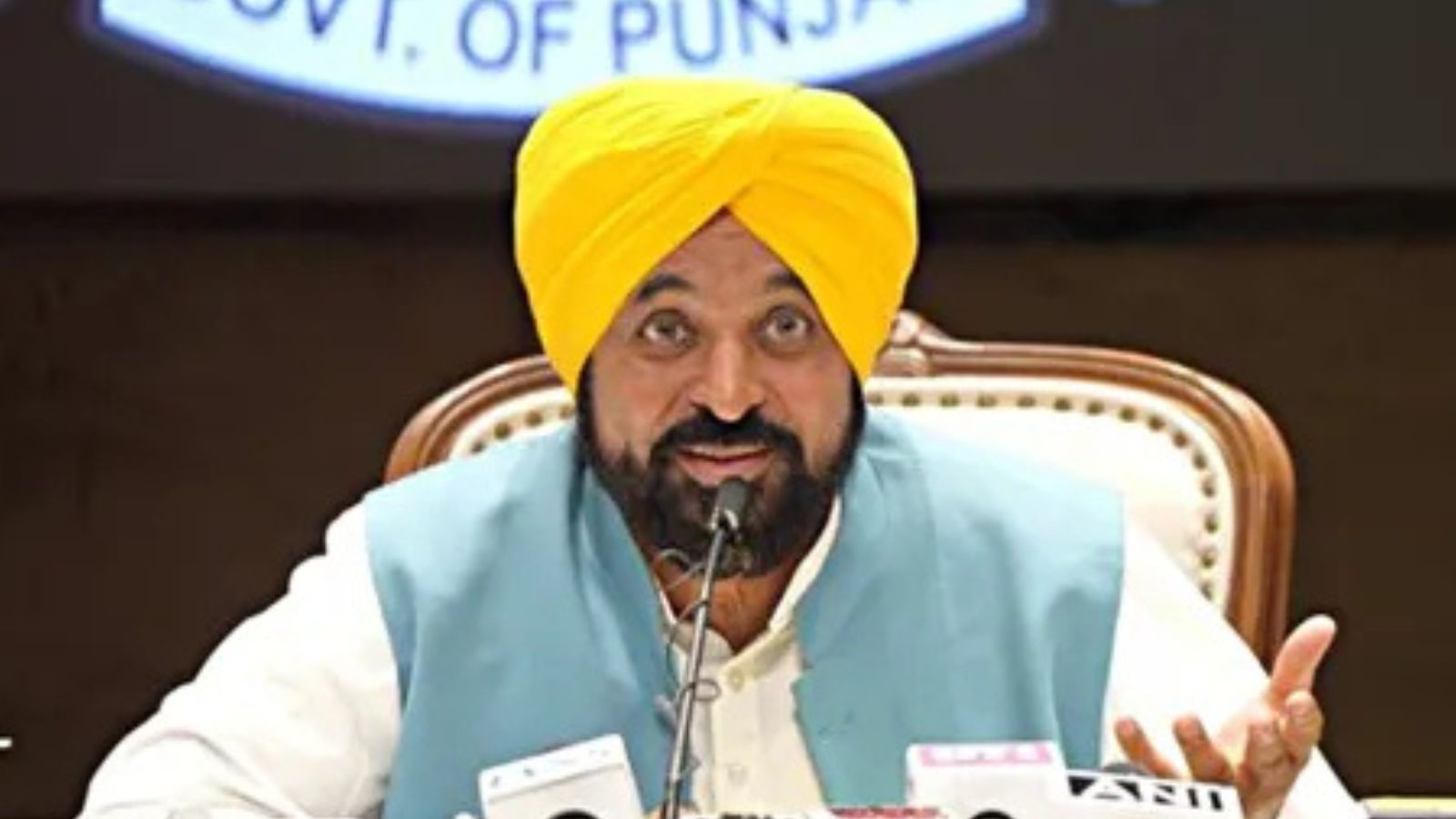
The Aam Aadmi Party's newly formed national executive has sparked controversy by granting limited space to the Punjab unit, raising questions about internal power dynamics and the rise of CM Bhagwant Mann's inner circle.
- Only three representatives from Punjab included in the 23-member National Executive.
- CM Bhagwant Mann and Finance Minister Harpal Singh Cheema secure spots in the elite 11-member Political Affairs Committee (PAC).
- The induction of Rajbir Singh Ghuman, the CM's OSD, over State Unit Chief Aman Arora, signals a shift in power.
- Arvind Kejriwal re-elected as national convener during the 15th National Council meeting.
In a strategic reshuffle that has sent ripples through the political landscape of Punjab, the Aam Aadmi Party (AAP) has announced its new national structure. While Punjab remains the only state where the party currently holds government power, the representation of the state in the 23-member national executive is surprisingly slim. Only Chief Minister Bhagwant Mann, Finance Minister Harpal Singh Cheema, and Rajbir Singh Ghuman, the CM's Officer on Special Duty (OSD), have found a place in the executive body.
The most contentious point of this appointment is the inclusion of Rajbir Singh Ghuman. Unlike Mann and Cheema, Ghuman is neither an elected representative nor a cabinet minister. His elevation is widely viewed as a testament to his proximity to the Chief Minister rather than a reflection of organizational seniority. This has led to significant speculation regarding the influence of Mann's personal staff over party policy.
Why This Matters
BozokMedia analysis shows that this restructuring indicates a consolidation of power around Bhagwant Mann. With AAP losing its stronghold in Delhi in February 2025, Mann has emerged as the party's most critical political face outside the central leadership. The exclusion of Aman Arora, the Punjab unit chief, from both the National Executive and the Political Affairs Committee (PAC) suggests a growing divide between the party's organizational wing and the administrative machinery led by the CM.
The marginalization of the state unit chief in favor of an OSD suggests that AAP is moving toward a 'centralized loyalty' model rather than a 'democratic organizational' model in Punjab.
The inclusion of Harpal Singh Cheema comes at a time of intense pressure. Cheema has been facing heat from the opposition following the tragic death of Gulzar Singh in his constituency, who had raised concerns about drug availability. By elevating Cheema, the central leadership, including Arvind Kejriwal, has signaled unwavering confidence in the Finance Minister's ability to defend the government.
The opposition has been quick to capitalize on these developments. The Shiromani Akali Dal (SAD) and the Congress party have framed this as evidence of a burgeoning power struggle. Partap Singh Bajwa of the Congress noted that the emergence of two distinct power centers—one centered around Mann and another around the Delhi leadership—could destabilize the party's cohesion ahead of the upcoming Punjab polls.
Historical Background
Since its inception in 2012, AAP has historically operated with a highly centralized command structure based in Delhi. While the party expanded its footprint to Punjab, the 'Delhi-centric' nature of decision-making often clashed with local aspirations. This latest reshuffle is the latest chapter in the ongoing tension between the party's national convener, Arvind Kejriwal, and the regional leadership in Punjab.
| Role/Position | Included in National Executive | Included in PAC |
|---|---|---|
| Bhagwant Mann (CM) | Yes | Yes |
| Harpal Singh Cheema (FM) | Yes | Yes |
| Rajbir Singh Ghuman (OSD) | Yes | No |
| Aman Arora (State Chief) | No | No |
Frequently Asked Questions
Q1: Who is Rajbir Singh Ghuman and why is his appointment controversial?
A1: He is the Officer on Special Duty (OSD) to CM Bhagwant Mann. His appointment is controversial because he is not an elected official, yet he was chosen over the state party president.
Q2: What is the significance of the Political Affairs Committee (PAC)?
A2: The PAC is the party's top decision-making body, consisting of 11 members who shape the overall strategic direction of AAP.


