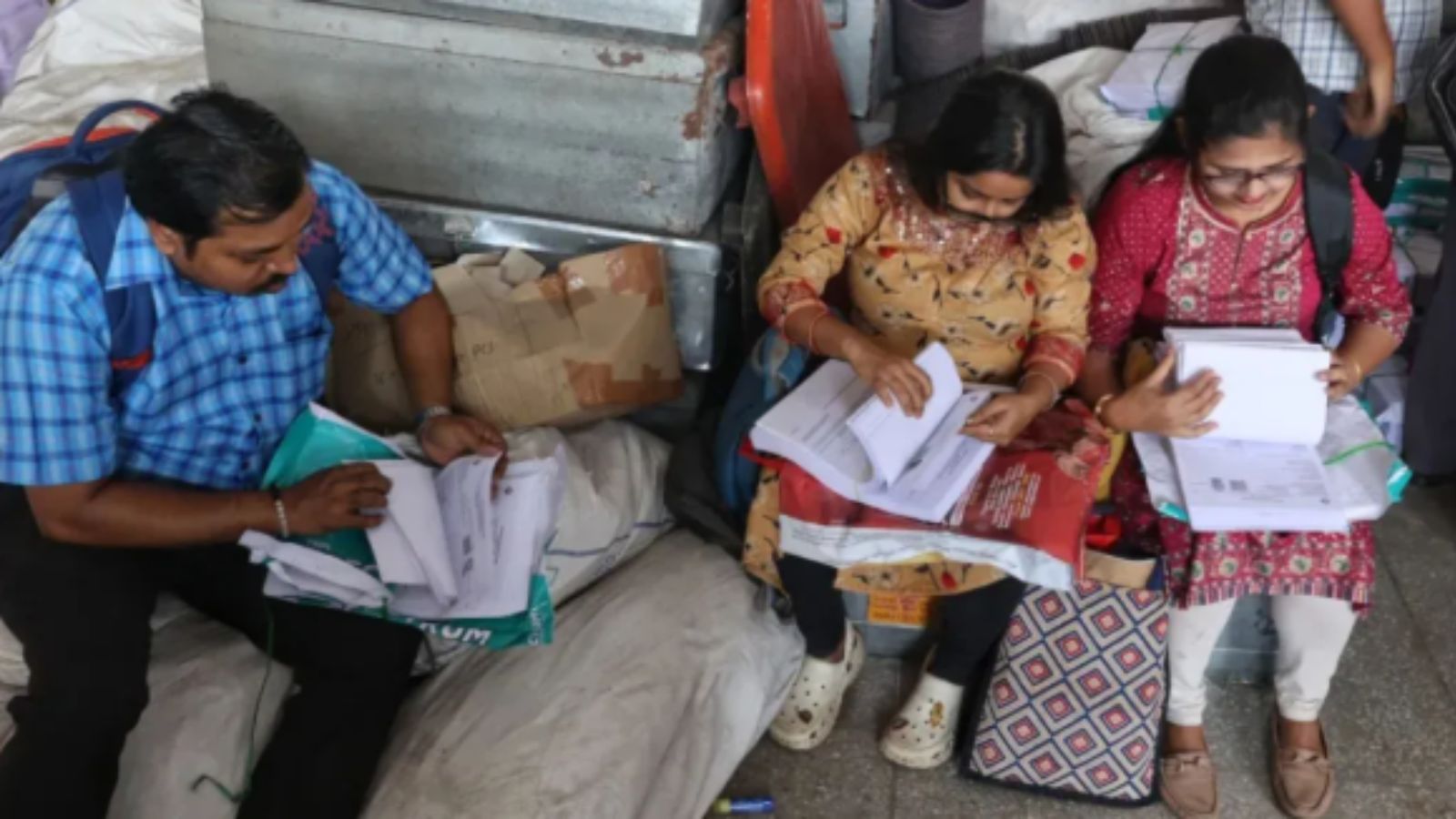
Chief Election Commissioner Gyanesh Kumar asserts that no appeals have been filed against voter name deletions in 12 states, while simultaneously defending the integrity of EVMs against hacking claims.
- CEC Gyanesh Kumar claims zero appeals against name deletions in 12 states where Special Intensive Revision (SIR) is complete.
- The CEC reiterated that EVMs are 'simple calculators' and cannot be hacked as they lack internet connectivity.
- India rejects mobile voting to avoid server-based vulnerabilities and maintain transparency.
- The appointment process for CECs has shifted from executive recommendation to a committee-based system.
Addressing a gathering at the Ahmedabad Management Association (AMA), Chief Election Commissioner (CEC) Gyanesh Kumar made a startling claim regarding the Special Intensive Revision (SIR) of electoral rolls. According to the CEC, in the 12 states where the SIR process has been concluded, not a single appeal has been filed before district collectors against the deletion of names from the voter lists.
This statement comes amidst significant scrutiny over the accuracy of electoral rolls. When questioned about thousands of complaints stemming from the SIR process, Kumar emphasized the multi-tier appeal system: first to the Collector, then to the Chief Electoral Officer (CEO) of the state, and finally to the courts. He specifically highlighted that in Gujarat, CEO Sandip Sagale confirmed zero appeals had been received to date.
Why This Matters
BozokMedia analysis shows a stark contradiction between the CEC's claims and ground reports. While the CEC reports 'zero' appeals in 12 states, previous reports indicate that in West Bengal, appellate tribunals disposed of over 82,000 appeals, with 91% of names being restored. This discrepancy raises critical questions about the uniformity of the SIR process and whether voters in certain states are unaware of their right to appeal.
Beyond the electoral rolls, the CEC took a firm stand on the sanctity of Electronic Voting Machines (EVMs). Describing them as "simple calculators," he argued that since they are not connected to the internet, they are immune to hacking. He noted that EVMs have successfully withstood 41 legal challenges in the Supreme Court, reinforcing the commission's confidence in the hardware.
Transparent democracies avoid mobile voting because cloud-based servers owned by private companies compromise the absolute secrecy and security of the ballot.
The discussion also touched upon the controversial appointment process of the Election Commission. The CEC defended the current law, which replaced the Chief Justice of India (CJI) with a Union Cabinet Minister in the selection panel. He argued that a committee-based approach is inherently better than the previous system of direct government recommendation, despite critics arguing that the current panel gives the executive overwhelming dominance.
Historically, Article 324 of the Constitution allowed the President to make appointments based on government recommendations. The 2023 Act formalized a committee consisting of the Prime Minister, the Leader of the Opposition, and a Cabinet Minister, a move challenged by organizations like the Association for Democratic Reforms (ADR) for undermining judicial oversight.
Frequently Asked Questions
Q1: Can EVMs be hacked via the internet?
No, according to the CEC, EVMs are standalone machines with no internet connectivity, making remote hacking impossible.
Q2: What is the process to appeal a deleted name from the voter list?
Voters can first appeal to the District Collector, then to the State Chief Electoral Officer (CEO), and finally move to the courts if unsatisfied.