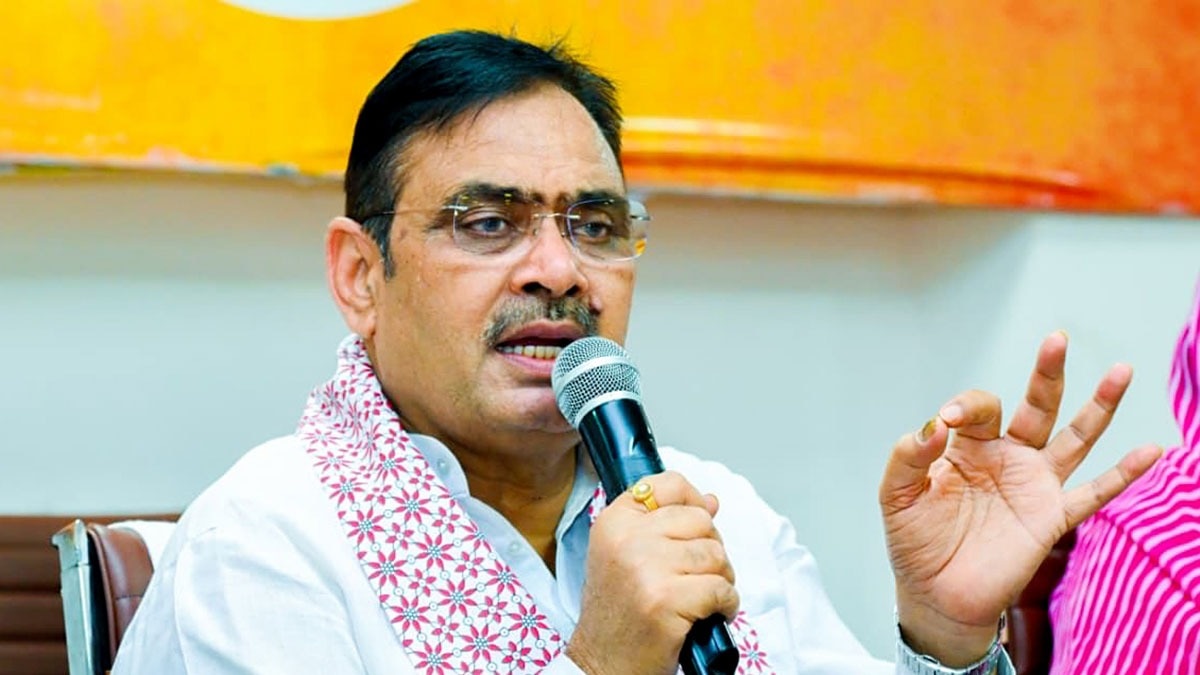
The Rajasthan urban local body elections have evolved into a high-stakes political test for Chief Minister Bhajan Lal Sharma. With 10,245 councillor seats at stake, the results will serve as a critical barometer for the BJP's performance and the CM's leadership.
- Over 10,000 councillor posts are being contested across 309 urban local bodies in Rajasthan.
- CM Bhajan Lal Sharma is personally leading the campaign, turning local polls into a personal political report card.
- The BJP is experimenting with inclusive candidate selection, fielding 480 Muslim candidates.
- The results will set the stage for the upcoming rural panchayat elections and the government's third anniversary.
Rajasthan's urban landscape is currently the center of a political storm as voters head to the polls to elect 10,245 councillors across 41 districts. Spanning 10 municipal corporations, 51 municipal councils, and 248 municipalities, this two-phase electoral exercise is far more than a routine administrative selection. It has transformed into a critical mid-term assessment of the Bhajan Lal Sharma administration, which assumed power in December 2023.
The stakes are exceptionally high because these are the first major polls following the BJP's underwhelming performance in the recent Lok Sabha elections. By taking the campaign to the streets himself, CM Sharma has shifted the narrative from local ward issues to a direct referendum on his leadership. While this strategy allows him to claim victory as a personal triumph, it simultaneously exposes him to direct accountability should the results be disappointing.
Why This Matters
BozokMedia analysis shows that the BJP is utilizing a dual-layered accountability strategy. By deploying ministers and MPs alongside the CM, the party creates a safety net; a loss in a specific ward can be blamed on local leadership, while a statewide sweep validates the CM's vision. However, the internal friction caused by rebels and disgruntled aspirants remains a volatile variable that could skew the outcomes.
The urban civic polls in Rajasthan are no longer about sanitation and streetlights; they are a litmus test for the BJP's social engineering and the CM's grip on the party machinery.
The Congress party, led by state chief Govind Singh Dotasra and former CM Ashok Gehlot, is attempting to capitalize on urban financial mismanagement and reservation disputes. For Congress, this is a chance to prove that their anti-government rhetoric has actual electoral currency. If they fail to make inroads, it may signal a deeper crisis in their organizational capacity to mobilize urban voters.
Social arithmetic is playing a pivotal role. Both major parties are aggressively courting the OBC (Other Backward Classes) community, often exceeding reserved quotas. Interestingly, the BJP has pivoted its strategy by fielding 480 Muslim candidates—a stark contrast to its approach in the 2023 Assembly and 2024 Lok Sabha polls—suggesting a tactical shift toward inclusive urban outreach.
| Feature | BJP Strategy | Congress Strategy |
|---|---|---|
| Leadership | CM-led high-voltage campaign | Attack on urban governance |
| Candidate Mix | Inclusive (480 Muslim candidates) | Focus on reservation issues |
| Goal | Validate mid-term performance | Punish the ruling government |
The political drama will not end on September 14 when results are declared. The subsequent 'barabandi'—the process of securing elected councillors to form boards—will likely involve resorts and intense bargaining to prevent poaching. This phase often reveals the true strength of a party's internal discipline.
Looking ahead, these urban results will act as a precursor to the rural panchayat elections. Together, they will define the political narrative leading up to the third anniversary of the Sharma government in December, potentially influencing the BJP high command's assessment of the state leadership.
Frequently Asked Questions
1. Why is this election called a mid-term referendum?
Because it is the first major electoral test since CM Bhajan Lal Sharma took office, reflecting public satisfaction with his governance.
2. How many candidates are contesting in these civic polls?
Voters are electing 10,245 councillors across 309 urban local bodies.

