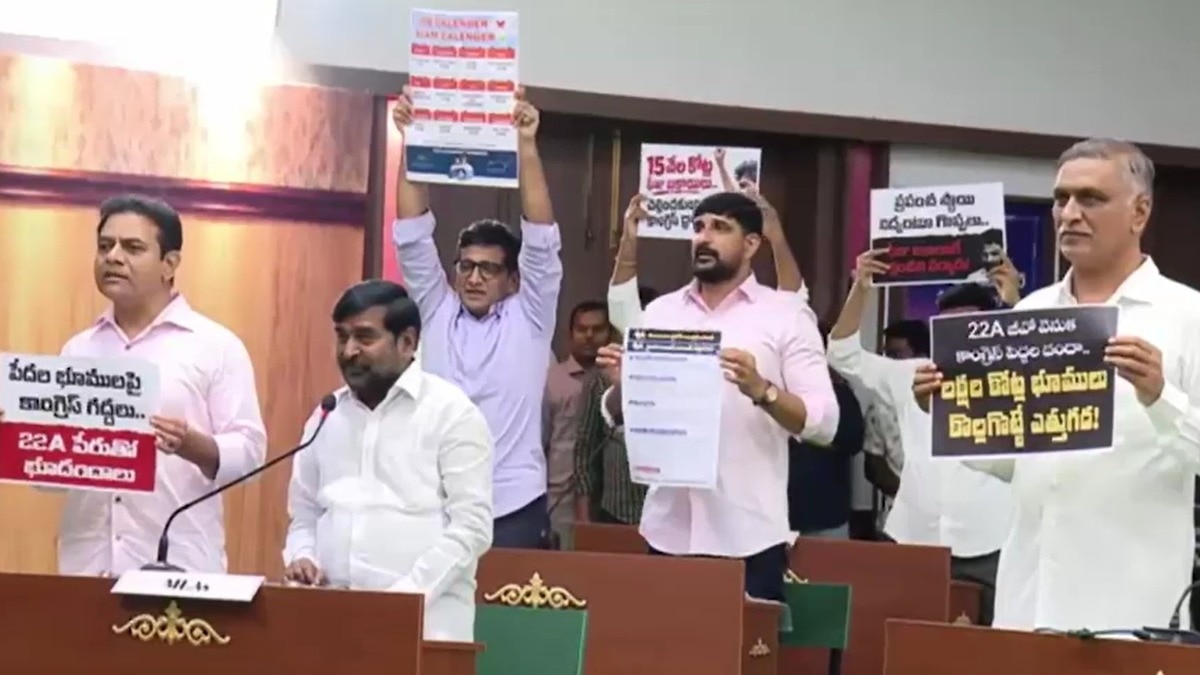
AIMIM leader Akbaruddin Owaisi has criticized the government regarding recent proposals from three municipal corporations, questioning the feasibility of implementation due to severe staff shortages.
- Akbaruddin Owaisi challenged the feasibility of new municipal proposals.
- He highlighted the critical shortage of staff in urban local bodies.
- The leader demanded accountability from the state government.
Senior AIMIM leader Akbaruddin Owaisi has launched a scathing attack on the government regarding the recent proposals submitted by three municipal corporations. Owaisi raised fundamental questions about the practical implementation of these plans, specifically asking, "Where will they get the employees from?"
The politician argued that the government is pushing ambitious administrative proposals without addressing the core issue of human resource deficiency. He noted that without sufficient manpower, these municipal bodies will struggle to fulfill their basic responsibilities toward citizens.
Why This Matters
BozokMedia analysis shows that the gap between policy formulation and ground-level execution is widening in urban governance. When municipal corporations lack the necessary workforce, even the most well-intentioned proposals fail to improve urban living standards, leading to systemic inefficiency.
Administrative reforms remain hollow if they are not backed by a robust and adequately staffed workforce.
Historically, urban local bodies in the region have faced chronic issues regarding budget allocations and staff recruitment. Owaisi's critique highlights a recurring pattern where bureaucratic expansion outpaces the actual capacity of the institutions to function effectively.
Frequently Asked Questions
1. What is the core of Owaisi's criticism?
His primary criticism is that the government is proposing new tasks for municipal corporations without ensuring they have the staff to execute them.
2. How does staff shortage affect municipal services?
A lack of staff directly impacts essential services such as sanitation, waste management, and public health maintenance.