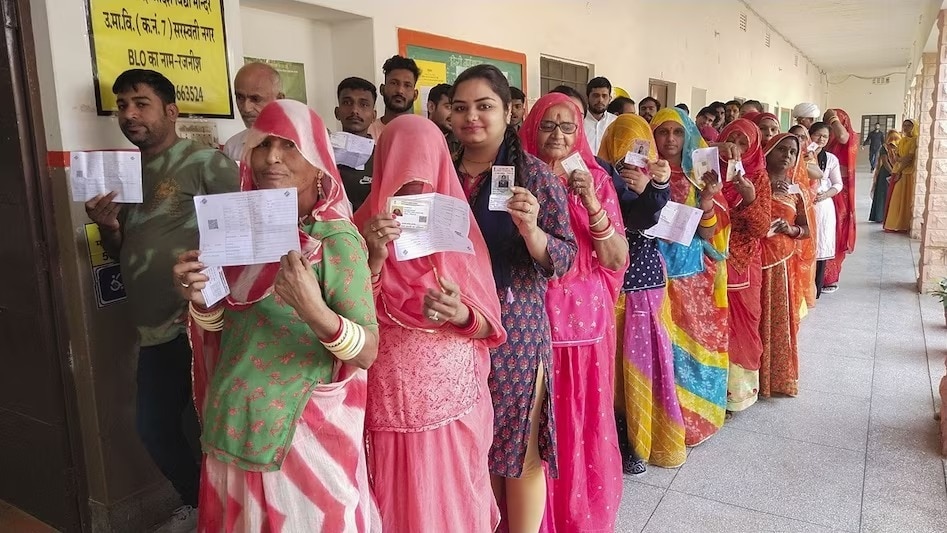
Counting for Rajasthan's local body elections has commenced across 309 urban bodies. The results will determine the urban political landscape for the BJP and Congress.
- Counting is underway for 309 urban local bodies, including 10 municipal corporations.
- 77 candidates were elected unopposed, with BJP securing the highest number (44).
- The results serve as a critical test of grassroots strength for both BJP and Congress.
The counting process for the Rajasthan Local Body Elections 2026 officially commenced at 8:00 AM today. This massive electoral exercise covers 309 urban local bodies across the state, encompassing 10 municipal corporations, 51 municipal councils, and 248 municipalities. The elections were conducted in two phases on September 9 and 11.
The political atmosphere is charged as the ruling Bharatiya Janata Party (BJP) and the opposition Indian National Congress (INC) fight for control over urban territories. The outcome is expected to reveal the shifting tides of voter sentiment in Rajasthan's growing urban centers.
Unopposed Victories and Candidate Breakdown
Before the formal counting began, a significant number of candidates secured their seats unopposed. A total of 77 candidates were elected without a contest. The breakdown of these unopposed winners is as follows:
| Party/Category | Unopposed Winners |
|---|---|
| BJP | 44 |
| Congress | 16 |
| Independents | 17 |
The results will provide an early indication of voter sentiment in Rajasthan’s urban centres and the relative strength of the two principal parties at the ward level.
Why This Matters
BozokMedia analysis shows that these elections are a crucial litmus test for the administration led by Chief Minister Bhajan Lal Sharma. For the BJP, winning these polls is essential to consolidate its urban stronghold following the 2023 Assembly elections. Conversely, for the Congress, these results are a chance to prove that its organizational machinery remains intact despite recent setbacks in state-level elections.
Beyond party politics, these results will shape the future of urban governance, infrastructure development, and municipal policy in Rajasthan's major cities.
Historical Background
Local body elections in Rajasthan have historically been the breeding ground for state-level leadership. Success in municipal corporations often translates to political momentum for upcoming general or assembly elections. The urban-rural divide in Rajasthan's politics has become increasingly prominent, making these civic polls a strategic priority for all major political players.
Frequently Asked Questions
Question 1: How many phases were the Rajasthan civic polls held in?
Answer: The elections were held in two phases on September 9 and September 11, 2026.
Question 2: Which party had the most unopposed wins?
Answer: The BJP had the highest number of unopposed wins with 44 candidates.