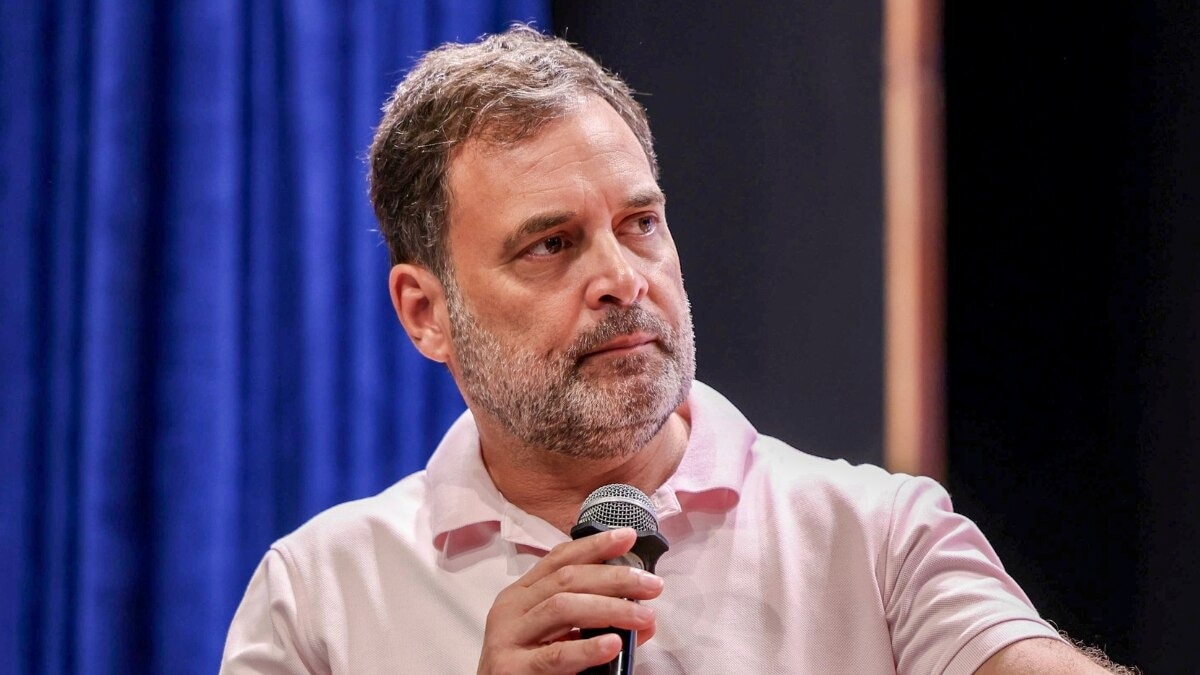
Congress leader Rahul Gandhi has accused the Modi government of opening the door to UPI charges to appease American interests, claiming the move undermines India's digital payment sovereignty.
- The government has prohibited charges on UPI transactions under ₹2,000, but left higher-value transactions open to fees.
- Rahul Gandhi alleges this move is a surrender to American pressure, specifically targeting US payment firms.
- Experts warn that Merchant Discount Rate (MDR) on merchants will eventually lead to higher prices for consumers.
In a scathing attack on the ruling dispensation, Congress MP Rahul Gandhi has alleged that the Prime Minister-led government is quietly paving the way to impose fees on UPI (Unified Payments Interface) transactions. Gandhi claimed that the Prime Minister is once again 'surrendering to American pressure' by altering the framework that has kept digital payments free for millions.
The controversy stems from a recent gazette notification following amendments to the Payment and Settlement Systems Act, 2007. While the notification stipulates that banks and payment providers cannot charge for UPI or RuPay debit card transactions below ₹2,000, it offers no explicit protection for transactions exceeding this threshold.
Why This Matters
BozokMedia analysis shows that this legislative shift marks a fundamental change in India's digital economy strategy. By removing the statutory guarantee of zero-MDR (Merchant Discount Rate), the government is transitioning from a subsidy-led model to a revenue-driven model. While the government argues this is necessary for cybersecurity and infrastructure, critics see it as a concession to global fintech giants.
'The government says no fees will be charged to customers, but where will the fees imposed on shopkeepers ultimately come from? Straight out of the customer's pocket.'
Rahul Gandhi highlighted the economic implications, noting that while transactions above ₹2,000 might represent only 5% of volume, they constitute nearly 65% of the total transaction value. This means the potential revenue from these fees could be massive, much to the benefit of the entities pushing for such changes.
Jairam Ramesh, Congress General Secretary, echoed these concerns, stating that the new laws were 'bulldozed through Parliament' to initiate the charging process. He warned that the ₹2,000 cap could be lowered in the future, potentially making even daily person-to-person (P2P) transactions subject to fees.
Historical Background
UPI, operated by the National Payments Corporation of India (NPCI), has been the backbone of India's digital revolution. For years, the zero-MDR policy ensured that small merchants and consumers could transact without any cost. However, American payment companies have long lobbied for a change in this policy to allow for a more profitable, fee-based ecosystem in the Indian market.
Frequently Asked Questions
1. Is UPI becoming a paid service?
Currently, transactions under ₹2,000 remain free. However, the government has enabled a framework that allows charges on transactions above this amount.
2. Why is the government introducing these charges?
The government states that the massive scale of UPI requires funds for cybersecurity, fraud prevention, and infrastructure sustainability.