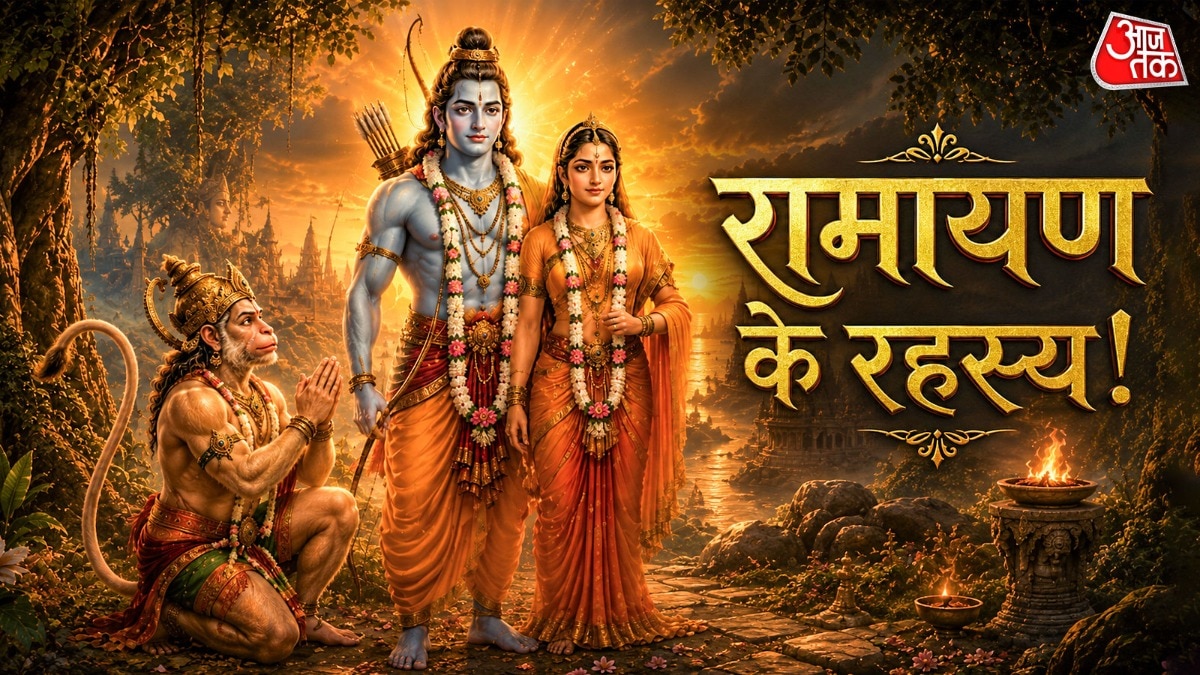
The Ramayana is much more than the story of Lord Rama's victory over Ravana. Discover the hidden legends of Princess Shanta, Urmila's sacrifice, and the divine connection to the Gayatri Mantra.
- There is a profound spiritual link between the verses of Ramayana and the Gayatri Mantra.
- King Dasharatha had a daughter named Shanta, who is often overlooked in mainstream narratives.
- Lakshman's ability to stay awake for 14 years was made possible by Urmila's immense sacrifice.
- The birth of Makardhwaja, son of Hanuman, remains one of the most intriguing legends.
The epic Ramayana is not merely a chronicle of Lord Rama's life, exile, and the slaying of Ravana; it is a vast ocean of spiritual wisdom and hidden mysteries. While the core narrative is well-known, several lesser-known legends provide a deeper understanding of the characters' sacrifices and the divine cosmic order.
The Sacred Connection: Ramayana and the Gayatri Mantra
One of the most fascinating spiritual beliefs is the mathematical connection between the 24,000 verses of the Valmiki Ramayana and the Gayatri Mantra. It is believed that by taking one letter from every thousandth verse of the epic, the 24 letters of the Gayatri Mantra are formed. This connection highlights the divine orchestration behind the epic's composition.
The Forgotten Princess: Shanta
While history remembers the four sons of King Dasharatha—Rama, Lakshman, Bharata, and Shatrughna—it often overlooks his daughter, Shanta. Legend suggests she was adopted by King Romapada of Anga Desha. Her marriage to Sage Rishyasringa played a pivotal role in the performance of the Putrakameshti Yagna, which eventually led to the birth of the four princes.
The Sacrifice of Urmila
The epic highlights the unparalleled devotion of Lakshman, who accompanied Rama to the forest. According to folklore, Lakshman requested the Goddess of Sleep to grant him 14 years of wakefulness to protect Rama and Sita. However, the heavy lifting of this penance was done by his wife, Urmila, who accepted the sleep on his behalf, embodying the ultimate sacrifice of a devoted spouse.
Why This Matters
BozokMedia analysis shows that these mythological nuances are essential for understanding the ethical framework of ancient Indian civilization. These stories serve as allegories for duty (Dharma), endurance, and the interconnectedness of human actions and cosmic consequences.
Mythological mysteries are not just supernatural tales; they are gateways to understanding the profound philosophy of life.
Hanuman and Makardhwaja: Even the life of Hanuman contains mysteries. Despite being a lifelong celibate, the legend of Makardhwaja—born from a drop of Hanuman's sweat falling into the ocean—adds a layer of divine complexity to the narrative of the Patal Lok (underworld).
Frequently Asked Questions
1. Did King Dasharatha have a daughter?
Yes, according to various traditions, he had a daughter named Shanta who was raised in Anga Desha.
2. How did Lakshman remain awake for 14 years?
It is believed that his wife, Urmila, took upon herself his share of sleep so that he could remain vigilant during the exile.