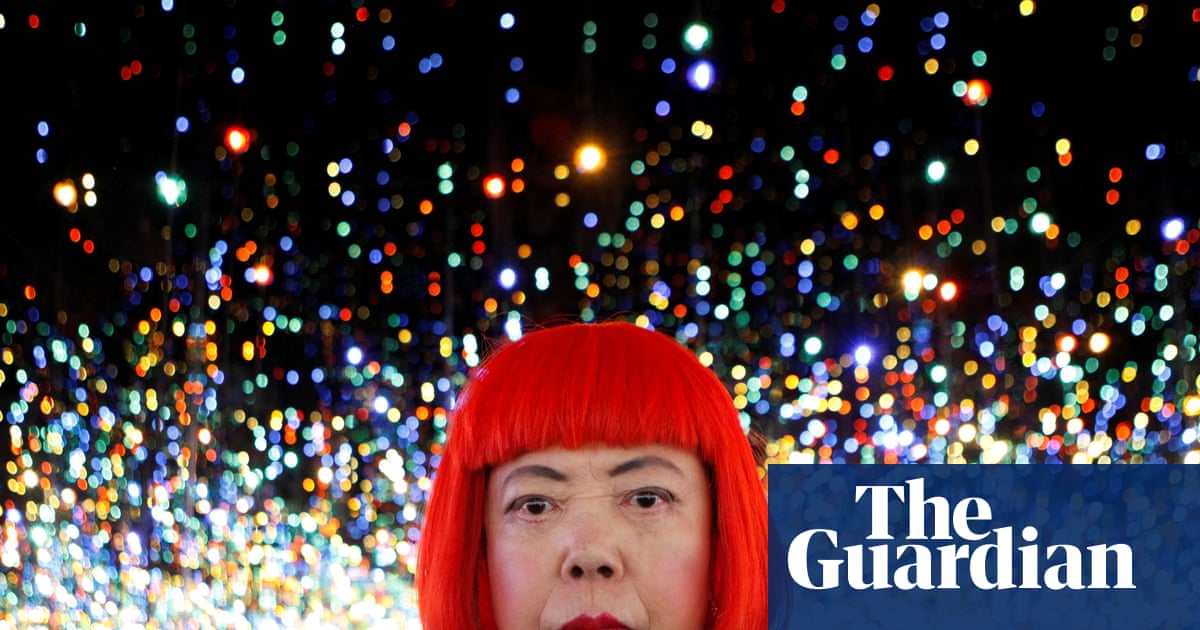
Renowned Japanese artist Yayoi Kusama has died at the age of 97 in a Tokyo hospital. Known for her psychedelic patterns and immersive installations, she leaves behind an unparalleled artistic legacy.
- Japanese superstar artist Yayoi Kusama died at 97 in Tokyo.
- Famous for her 'Infinity Mirror Rooms' and signature polka dot patterns.
- Her work transformed personal hallucinations into universal art experiences.
The art world is in mourning following the death of Yayoi Kusama, the Japanese avant-garde artist who ascended to global superstardom. Her studio confirmed her passing in a Tokyo hospital on August 14, marking the end of an extraordinary journey that spanned seven decades of creative exploration.
Kusama’s work was deeply rooted in her personal struggles. Since childhood, she experienced vivid hallucinations where patterns and flowers would overwhelm her surroundings. Rather than succumbing to these visions, she used them as a blueprint for her art, developing the concept of 'self-obliteration'—the idea of becoming one with the infinite universe through repetitive patterns.
Why This Matters
BozokMedia analysis shows that Kusama's impact transcends the traditional gallery space. By creating immersive, highly visual installations like the 'Infinity Mirror Rooms,' she bridged the gap between high art and the digital age, becoming one of the most Instagrammable and accessible artists in history.
Kusama didn't just paint patterns; she painted the very fabric of her perception.
After moving to New York in 1958, Kusama broke into the male-dominated art scene. She pioneered 'soft sculptures' and 'infinity net' paintings, challenging the boundaries of Pop Art and Minimalism. Despite her massive success, she often spoke out against the appropriation of her ideas by contemporary male artists, asserting her place in a history that had often overlooked her.
Her career was not without controversy. From staging provocative 'body festivals' to her uninvited appearance at the 1966 Venice Biennale with 'Narcissus Garden,' Kusama used art as a tool for social and political disruption. Her ability to blend scandal with profound philosophical inquiry made her a singular force in 20th and 21st-century art.
Frequently Asked Questions
1. What made Yayoi Kusama's art so unique?
Her use of repetitive polka dots and mirrored environments to create a sense of infinite space was revolutionary.
2. How did her mental health influence her work?
Her hallucinations served as the primary inspiration for her patterns and the concept of self-obliteration.