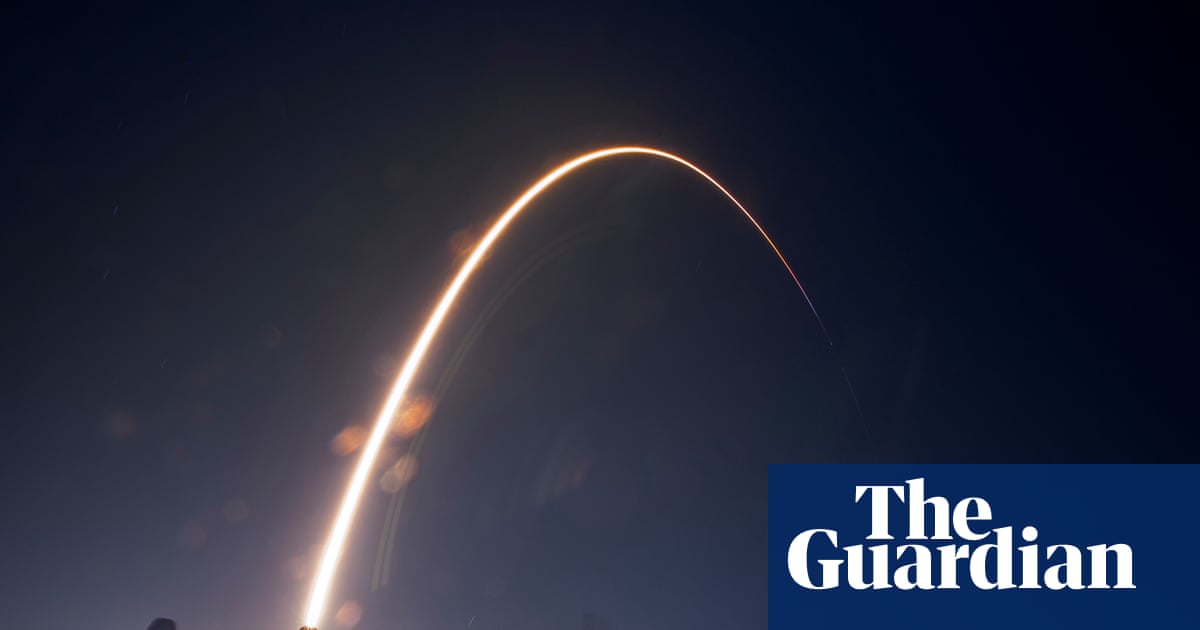
A spent SpaceX Falcon 9 rocket stage is set to crash into the Moon on August 5. Scientists are closely monitoring the event, which is expected to occur at seven times the speed of sound.
Key Takeaways
- A SpaceX Falcon 9 rocket stage will impact the Moon on August 5.
- The impact velocity is expected to be 7 times the speed of sound.
- Scientists anticipate the creation of a fresh lunar crater.
In a significant celestial event, a spent SpaceX Falcon 9 rocket stage is prepared to collide with the Moon on August 5. This orbital debris, once a vital part of Earth-to-orbit transport, is now destined to become a cosmic impact event that will be closely watched by astronomers worldwide.
High-Velocity Impact and Crater Formation
The rocket is projected to strike the lunar surface at a staggering velocity of seven times the speed of sound. Such a high-energy impact is expected to leave a visible, fresh crater on the Moon's surface, providing a rare opportunity for scientists to observe impact mechanics in real-time.
Why This Matters
BozokMedia analysis shows that while this might seem like simple debris disposal, it serves as a critical natural experiment. Studying the resulting crater helps researchers understand the structural integrity of the lunar regolith and the physics of high-speed kinetic impacts in a vacuum environment.
This impact serves as a natural laboratory, offering insights into lunar geology that human-made probes often cannot replicate.
Historical Background: Since the advent of reusable rocket technology, companies like SpaceX have revolutionized spaceflight. However, the management of spent stages and orbital debris remains a pivotal challenge as humanity moves toward becoming a multi-planetary species.
Frequently Asked Questions
Question 1: When exactly will the crash occur?
Answer: The impact is scheduled for August 5.
Question 2: Will this impact affect Earth?
Answer: No, the impact is localized to the Moon and poses no threat to Earth.