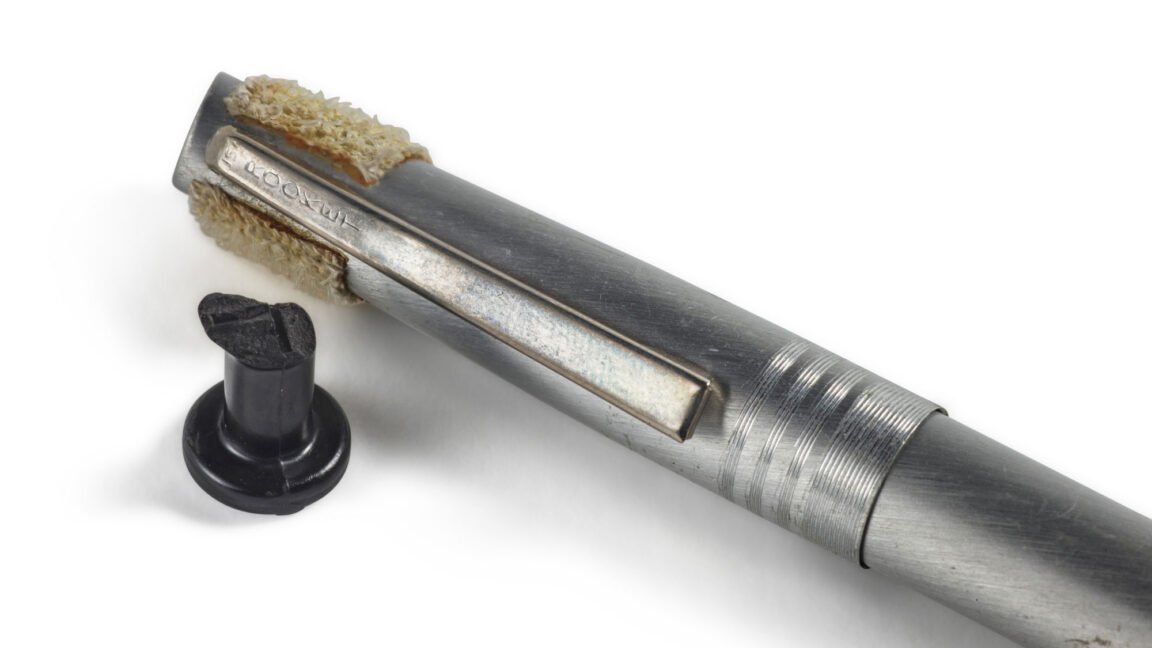
A dried-out marker and a broken circuit breaker switch from the Apollo 11 mission fetched a staggering sum at a Sotheby's auction.
Key Takeaways
- A felt-tip marker and a plastic switch from the Apollo 11 mission sold for $857,600.
- These items were critical to the survival of Neil Armstrong and Buzz Aldrin on the Moon.
- The auction took place at Sotheby's, highlighting the immense value of space exploration artifacts.
In the realm of space exploration, certain objects transcend their physical form to become icons of human achievement. During a recent high-profile auction at Sotheby's, a dried-out felt-tip marker and a snapped-off piece of molded black plastic commanded an incredible price of $857,600. While they might appear to be mere debris, these items carried the weight of history, having been aboard NASA's Apollo 11 spacecraft during humanity's first lunar landing.
A Crisis on the Lunar Surface
The true value of these items lies in the life-or-death drama they witnessed 57 years ago. During the mission, Neil Armstrong and Buzz Aldrin faced a terrifying technical failure: the circuit breaker switch required to ignite their ascent engine had broken off. Without this switch, the astronauts would have been stranded on the lunar surface, unable to launch their ascent module back to Earth.
The Moment That Saved the Mission
The tension of that moment is preserved in the mission transcripts. Buzz Aldrin famously radioed Mission Control, asking for guidance on the broken configuration. The simple tools at their disposal—including the marker and the broken switch components—became the focal points of a desperate attempt to save the mission. This incident serves as a stark reminder of how thin the margin for error was during the early days of spaceflight.
The Legacy of Apollo 11
While the sale did not shatter global auction records, the premium paid by collectors underscores the enduring legacy of the Apollo program. These artifacts are not just pieces of plastic and ink; they are tangible connections to a moment when human ingenuity overcame the most hostile environments imaginable. For historians and space enthusiasts, such items represent the pinnacle of 20th-century scientific triumph.