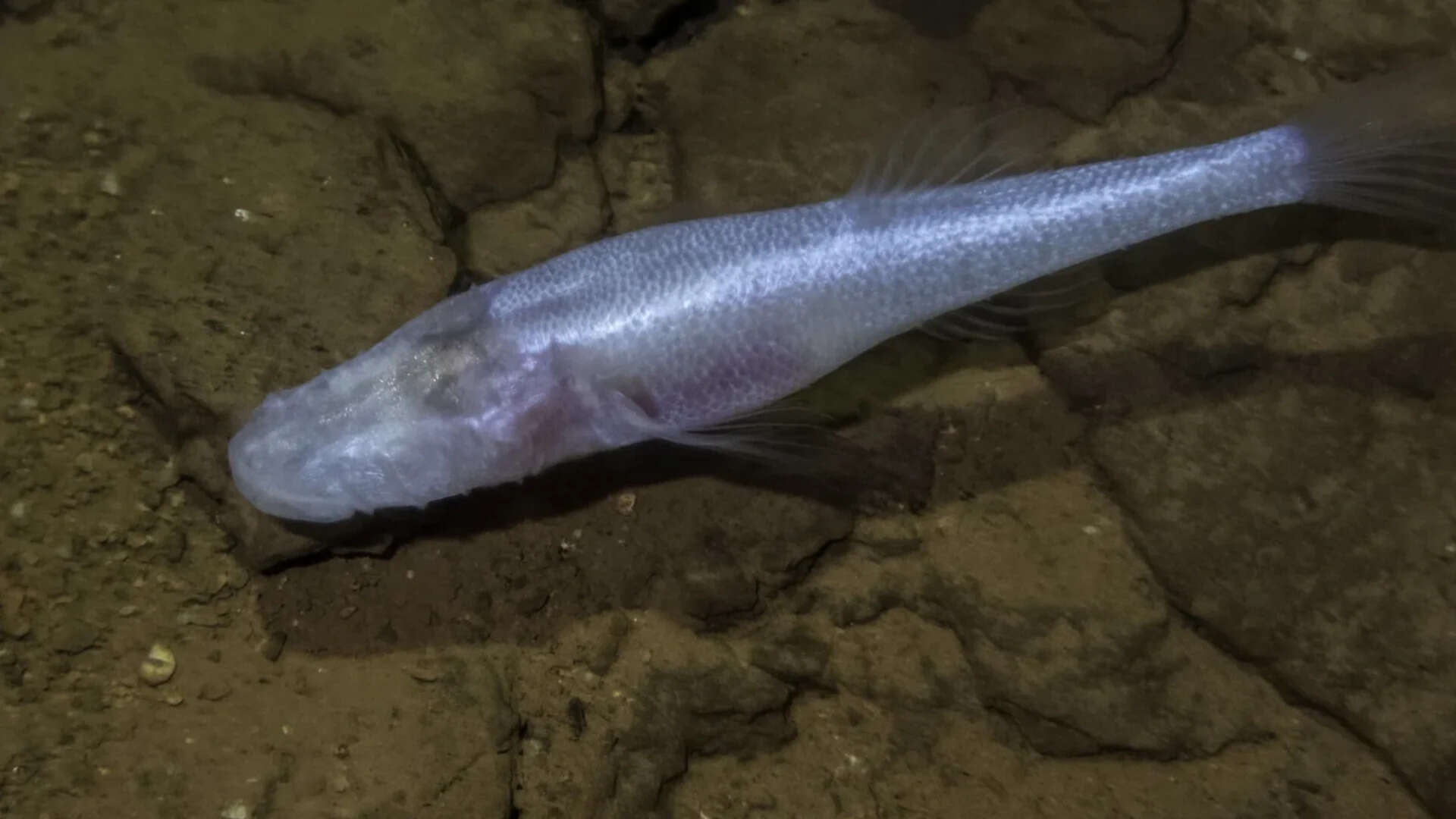
A scientist has identified a new blind fish species in Bobcat Cave, named the ‘Demon Cavefish’ after a popular TV character. The creature thrives in total darkness and coexists with another sightless predator, highlighting unique wildlife beneath human-made structures.
Key Takeaways
- New blind fish species identified in Bobcat Cave
- Named ‘Demon Cavefish’ after a TV series character
- Special adaptations for surviving in complete darkness
Deep beneath a United States military installation, researcher Dr. Alex Johnson discovered a previously unknown blind fish species in the subterranean water body known as Bobcat Cave. Dubbed the “Demon Cavefish” in homage to a character from the hit TV series “Demon Slayer,” the find expands the catalog of subterranean biodiversity and underscores the extraordinary adaptability of life in human‑altered environments.
Scientific Context and Importance
Bobcat Cave, formed within the concrete basins of an old military base, has long been an isolated ecosystem, shielded from sunlight and surface disturbances. Species that inhabit such aphotic zones undergo profound evolutionary changes, notably the loss of eyes and pigment. These adaptations provide a living laboratory for evolutionary biologists studying regressive evolution and sensory compensation.
Distinctive Features of the Demon Cavefish
The Demon Cavefish is characterized by complete ocular regression and an almost translucent, pigment‑free skin that renders it invisible in the dim waters. It compensates with heightened mechanosensory abilities—detecting minute water currents and vibrations to locate prey and navigate its environment. Such traits are emblematic of troglobitic organisms that have spent millennia in perpetual darkness.
Co‑habitation with Another Blind Predator
Intriguingly, the cavefish shares its habitat with a previously documented blind eel‑like predator, the “Blind Ember Moray.” Together, they form a tightly knit trophic network where each species’ survival is intricately linked to the other’s presence. This symbiotic relationship offers rare insight into how multiple blind species coexist and maintain ecological balance in confined subterranean ecosystems.
Future Research Directions and Conservation Implications
The discovery opens several avenues for further investigation, including genomic sequencing to uncover the genetic basis of eye loss, reproductive studies to understand population dynamics, and biochemical analyses for potential pharmaceutical compounds. Moreover, the find raises urgent conservation questions: how to protect such fragile, undocumented habitats when they lie beneath active military sites. Collaborative efforts between scientists, the Department of Defense, and conservation NGOs will be essential to safeguard these hidden treasures.