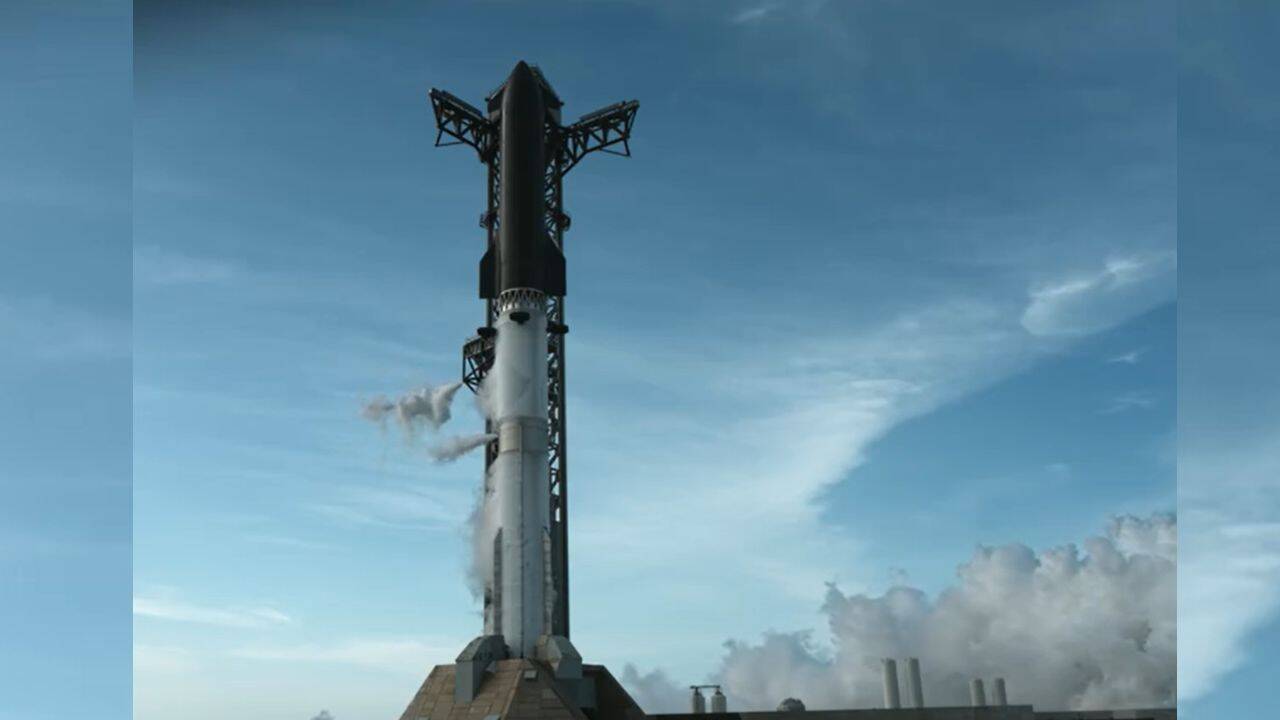
SpaceX’s Starship rocket halted its 13th flight test just moments before the scheduled launch from Texas. A Raptor engine issue triggered an automatic abort, pushing the mission back by at least a day while engineers investigate.
मुख्य बिंदु (Key Takeaways)
- Starship’s 13th test aborted due to engine startup failure
- Raptor engines ignited briefly then shut down
- Next launch window expected within the coming days
SpaceX called off the launch of its flagship Starship rocket less than a second before the planned 6:45 p.m. ET liftoff from Starbase, Texas. The automated scrub was triggered when several Raptor engines failed to start, prompting an immediate shutdown of the vehicle. Elon Musk posted on X, “Some of the engines didn’t start, triggering an automatic launch abort. Now offloading propellant. Next launch attempt hopefully in a few days.”
Technical Background
Starship, the world’s largest and most powerful fully reusable launch system, is designed to ferry astronauts and cargo to the Moon and eventually Mars. Its Raptor engines, powered by liquid methane and liquid oxygen, produce roughly 2 MN of thrust each. During the 13th test, the engines ignited successfully but the control system detected an anomaly and cut them off within seconds – a pattern often linked to fuel‑pump irregularities or sensor feedback loops.
Implications of the Delay
SpaceX has announced a 24‑hour hold to analyse telemetry, off‑load propellant safely, and determine corrective actions. The delay adds to a series of postponements that have already stretched the Starship schedule, but it also reflects a disciplined safety-first approach. Successful completion of the test series is critical for NASA’s Artemis program, which plans to use Starship for lunar landings as early as 2027.
Expert Perspective
Aerospace analysts note that such aborts, while inconvenient, are a normal part of developing breakthrough technology. Repeated iterative testing helps iron out the complex interplay of engine performance, software control, and structural loads. However, persistent setbacks could strain investor confidence and intensify competition with other emerging launch providers.