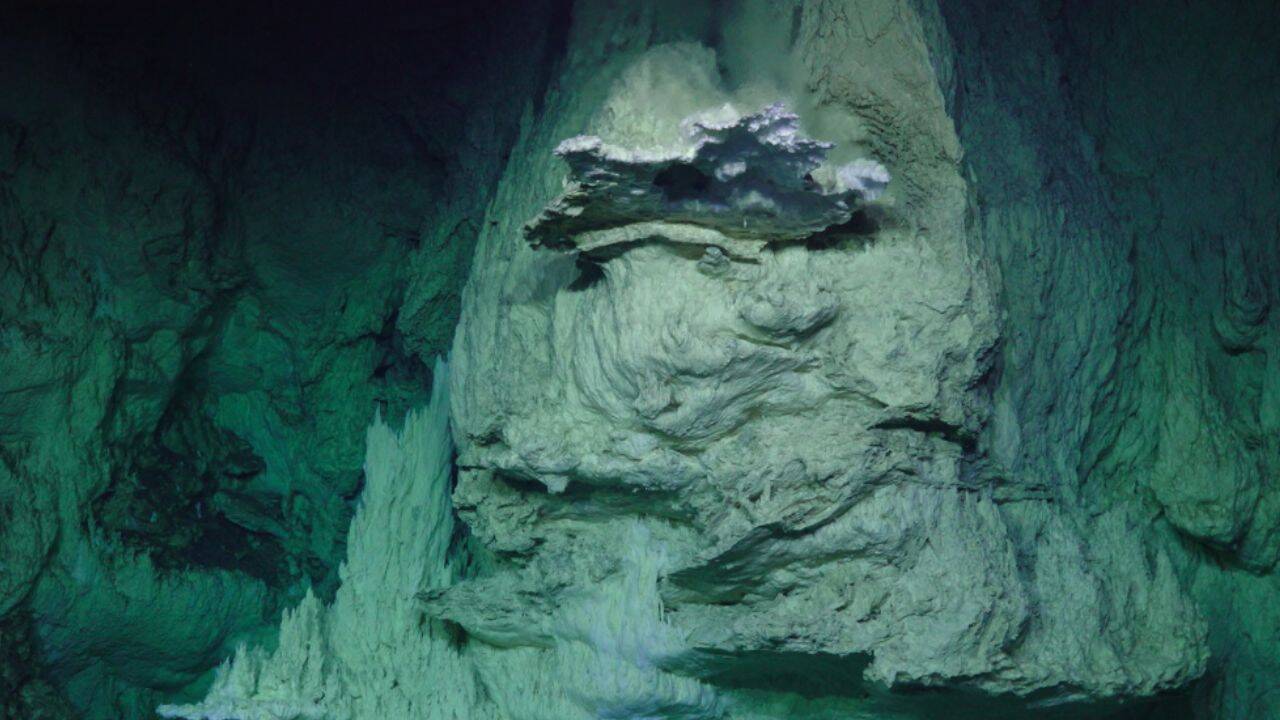
Scientists have identified superheated water 1.3 km beneath the Atlantic seafloor, chemically akin to fluids from the Lost City hydrothermal vent. The finding points to a hidden, hydrogen‑rich energy source that could sustain life without sunlight and informs the search for extraterrestrial biosignatures.
मुख्य बिंदु (Key Takeaways)
- Discovery of superheated water at 1.3 km depth
- Chemical similarity to Lost City vent fluids
- Potential hidden energy source for sunless ecosystems
Researchers probing the Atlantic ocean floor have uncovered a previously unknown layer of superheated water roughly 1.3 km beneath the seabed. This fluid not only exhibits extreme temperatures but also mirrors the chemical signature of the famed Lost City hydrothermal vent, a system long celebrated for its hydrogen‑rich, methane‑laden emissions.
Background: The Lost City Vent
The Lost City vent, located on the Mid‑Atlantic Ridge, has been a focal point for deep‑sea microbiology because its effluents are dominated by hydrogen, methane, and a suite of organic compounds that support chemosynthetic life. Over the past two decades, studies have shown that microorganisms can thrive solely on chemical energy derived from these fluids, bypassing the need for sunlight. The new discovery extends this paradigm deeper into the Earth’s crust, suggesting that similar chemolithoautotrophic habitats may be more widespread than previously imagined.
A Hidden Hydrogen‑Rich Energy Reservoir
The identified water column appears to be a concealed source of hydrogen‑rich fluid, capable of driving redox reactions that power microbial metabolism. Such a chemical energy reservoir could sustain a hidden biosphere, providing a plausible explanation for the myriad of unknown life forms detected in deep‑sea drilling projects. Moreover, the parallels with extraterrestrial environments—such as the subsurface oceans of icy moons like Europa and Enceladus—make this finding a vital analogue for astrobiology.
Implications for Astrobiology and Earth’s Deep Biosphere
By demonstrating that sunless ecosystems can be powered by deep‑seated, hydrogen‑laden waters, the research reshapes our expectations of where life might exist beyond Earth. If similar hydrothermal systems are present on other planetary bodies, the probability of detecting biosignatures in future space missions increases dramatically. On Earth, the discovery prompts a re‑evaluation of the global carbon and hydrogen cycles, as well as the potential for undiscovered metabolic pathways.
Future Research Directions
Scientists are now planning targeted geochemical surveys, high‑resolution seismic imaging, and autonomous submersible sampling to map the extent of this hidden fluid plume. Interdisciplinary collaborations will aim to isolate resident microbes, characterize their metabolic strategies, and model the energy fluxes that sustain them. Such efforts will not only illuminate the deep biosphere’s complexity but also guide the design of instruments for detecting analogous habitats on other worlds.