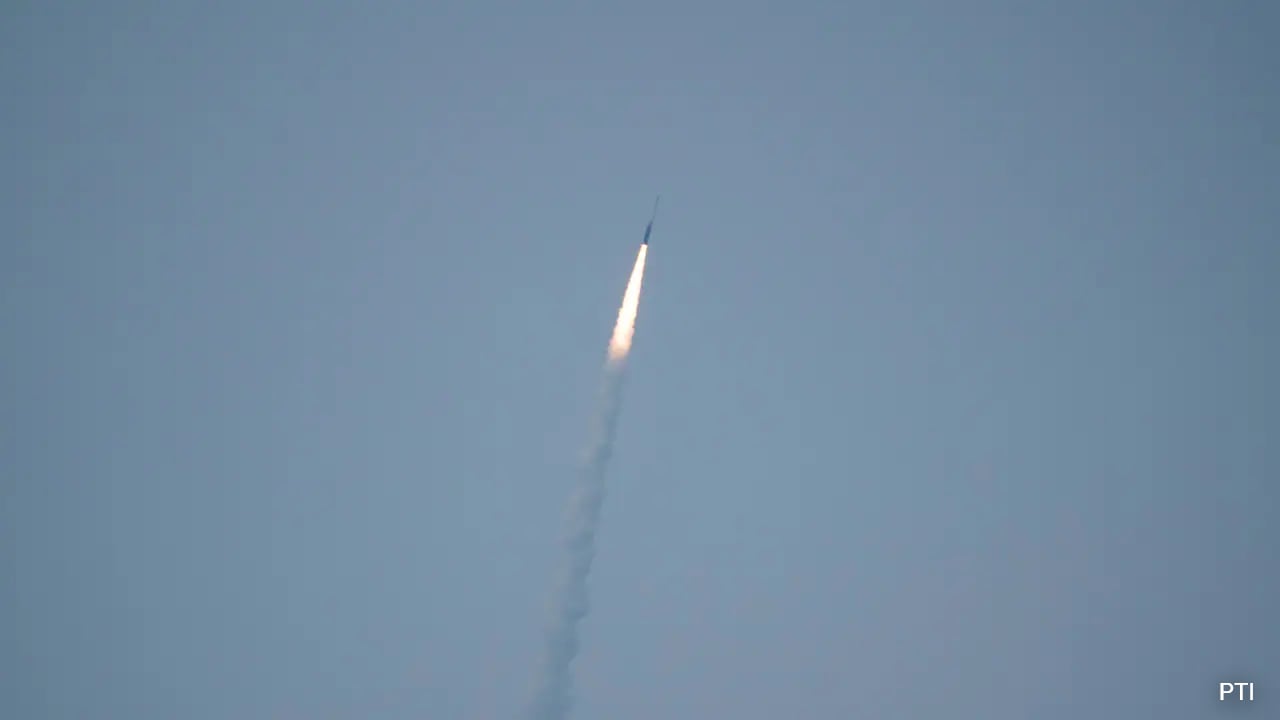
Skyroot Aerospace has created history with the successful launch of its Vikram-1 rocket (Mission Aagaman) from Sriharikota. This milestone marks a revolutionary leap forward for India's rapidly expanding private space sector.
Key Takeaways
- Skyroot Aerospace successfully launched its Vikram-1 rocket under 'Mission Aagaman'.
- The rocket achieved its objective by successfully deploying payloads into space from Sriharikota.
- This launch marks a historic milestone for India's rapidly expanding private space sector.
A glorious new chapter has been written in India's private space exploration journey. Hyderabad-based space-tech startup Skyroot Aerospace has successfully launched its highly anticipated Vikram-1 rocket from Sriharikota. Flying under 'Mission Aagaman', the rocket successfully released its payloads into space. The company has declared the mission a "grand success," sparking widespread celebration across the nation's aerospace industry.
Historical Background
For decades, India's space sector was exclusively managed by the state-run Indian Space Research Organisation (ISRO). However, in 2020, the Indian government introduced landmark reforms, opening up the space sector to private enterprises. Skyroot Aerospace proved its capabilities in November 2022 by launching 'Vikram-S', India's first privately developed rocket. Now, with the successful deployment of Vikram-1, Skyroot has solidified India's position in the global commercial satellite launch market.
| Feature | ISRO (Public Sector) | Skyroot (Private Sector) |
|---|---|---|
| Primary Focus | National missions & deep-space scientific research | Commercial satellite launches & on-demand services |
| Rocket Fleet | PSLV, GSLV, LVM3 | Vikram Series (Vikram-1, 2, 3) |
| Launch Cost | Moderate to High | Highly cost-effective and customized |
Why This Matters
According to BozokMedia analysis, the success of Vikram-1 is poised to exponentially increase India's share in the multi-billion-dollar global commercial satellite launch market. Previously, global entities launching small satellites had to rely on heavy-lift rockets, resulting in high costs and long waiting periods. Skyroot's on-demand launch model offers global startups and research institutions rapid, cost-effective access to space.
Furthermore, this milestone bolsters India's domestic defense and technology ecosystem. The influx of private space players is set to generate high-tech employment opportunities and attract significant foreign direct investment (FDI). This is a monumental step toward self-reliance, positioning India as a primary hub for the global space economy.
"The successful launch of Vikram-1 is not just a rocket flight; it is definitive proof that the Indian private sector is ready to lead the global space race."
Frequently Asked Questions
Q1: What is the primary feature of the Vikram-1 rocket?
A1: Vikram-1 is a multi-stage, solid-propellant rocket specifically designed to deploy small satellites into Low Earth Orbit (LEO) rapidly and at a fraction of traditional costs.
Q2: What is 'Mission Aagaman'?
A2: 'Mission Aagaman' is a pivotal mission by Skyroot Aerospace aimed at demonstrating the commercial viability of the Vikram-1 rocket by successfully placing payloads into space.