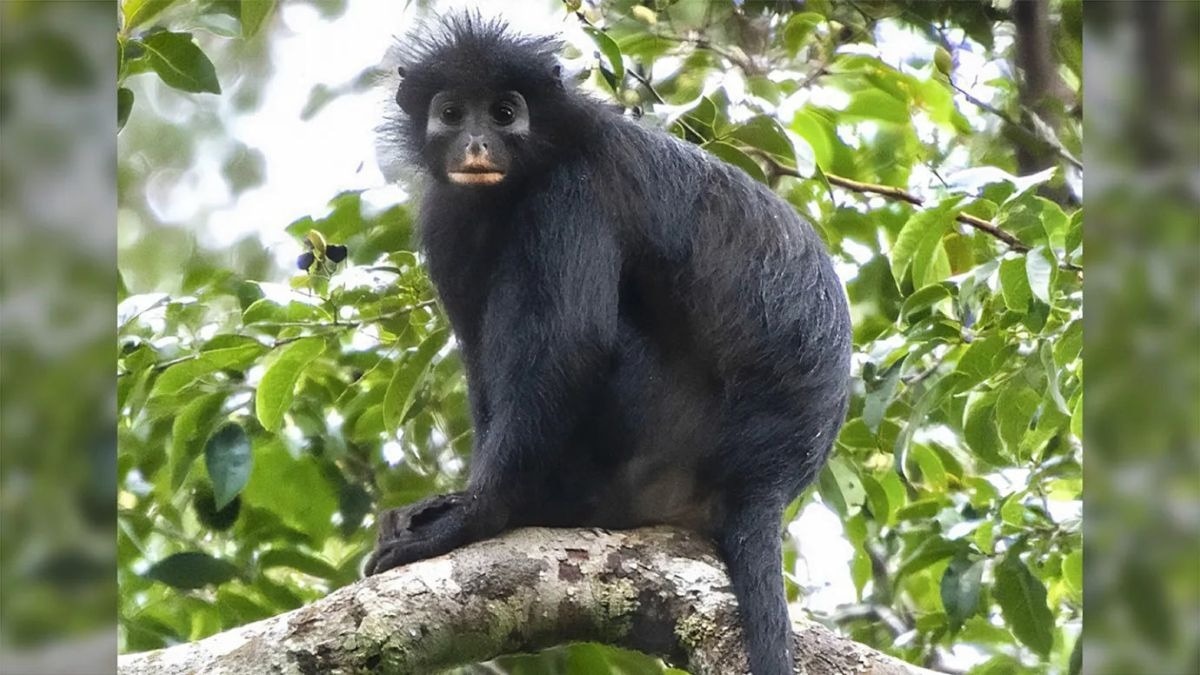
Scientists have uncovered a brand‑new primate species, Likweli, in the Congo rainforest. Its striking orange lips set it apart from all known monkeys, sparking excitement across the zoological community.
Key Takeaways
- New primate species named Likweli
- Distinctive orange lips
- Located in Congo’s dense rainforest
An international research team has officially described Likweli, a previously unknown monkey species discovered deep within Congo’s tropical forest. The animal’s bright orange lips made it instantly recognizable, prompting a wave of scientific intrigue.
Lead primatologist Dr. Elena Moreno and her colleagues conducted extensive fieldwork throughout 2025, collecting high‑resolution photographs and DNA samples. Laboratory analysis confirmed that Likweli does not fit into any existing genus, confirming its status as a completely new species.
Habitat studies show Likweli thrives in the mid‑eastern Congo basin, feeding on fruit, nuts, and small insects. The species lives in tight‑knit social groups, offering fresh insights into primate social dynamics and adaptation.
Historical Background
Over the past two decades, African monkey taxonomy has undergone several revisions, yet no discovery has introduced a primate with such a distinct morphological trait. Likweli’s emergence forces a re‑examination of long‑standing classification frameworks.
Why This Matters
BozokMedia analysis shows that new‑species discoveries not only expand our understanding of biodiversity but also shape conservation priorities. Likweli’s presence strengthens the case for heightened protection of Congo’s forests, potentially unlocking additional international funding.
“The orange‑lipped Likweli could be the key to unlocking hidden chapters of African primate evolution.” – Dr. Marco, Primatologist
Frequently Asked Questions
Q: Has Likweli been officially classified?
A: Yes, the International Primatological Society recognized it as a new species in 2026.
Q: What conservation steps are being taken?
A: Local NGOs and global wildlife groups are drafting proposals to designate its habitat as a protected reserve.