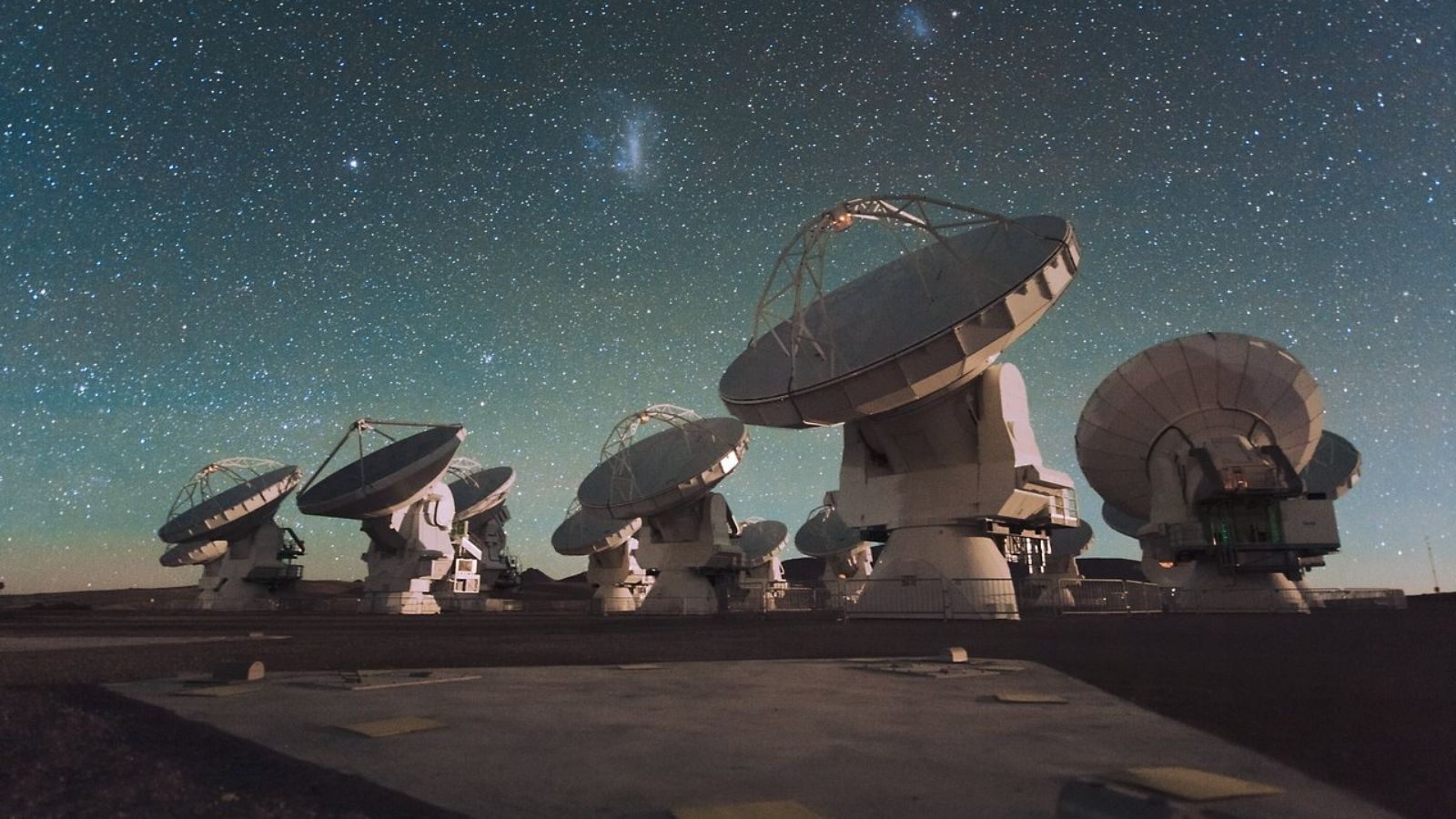
New research reveals that radio telescopes have unknowingly surveyed over 6 million stars, vastly expanding the scope of our search for extraterrestrial intelligence.
Key Takeaways
- Radio telescopes have surveyed over 6.1 million stars, far exceeding previous estimates.
- Previous calculations suggested only ~288,000 stars were covered.
- The expansion is due to radio telescopes capturing signals from faint stars invisible to optical catalogs.
- Research is now shifting toward unexplored high-frequency radio bands using ALMA.
The search for extraterrestrial intelligence (SETI) may have just received a massive, unexpected boost. New research indicates that astronomers have unknowingly surveyed a much larger portion of the Milky Way than previously believed, potentially placing us much closer to detecting alien technosignatures.
A re-analysis by Louisa Mason, a researcher from the University of Manchester, has fundamentally changed our understanding of previous observations. By examining data from the Green Bank and Parkes radio telescopes, Mason discovered that the observations covered more than 6.1 million stars. This stands in stark contrast to earlier estimates, which relied on optical star catalogues and suggested only about 288,315 stars had been observed.
Why This Matters
BozokMedia analysis shows that this discrepancy arises from the fundamental nature of radio astronomy. Unlike optical telescopes that rely on visible light, radio telescopes capture signals from every object within their field of view. This includes countless dim stars that are too faint to appear in traditional optical catalogues like the ESA’s Gaia mission but are perfectly capable of emitting detectable radio signals.
"Even a very small observation can contain a huge number and diversity of stars that we might never have intended to study," says Louisa Mason.
For decades, the SETI community has focused heavily on the 'water-hole' frequencies (between 1,420 MHz and 1,666 MHz), a region considered ideal due to its relationship with the hydrogen line and the symbolic importance of water for life. However, this narrow focus may have caused scientists to overlook signals in other parts of the spectrum.
To remedy this, researchers are now utilizing the Atacama Large Millimeter/submillimeter Array (ALMA) in Chile. This advanced facility allows scientists to probe much higher radio frequencies, opening up entirely new 'parameter spaces' that have remained almost completely unexplored for the search for alien civilizations.
Comparison: Previous vs. Revised Estimates
| Metric | Previous Estimate | New Research Findings |
|---|---|---|
| Total Stars Surveyed | ~288,315 | >6,100,000 |
| Data Source Basis | Optical Star Catalogues | Radio Telescope Field of View |
| Search Scope | Narrow/Targeted | Extensive/Commensal |
Frequently Asked Questions
1. Have we found aliens yet?
No. While the search area has increased significantly, no definitive technosignatures or signals from alien civilizations have been detected so far.
2. Why use radio telescopes instead of regular telescopes?
Radio telescopes can detect signals from extremely dim stars and through cosmic dust, providing a much broader view of the galaxy's potential inhabitants.