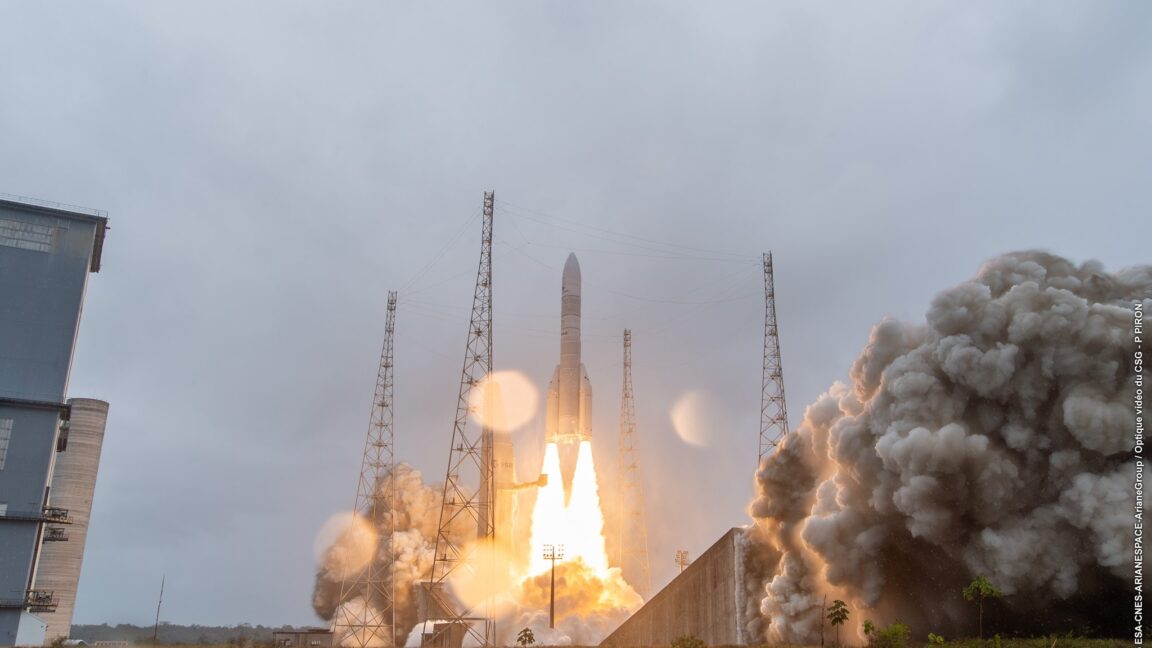
Despite a successful track record of eight safe missions, Europe's Ariane 6 rocket faces an uncertain future as planned upgrades are scrapped due to mounting costs. The decision highlights the growing economic tension in the global space race.
- Planned technical upgrades for the Ariane 6 rocket have been halted.
- The rocket has successfully completed eight missions to orbit since its debut.
- High operational costs are the primary driver behind the cancellation of upgrades.
The European space sector is facing a strategic dilemma. While the Ariane 6 rocket has proven its reliability with eight successful missions in its first two years, the decision to cancel planned upgrades marks a significant setback for the program's long-term evolution. The core issue remains the staggering cost of maintaining a competitive launch capability.
The Ariane 6 is a heavy-lift, expendable launch vehicle capable of carrying over 20 metric tons to Low-Earth Orbit (LEO). Interestingly, European engineers have achieved a remarkably smooth rollout compared to their American counterparts. While Blue Origin’s New Glenn and United Launch Alliance’s Vulcan rockets have struggled with significant developmental growing pains, Ariane 6 has demonstrated immediate orbital success.
Why This Matters
BozokMedia analysis shows that the space industry is shifting from a purely scientific frontier to a high-stakes commercial battlefield. For Europe to maintain strategic autonomy, it must solve the economic equation of launch services. Success in orbit means little if the price per kilogram remains uncompetitive against private entities like SpaceX.
Technical reliability is a prerequisite, but economic sustainability is the ultimate decider in the modern space race.
Historically, the Ariane program has been the cornerstone of European sovereignty in space. By providing independent access to orbit, Europe avoids reliance on foreign nations. However, the current financial constraints threaten to erode this very independence, potentially leaving Europe vulnerable to market shifts dominated by reusable rocket technology.
Comparison: Ariane 6 vs. US Competitors
| Rocket Name | Manufacturer | Initial Performance | Primary Challenge |
|---|---|---|---|
| Ariane 6 | Arianespace | Highly Successful/Smooth | High Operational Costs |
| New Glenn | Blue Origin | Developmental Issues | Technical Maturity |
| Vulcan | ULA | Developmental Issues | Launch Reliability |
Frequently Asked Questions
1. Why were the Ariane 6 upgrades cancelled?
The primary reason cited is the high cost associated with the upgrades and the overall economic pressure on the program.
2. Is the Ariane 6 rocket still considered reliable?
Yes, the rocket has a 100% success rate across its initial eight missions, proving its technical stability.