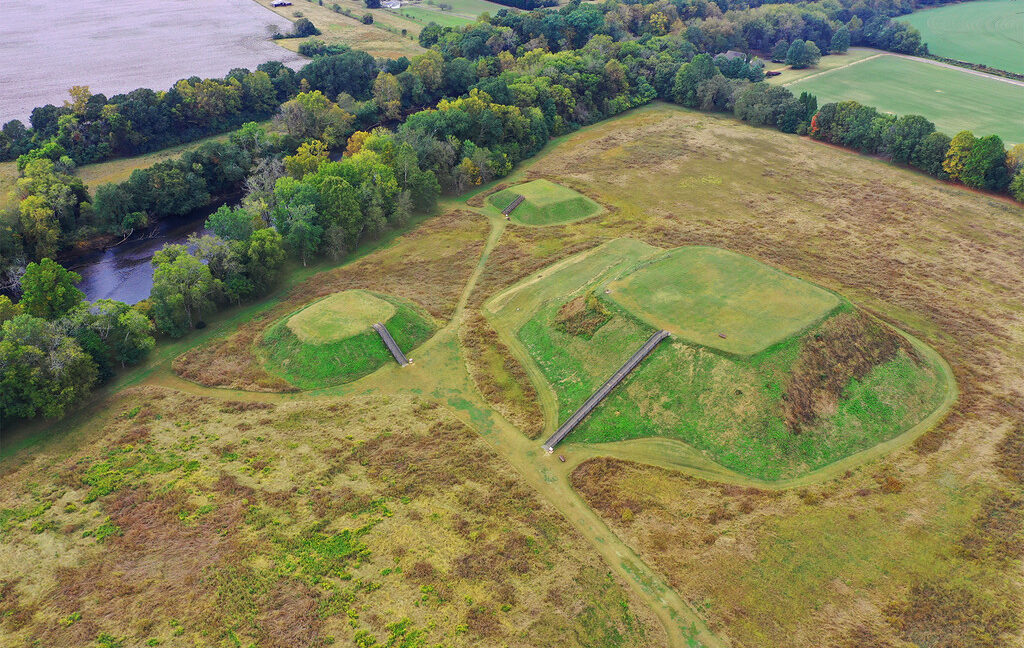
Archaeologists have discovered cacao residues in 11th-century pottery at Etowah, Georgia, proving ancient Mississippian people had trade links spanning 3,000 km to Central America.
- Cacao residues were found in 11th-century pottery shards at Etowah, Georgia.
- The presence of cacao proves trade connections reaching 3,000 km to Central America.
- The discovery highlights the sophisticated economic networks of the Mississippian people.
A thousand years ago, the feasts held in the ancient Indigenous city of Etowah—located just north of modern-day Atlanta, Georgia—featured a luxury ingredient we know well today: cacao. Recent archaeological findings have revealed that the Mississippian people were not just skilled builders, but also connoisseurs of exotic flavors.
Adam King, an archaeologist from the University of South Carolina, along with his colleagues, identified ancient DNA fragments from Theobroma cacao embedded in the inner surfaces of discarded potsherds. These fragments were left behind after feasts dating back to the 11th century.
A Continent-Spanning Trade Network
The presence of cacao is a geological and botanical marvel for the region. Since cacao trees only thrive in tropical climates, the nearest source would have been at least 3,000 kilometers away from the woodlands of the eastern United States. This implies the existence of highly organized, long-distance trade routes that spanned much of the continent.
The discovery of cacao in Georgia rewrites our understanding of pre-Columbian economic complexity and intercontinental connectivity.
Why This Matters
BozokMedia analysis shows that this discovery transcends mere culinary history. The ability to procure luxury goods from such vast distances suggests a highly stratified and economically stable society. It is highly probable that the wealth generated through such extensive trade networks provided the resources necessary to construct the massive Mississippian mounds that define the era.
Historically, the Mississippian culture is celebrated for its complex social hierarchies and monumental architecture. The integration of tropical goods like cacao into their diet provides a new lens through which to view their economic power and cultural sophistication.
Frequently Asked Questions
Question 1: Where exactly was the cacao found?
Answer: The residues were found inside ancient pottery shards at the Etowah site in Georgia.
Question 2: How far did the trade routes extend?
Answer: The trade routes likely stretched at least 3,000 kilometers to reach Central America.