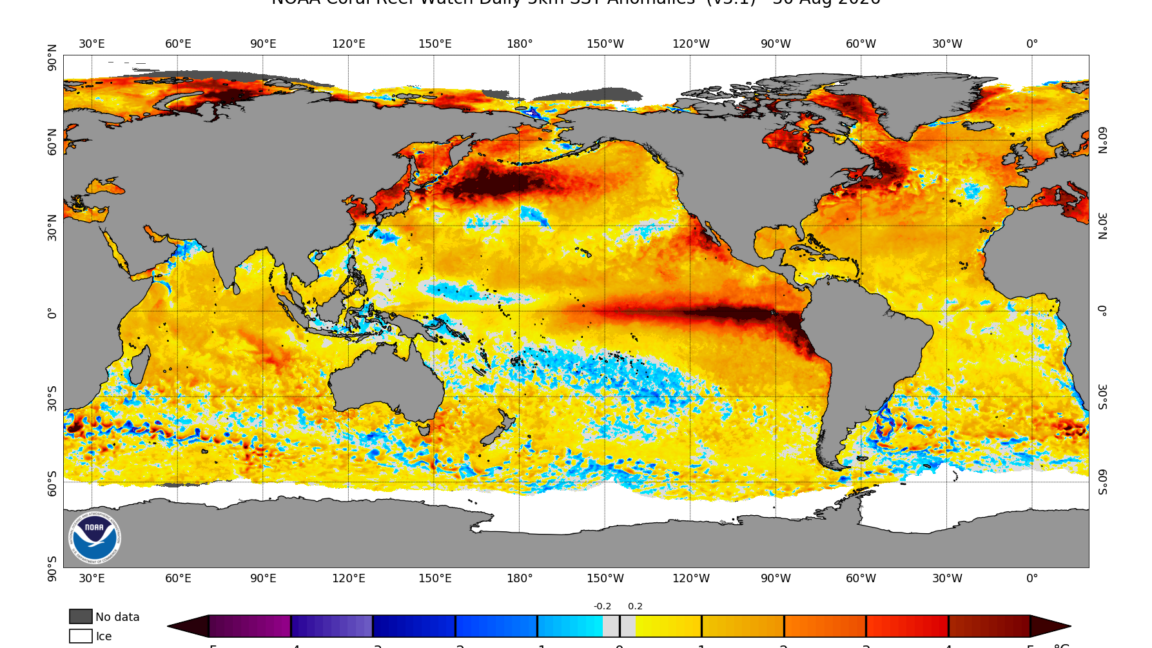
A groundbreaking study using fossilized corals reveals that modern El Niño events are more intense than any seen in a millennium, signaling a dangerous synergy with global warming.
- Modern El Niño events are the most intense in the last 1,000 years.
- Researchers used fossilized Galápagos corals to reconstruct ancient ocean temperatures.
- Global warming is likely amplifying the natural swings of the ENSO system.
The El Niño-Southern Oscillation (ENSO) is the Earth's most significant source of year-to-year climate variability. This complex system, characterized by the alternating warm phase (El Niño) and cool phase (La Niña), dictates rainfall patterns across the tropics, causes severe droughts in Australia, and triggers catastrophic flooding in Peru. While these swings are natural, recent data suggests they are becoming increasingly volatile.
For decades, scientists have debated whether anthropogenic global warming is intensifying these cycles. While the late 20th and early 21st centuries witnessed several powerful El Niño events, existing instrumental data—which only spans a few decades—was insufficient to determine if these were statistical anomalies or part of a broader, warming-induced trend.
The Role of Fossilized Corals
To bridge this data gap, Julie Cole, an environmental scientist at the University of Michigan, and her team turned to nature's own archives. By analyzing fossilized corals from the Galápagos Islands, the researchers were able to reconstruct ocean surface temperature records stretching back a thousand years. Corals act as biological recorders, trapping chemical signatures that reflect the water temperature at the time of their growth.
"We've been seeing some very strong El Niño events in the late 20th and early 21st century, and what we didn't know was how unusual those are."
Why This Matters
BozokMedia analysis shows that the amplification of El Niño is not merely a meteorological curiosity but a systemic threat to global food security and infrastructure. When the ENSO system's swings are superimposed on a baseline of steadily rising global temperatures, the resulting weather extremes—such as heatwaves and super-storms—become far more lethal and unpredictable.
The energy surplus currently trapped in our atmosphere and oceans acts as fuel for these events. As the ocean absorbs more heat, the temperature gradient between the eastern and western Pacific shifts more dramatically, leading to the "super El Niños" observed in recent years.
| Feature | Natural ENSO Cycle | Climate-Amplified ENSO |
|---|---|---|
| Frequency | Periodic/Cyclical | Potentially more erratic |
| Intensity | Moderate to High | Unprecedented/Extreme |
| Global Impact | Regional weather shifts | Systemic global climate disruption |
Frequently Asked Questions
Q1: How does El Niño differ from global warming?
El Niño is a natural short-term climate pattern, whereas global warming is a long-term increase in the Earth's average temperature due to greenhouse gases.
Q2: Why are fossilized corals used for this research?
Because instrumental records (thermometers) haven't existed for 1,000 years, corals provide a chemical proxy to estimate ancient sea temperatures.