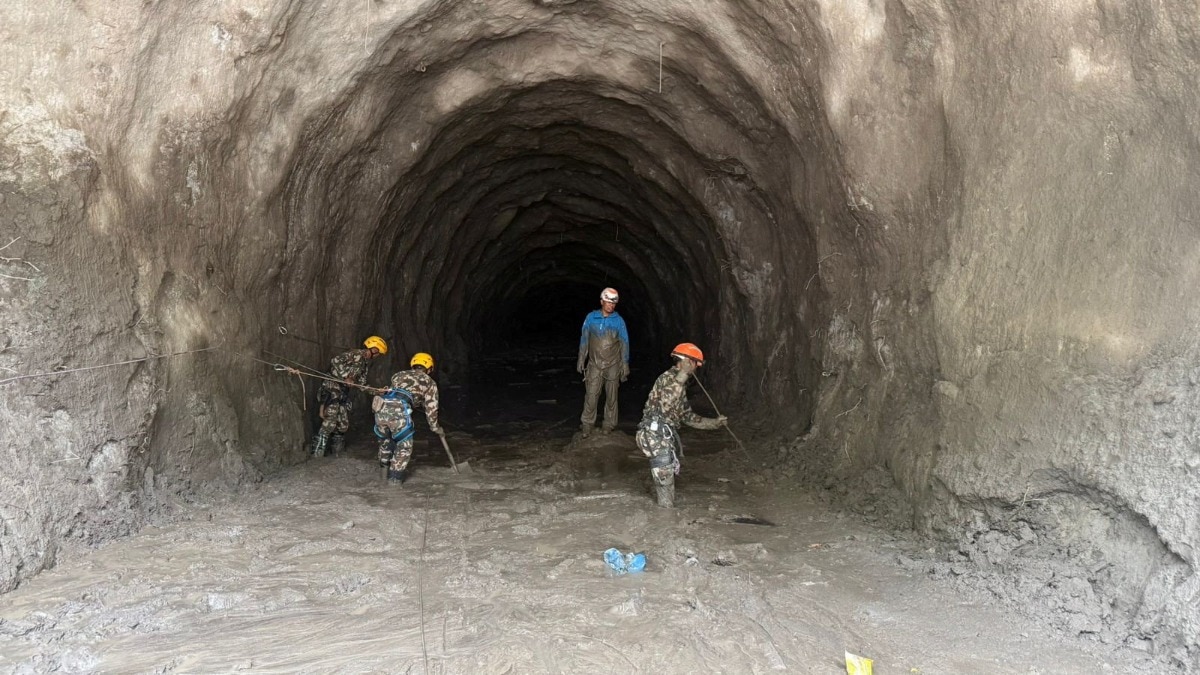
As rescue operations continue for missing workers in Nepal's hydropower tunnels, science reveals the harrowing toll that oxygen deprivation, hypothermia, and isolation take on the human body.
- Oxygen depletion and CO2 buildup lead to confusion, dizziness, and eventual unconsciousness.
- Dehydration occurs despite being surrounded by water due to the toxicity of floodwater.
- Hypothermia and extreme psychological stress significantly reduce survival windows.
The catastrophic flash floods in Nepal on August 26 have turned hydropower project tunnels into death traps, burying hundreds of workers under layers of mud and debris. While rescue teams employ thermal drones and specialized gear, the situation prompts a critical scientific inquiry: how does the human body and brain react when trapped underground for prolonged periods?
The Battle for Breath: Oxygen and CO2
Once a tunnel entrance is sealed by debris, the environment becomes a ticking clock. Survival depends heavily on the tunnel's volume and existing ventilation shafts. As trapped individuals consume the limited oxygen, carbon dioxide levels rise. This hypercapnia leads to acute headaches, disorientation, and respiratory distress. In sealed chambers, the transition from confusion to unconsciousness can happen rapidly, making air quality the primary determinant of survival.
Why This Matters
BozokMedia analysis shows that the lack of redundant ventilation systems in remote hydropower projects creates a 'single point of failure.' The ability to pump fresh air into a collapsed zone is often more critical than the physical extraction of the victims in the first few hours.
"The synergy of physical exhaustion and sensory deprivation in a tunnel environment can lead to a complete breakdown of cognitive function within hours."
The Paradox of Dehydration
One of the most cruel aspects of tunnel entrapment during floods is the abundance of undrinkable water. Floodwaters are typically contaminated with sewage, fuel, chemicals, and pathogens. Drinking this water can lead to severe gastrointestinal infections, accelerating dehydration. Since the brain and heart rely on precise fluid balance to function, dehydration leads to organ failure far quicker than starvation would.
Thermal Regulation and the Mind
Underground environments are naturally cool, and soaked clothing accelerates heat loss through conduction. This leads to hypothermia, where the core body temperature drops, causing shivering and eventually a loss of coordination. A similar pattern was observed during the 2021 Tapovan disaster in Uttarakhand, India. Simultaneously, the psychological impact of absolute darkness and isolation triggers a 'fight or flight' response, spiking cortisol levels and depleting precious caloric energy.
| Factor | Physiological Effect | Psychological Effect |
|---|---|---|
| Oxygen Deprivation | Hypoxia, Loss of consciousness | Confusion, Panic |
| Extreme Cold | Hypothermia, Muscle rigidity | Lethargy, Cognitive decline |
| Darkness/Isolation | Circadian rhythm disruption | Hallucinations, Severe Anxiety |
Frequently Asked Questions
Q1: Can a person survive by drinking floodwater in a tunnel?
A: It is highly dangerous. Contaminants in floodwater can cause severe illness, which further dehydrates the body and weakens the immune system.
Q2: What is the most critical factor for survival in these conditions?
A: Maintaining core body temperature and conserving oxygen by remaining calm and minimizing physical exertion are the most critical factors.