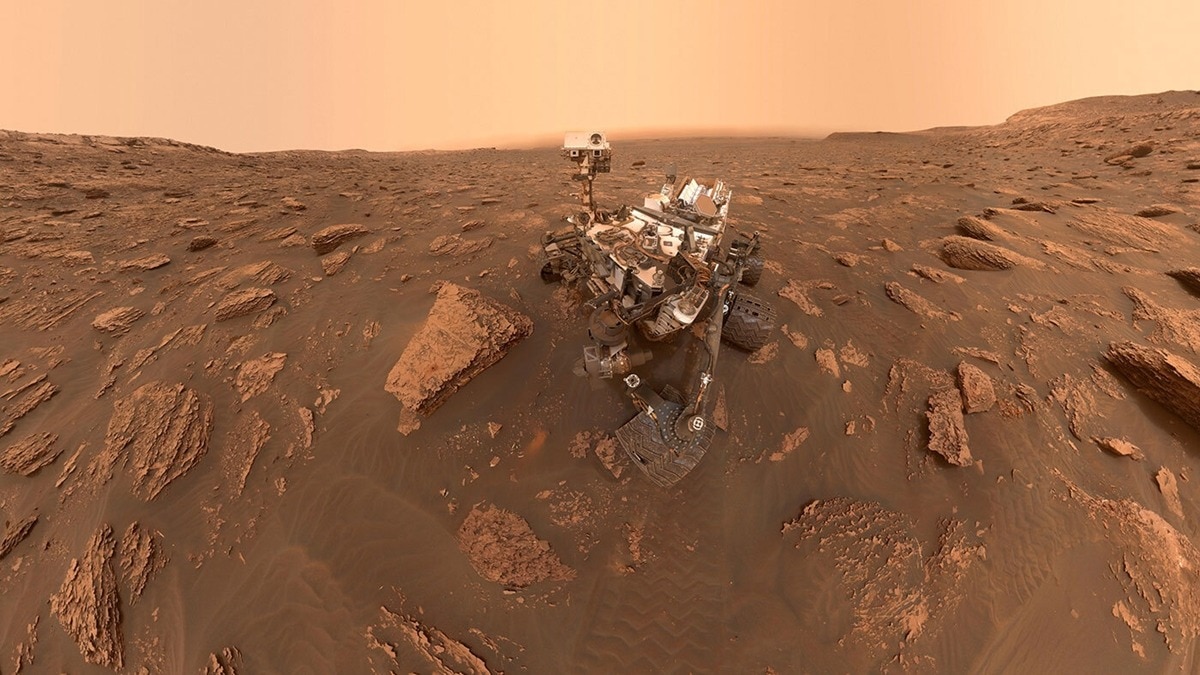
Originally designed for a 2-year mission, NASA's Curiosity rover has defied all odds to complete 5,000 Martian sols, marking 14 years of groundbreaking exploration on the Red Planet.
- Curiosity rover has officially surpassed the 5,000 'sol' milestone on Mars.
- The mission was originally intended to last only 700 days (2 years).
- The rover has been operating on Mars for nearly 14 years.
- It recently achieved a 1-kilometer elevation gain on Mount Sharp.
In the desolate and silent expanse of the Gale Crater, a lone explorer has just reached a monumental milestone. On August 30, 2026, NASA's Curiosity rover ticked over its 5,000th 'sol'—the Martian equivalent of a day. This achievement is not just a statistical triumph but a testament to the extraordinary engineering that has allowed a machine designed for a short stint to survive over a decade in one of the solar system's harshest environments.
What makes this feat truly staggering is the original mission scope. When Curiosity launched, its lifespan was projected to be a mere 2 years (roughly 700 sols). However, 14 years later, it continues to traverse the Martian terrain, sending back high-resolution data that continues to reshape our understanding of the Red Planet. Because a Martian 'sol' is approximately 40 minutes longer than an Earth day, 5,000 sols equate to nearly 14 Earth years of continuous operation.
The Perilous Journey to the Red Planet
The journey began on November 26, 2011, from Cape Canaveral. After an eight-month transit through deep space, Curiosity performed one of the most complex maneuvers in space history: the 'Sky Crane' landing. On August 6, 2012, a rocket-powered crane lowered the car-sized rover onto the Martian surface using cables, a high-stakes operation that successfully placed the rover within the Gale Crater.
Curiosity's longevity is a masterclass in resilient engineering, proving that our robotic emissaries can endure far beyond their design specifications.
Climbing Mount Sharp and Scientific Breakthroughs
Unlike other rovers built for speed, Curiosity was designed for deep chemical analysis. Its mission involves 'reading' the layers of Martian rock like the pages of an ancient history book. One of its most significant ongoing challenges is ascending Mount Sharp, a massive geological formation rising from the crater floor. Recently, the rover celebrated reaching a 1-kilometer elevation gain on this mountain.
The scientific dividends of this longevity have been immense. Within its first year, Curiosity discovered mudstone that provided evidence of ancient lakes, suggesting that Mars once possessed environments capable of supporting microbial life. It continues to probe the chemistry of the planet, searching for organic molecules and signs of past habitability.
Why This Matters
BozokMedia analysis shows that the extended lifespan of Curiosity provides critical data for future human colonization efforts. By understanding the long-term durability of electronics and power systems—specifically its plutonium-based heat source—NASA can better prepare for the logistical challenges of sending astronauts to Mars.
Frequently Asked Questions
1. How long was Curiosity originally supposed to stay on Mars?
The rover was originally designed for a 2-year mission, or approximately 700 Martian sols.
2. What is a 'Sol' on Mars?
A 'Sol' is a Martian day, which is slightly longer than an Earth day by about 40 minutes.


