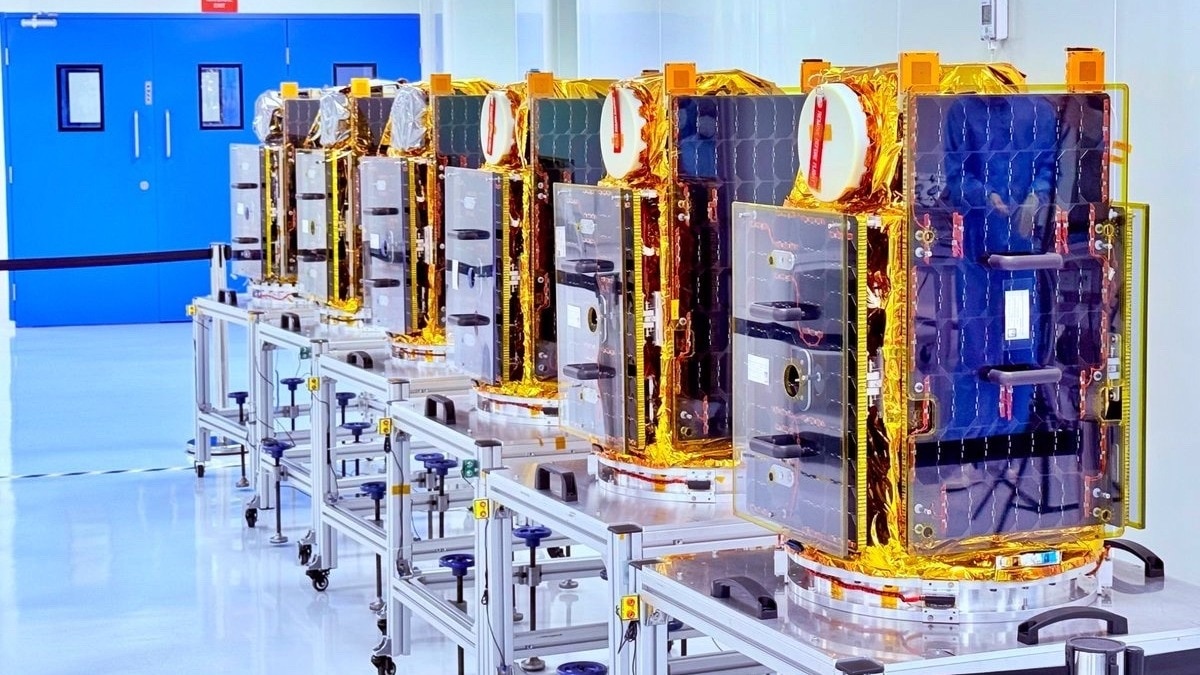
Bengaluru-based Pixxel has secured $100 million in Series C funding to expand its hyperspectral imaging capabilities into advanced sensing technologies and sovereign space systems.
- Pixxel raised $100M in Series C funding led by Temasek and Seraphim Space.
- The capital will fund the development of 'planetary infrastructure' and advanced Earth intelligence software.
- The company aims to transition from simple observation to providing actionable strategic intelligence.
In a landmark move for the Indian private space sector, Pixxel, a Bengaluru-based space technology startup, has raised $100 million in a Series C funding round. This capital injection is set to propel the company beyond its core hyperspectral Earth observation services into the realms of new sensing technologies, sophisticated software, and sovereign space systems.
The funding round saw strong leadership from Temasek and Seraphim Space, with significant participation from existing investors and new entries such as 360 ONE Asset and IMM Invest. This influx of capital underscores the growing global appetite for high-resolution planetary data.
Building a 'Health Monitor' for Earth
Founded seven years ago by Awais Ahmed and Kshitij Khandelwal while they were still students, Pixxel began with a visionary goal: creating a comprehensive health monitor for the planet. Unlike traditional satellites, Pixxel's hyperspectral sensors capture data across hundreds of narrow spectral bands, enabling the detection of chemical signatures and physical changes invisible to the human eye or standard cameras.
Why This Matters
BozokMedia analysis shows that Pixxel is strategically pivoting from being a data provider to becoming a critical infrastructure player. By integrating persistent sensing with AI-driven software, Pixxel is addressing a critical gap in global security and sustainability. In an era of climate volatility, the ability to monitor resources and infrastructure in real-time is no longer a luxury—it is a strategic imperative for national sovereignty.
"The coming decades will make understanding the physical world a strategic necessity, particularly regarding climate, resources, and national security." - Awais Ahmed, Founder of Pixxel.
Strategic Partnerships and Global Reach
Pixxel has already established a formidable track record, collaborating with elite organizations including NASA, the US National Reconnaissance Office, and the Indian Air Force. These partnerships highlight the dual-use potential of their technology, serving both commercial environmental needs and high-stakes governmental intelligence requirements.
The expansion coincides with India's liberalized space policies, which have opened the doors for private players to operate and launch satellites. Pixxel now intends to utilize the $100 million to build a larger constellation of satellites, ensuring constant coverage and higher temporal resolution of the Earth's surface.
Frequently Asked Questions
1. What is the difference between hyperspectral and multispectral imaging?
While multispectral imaging looks at a few wide bands of light, hyperspectral imaging captures hundreds of very narrow bands, providing a much more detailed spectral signature of the target.
2. Who are the primary investors in Pixxel's Series C round?
The round was led by Temasek and Seraphim Space, with participation from 360 ONE Asset and IMM Invest.