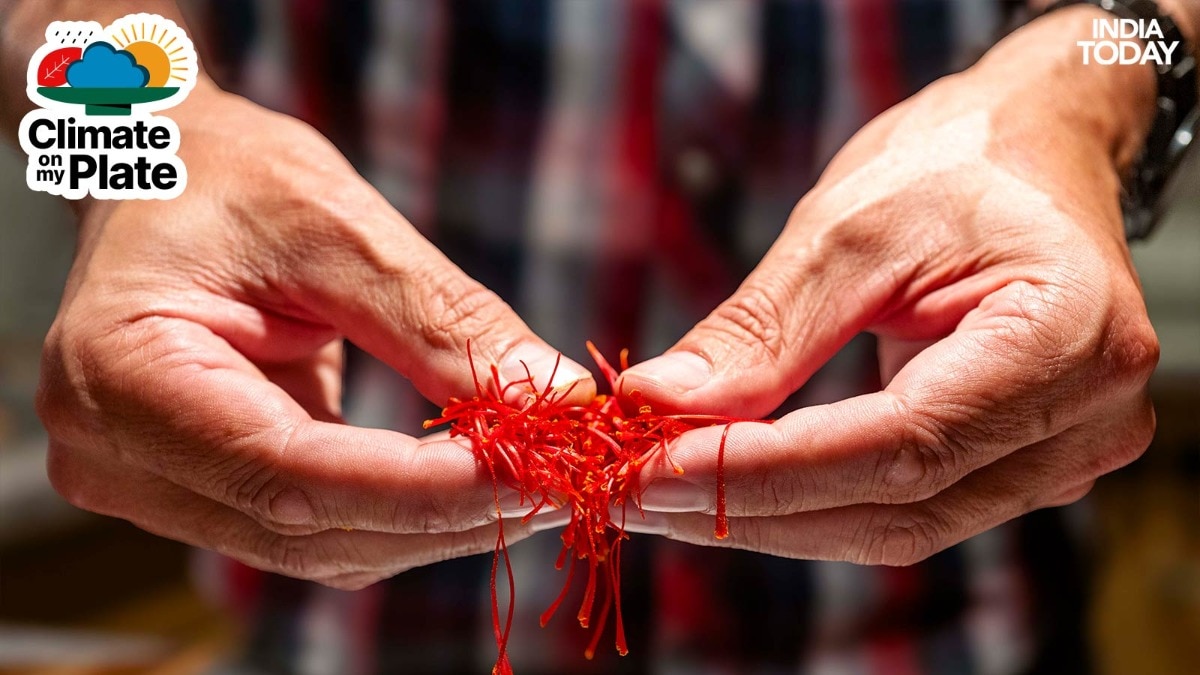
Climate change and erratic weather patterns are severely threatening the production of saffron in Kashmir. This report explores the precarious balance between rising temperatures and the survival of the 'Red Gold'.
- Kashmir's saffron output has plummeted from 8 tonnes in 2010-11 to just 2.6 tonnes in 2023-24.
- The crop requires a precise temperature window (23-25°C in Sept) for corm sprouting.
- Controlled-environment agriculture is being explored as a desperate measure to save the spice.
A few strands of Kesar (Saffron) can elevate any culinary dish, but the journey of this spice from the fields of Kashmir to the kitchen is becoming increasingly perilous. For centuries, the region has produced India's most prized spice, but today, the crop is locked in a battle against a warming planet and unpredictable precipitation patterns.
Saffron is derived from the red stigmas of the Crocus sativus flower, which blooms in autumn. The biology of this plant is incredibly sensitive; it demands a specific seasonal rhythm. Research indicates that daytime temperatures of around 23–25°C in September are critical for sprouting, while flowering is triggered only when temperatures drop to approximately 17°C during the day and 10°C at night.
Why This Matters
BozokMedia analysis shows that the crisis in Kashmir is a microcosm of a larger global agricultural threat. Since approximately 90% of India's saffron originates from this single region, any climatic shift here creates a massive supply shock. The loss of saffron isn't just an economic blow to Kashmiri farmers; it is the erasure of centuries-old indigenous farming wisdom and a biological heritage that cannot be easily replicated.
"Saffron does not simply need rain or cold; it requires the precise delivery of these elements at the exact biological moment, a synchronization that climate change is systematically destroying."
A 2024 study focused on the Pampore region highlighted that both excessive rainfall and severe droughts lead to significant production losses. The data is stark: the drop from 8 tonnes to 2.6 tonnes over a decade serves as a quantitative alarm bell for environmentalists and policymakers alike.
In response, researchers are shifting their focus toward indoor cultivation and controlled-environment agriculture. By simulating the necessary moisture and temperature conditions, scientists hope to decouple saffron production from the whims of a changing climate. However, the authentic identity and quality of Kashmiri Kesar are deeply tied to its unique terroir, which no laboratory can fully mimic.
| Parameter | Ideal Condition | Climate Change Impact |
|---|---|---|
| Production (Kashmir) | 8 Tonnes (2010-11) | 2.6 Tonnes (2023-24) |
| Sept Temperature | 23-25°C (Day) | Unpredictable Spikes |
| Rainfall Pattern | Timed Precipitation | Erratic/Extreme Events |
Frequently Asked Questions
Q1: Why is saffron production declining in Kashmir?
A: The primary cause is climate change, which has disrupted the precise temperature and rainfall cycles required for the Crocus sativus to bloom.
Q2: Can technology save the saffron industry?
A: While indoor farming can maintain supply, it struggles to replicate the specific landscape and soil characteristics that give Kashmiri saffron its unique profile.