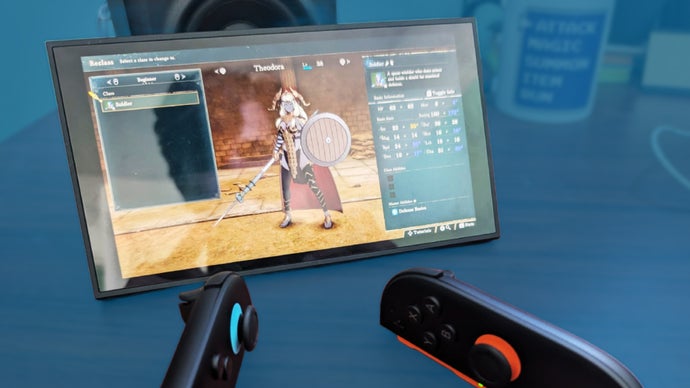
The introduction of mouse controls on the Switch 2 has fundamentally altered the strategic flow of Fire Emblem: Fortune's Weave. This deep dive explores why this shift enhances decision-making and accessibility.
- Switch 2 mouse controls significantly increase precision and speed in tactical gameplay.
- The transition feels like a natural evolution for the series' grid-based combat.
- High-difficulty settings benefit most from the intuitive unit-comparison capabilities of the mouse.
Earlier this year, the notion of mouse controls on a console seemed like a gimmick. However, after extensive testing with Fire Emblem: Fortune's Weave, it has become evident that this addition is a masterstroke. Moving away from the traditional D-pad to a clicking and dragging system provides a level of tactile satisfaction and efficiency that was previously missing from the handheld experience.
The Fire Emblem franchise, which dates back to 1990, has always been rooted in a rigid, grid-based system. While the evolution to 3D and the introduction of analogue sticks allowed for better camera panning, the actual interaction with units remained tethered to directional inputs. The integration of mouse controls is, therefore, a natural progression that fits perfectly into the game's DNA.
Why This Matters
BozokMedia analysis shows that the shift to mouse controls reduces the 'cognitive load' on the player. In complex strategy games, the effort spent navigating menus or cycling through units can distract from the actual tactical planning. By streamlining the interface, Nintendo and Intelligent Systems have allowed the player's intellect to focus entirely on the battlefield rather than the controller.
"The mouse doesn't change the rules of the game, but it changes the speed of thought, making the player feel more empowered."
This becomes critical on 'Hard' difficulty. When facing a brutal AI, the difference between victory and defeat often hinges on a single turn. The ability to hover over multiple units to instantly compare attack ranges and survival odds—without the tedious process of cycling through the army—is transformational. It allows for snap-comparisons that make high-stakes strategizing feel intuitive.
Furthermore, the ergonomics of the Switch 2 mouse JoyCons introduce a new way of interacting with the console. By placing the console on a desk alongside a keyboard, the act of gaming begins to mirror a productivity workflow. This compartmentalization allows players to pivot between creative work and tactical gaming without breaking their mental flow, creating a unique hybrid environment.
| Feature | Traditional D-Pad/Stick | New Mouse Control |
|---|---|---|
| Unit Selection | Sequential Cycling (Slower) | Direct Point-and-Click (Faster) |
| Camera Movement | Analogue Panning | Intuitive Dragging |
| Tactical Analysis | High Mental Calculation | Rapid Visual Comparison |
Frequently Asked Questions
Q1: Is there a steep learning curve for the mouse controls?
Not at all. While the JoyCons may feel small initially, most players find the system intuitive within the first few tutorial missions.
Q2: Does this change the core mechanics of the game?
No, the core rules and gameplay remain the same; only the method of interaction is improved for better efficiency.


