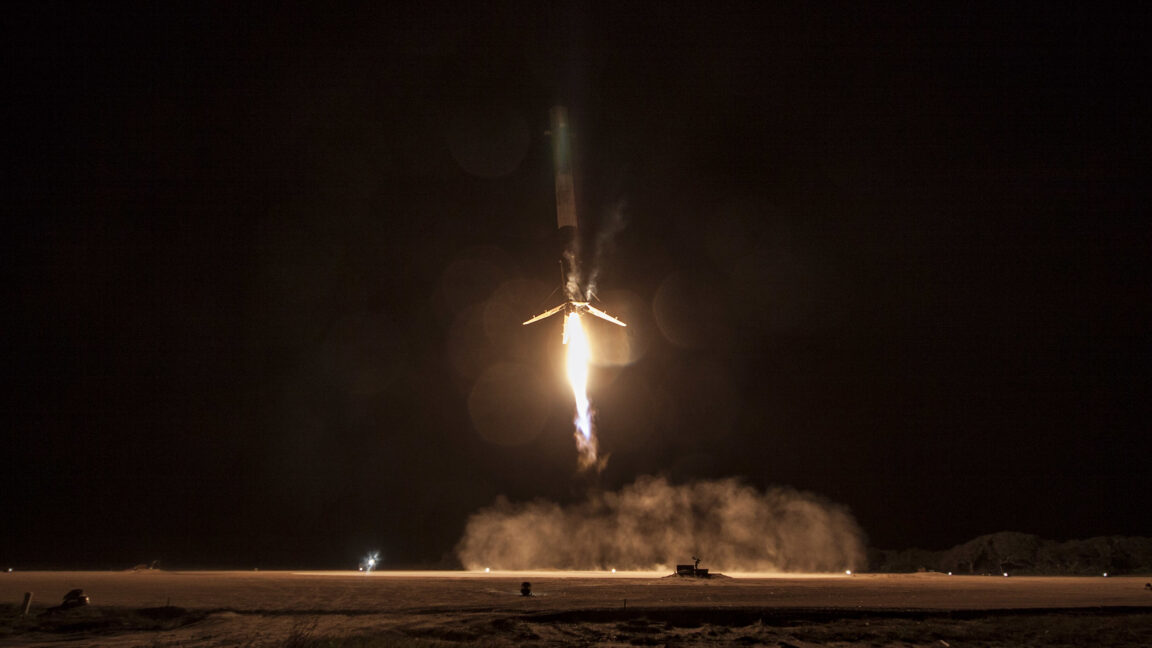
SpaceX’s Falcon 9 reuse model has reshaped the global launch market, leaving Europe squeezed by lower costs and heightened competition. New research shows the company now accounts for over 75% of mass launched to orbit.
Key Takeaways
- SpaceX now launches over 75% of global payload mass.
- Falcon 9 reuse drives down costs and forces Europe into a dilemma.
- European launch providers face reduced demand and higher competition.
Over the past decade, SpaceX has transformed the launch industry by perfecting the recovery and rapid reuse of the Falcon 9 first stage. In the last five years the company has been able to fly the booster dozens, then hundreds of times annually, setting a new cadence for orbital access.
Because of its cost advantage, SpaceX now carries more than three‑quarters of all mass placed into orbit, a share dominated by its Starlink satellite constellation but also extending to commercial payloads from rivals such as Amazon’s Project Kuiper, Northrop Grumman, AST SpaceMobile, OneWeb and others.
Historical Background
The first successful Falcon 9 landing occurred in 2015, a milestone that proved reusability was technically feasible. Prior to that, launch services were largely a one‑off affair, with each rocket discarded after a single flight, keeping prices high and launch windows limited.
Since then, SpaceX’s iterative design, rapid refurbishment processes, and high launch frequency have forced the global market to re‑evaluate pricing, reliability, and the strategic value of national launch capabilities.
Why This Matters
BozokMedia analysis shows that Europe’s traditional launch providers, such as Arianespace, are now squeezed between dwindling domestic demand and the economic pressure of a reusable competitor that can undercut prices by up to 30%.
“Reusable rockets have shifted the economics of access to space from a luxury to a commodity,” says Dr. Elena Martinez, senior aerospace economist.
Frequently Asked Questions
Q1: How many times can a Falcon 9 first stage be reused?
A: SpaceX designs boosters for up to 15 flights, though most are retired earlier.
Q2: What alternatives does Europe have to compete?
A: Europe is investing in the Ariane 6, Vega‑C, and exploring partial reusability and satellite constellations.