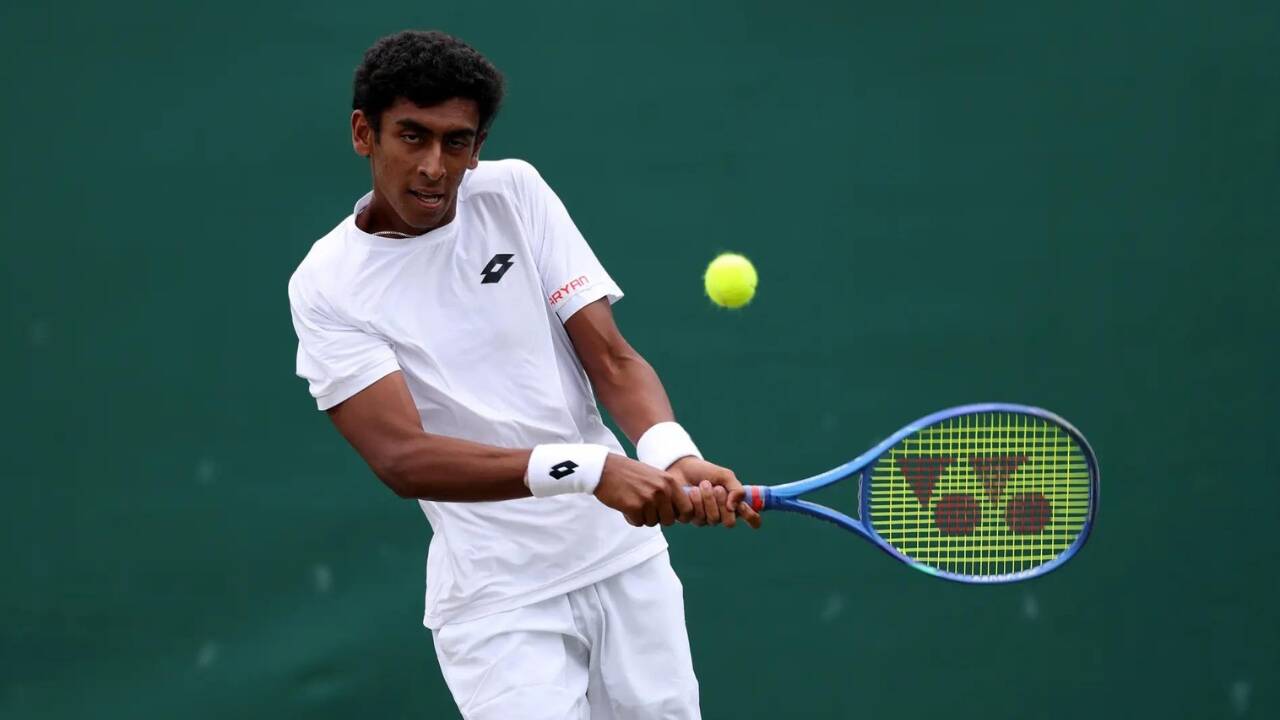
Eighteen‑year‑old Arnav Paparkar has rewritten Indian junior tennis history by advancing to the Wimbledon quarter‑finals, a feat not achieved since Leander Paes in 1990. His victory signals a fresh surge of talent and offers a beacon of hope for the country's tennis future.
At the iconic Wimbledon Championships, 18‑year‑old Arnav Vijay Paparkar etched his name into Indian tennis lore. In his final junior season, he dispatched Japan's Ryo Tabata 6‑2, 6‑1 on day six, securing a spot in the boys' singles quarter‑finals – the first Indian to do so since Leander Paes lifted the junior title in 1990.
Path to the Grand Slam
Paparkar’s ascent has been methodical. Starting with lower‑tier international events on Indian soil, he progressed through the Asian circuit before breaking into the higher echelons of junior competition. This year marked his debut at Grand Slam junior draws, where his steady improvement propelled him to world junior rank No. 19.
Match Breakdown
Against Tabata, Paparkar’s serve was a masterclass. He fired eight aces, won 23 of 25 first‑serve points, and recorded a peak speed of 208 km/h in the second set, while averaging 196 km/h. Tabata, who had previously beaten Paparkar twice, struggled with his service motion and later reduced his court coverage, allowing the Indian to dominate.
“The match was in my head. I couldn’t afford to lose again. Mentally I’m much calmer now,” Paparkkar said, reflecting on his newfound composure. He added that he remained focused on his own game, noting Tabata’s physical dip but not letting it distract him.
Coaching Influence
Paparkar trains at two bases: a home facility in Pune with coach Hemant Bendre, and the Soto Academy in Spain under Nigel Beavers. Bendre helped refine Paparkkar’s serve by slowing his swing and adding fullness, a change aimed at injury prevention and rhythm consistency. The dual‑location approach has given him a blend of technical precision and tactical adaptability.
Looking Ahead
In the quarter‑finals, Paparkkar will meet American qualifier Jordan Lee – a player who has bested him in their two previous meetings, including a recent clash at the J300 Roehampton tournament. A win would make Paparkkar the second Indian after Yuki Bhambri (2009) to reach a junior Grand Slam quarter‑final, reviving a legacy that has been dormant for over three decades.
The broader impact of his achievement extends beyond personal glory. It underscores the importance of structured coaching, international exposure, and the need for sustained investment in Indian tennis pathways. As the nation watches, Paparkkar’s performance could catalyze a new era of competitive junior talent.