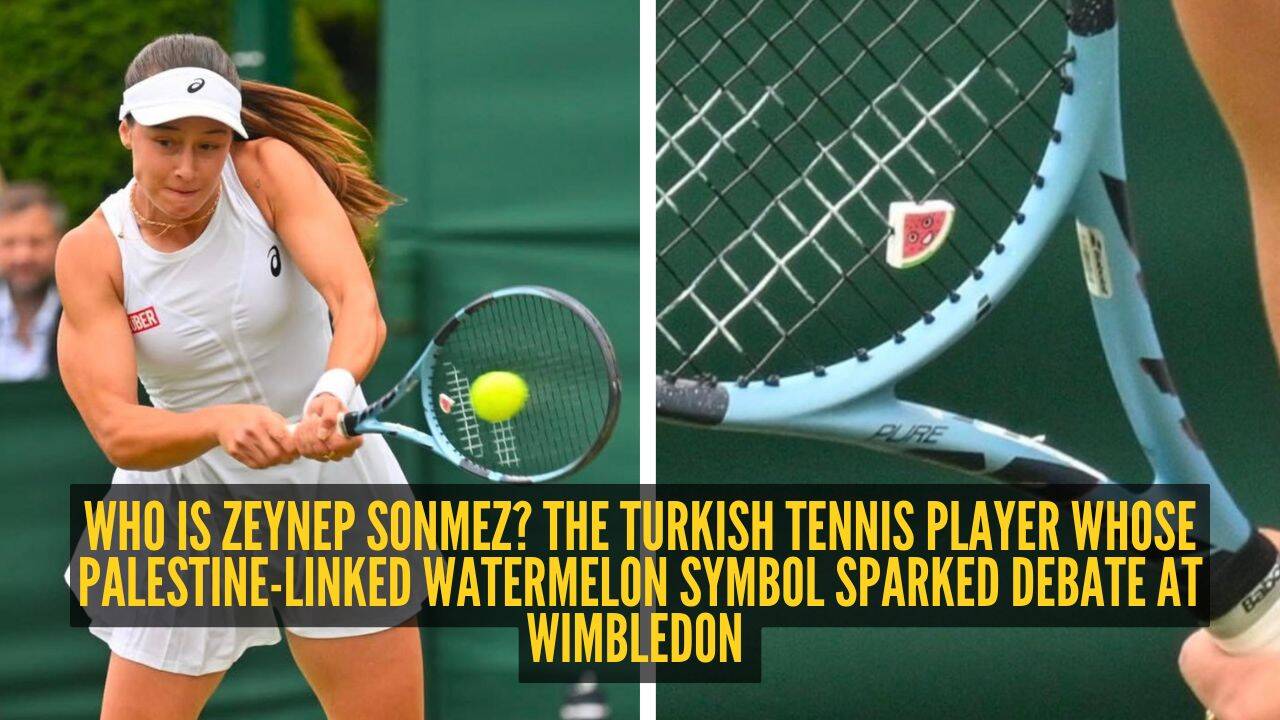
A tiny watermelon accessory on Zeynep Sonmez’s racket turned a Wimbledon match into a global political flashpoint. The emblem, a subtle nod to Palestinian identity, raised questions about double standards in sporting protest symbols.
During the prestigious Wimbledon Championships, 24‑year‑old Turkish tennis talent Zeynep Sonmez attached a miniature watermelon‑shaped ornament to her racket, instantly igniting a firestorm of media and public debate. Although she bowed out in the second round, the modest emblem transcended the sport, spotlighting the disparity between support for Ukraine and for Palestine on the world stage.
Why the Watermelon?
The watermelon has evolved into a widely recognized symbol of Palestinian solidarity. Its red, green, black and white hues mirror those of the Palestinian flag, offering a discreet method of expression when overt flag displays are prohibited. Across the Middle East and beyond, activists have adopted the fruit as a visual shorthand for resistance and cultural identity.
Sonmez’s Explanation and the Equality Question
Post‑match, Sonmez disclosed that she originally intended to wear a brooch bearing the same colors, but officials deemed it “no longer permitted.” She then asked why Ukrainian‑supporting symbols have historically been tolerated while comparable Palestinian expressions face restrictions, citing a report by Al Jazeera. With officials unable to object to the accessory on her racket, she chose to keep the watermelon emblem in place.
Beyond the Controversy: Sonmez’s Tennis Milestones
Even as the controversy dominated headlines, Sonmez’s on‑court achievements are historic for Turkish tennis. She broke national records by reaching a career‑high WTA ranking of World No. 51, the highest ever for a Turkish woman. In the Open Era, she became the first Turkish player to advance to Wimbledon’s third round and has secured victories over several top‑ranked opponents, signalling a new era for Turkey’s presence in elite tennis.
Implications for Sport Governance
Sonmez’s case may force governing bodies such as the ITF and WTA to revisit policies governing political expression. The incident underscores the need for clear, consistent rules that balance athletes’ freedom of speech with tournament neutrality. If left unresolved, similar symbolic gestures could proliferate, compelling sports federations to navigate increasingly complex geopolitical landscapes.
Looking Ahead
In the broader context, Sonmez’s watermelon has turned a simple accessory into a catalyst for dialogue about fairness, solidarity, and the role of sport as a platform for social commentary. Her story illustrates how a single visual cue can amplify a player’s voice far beyond the baseline, urging stakeholders to consider the ethical dimensions of protest in the modern game.