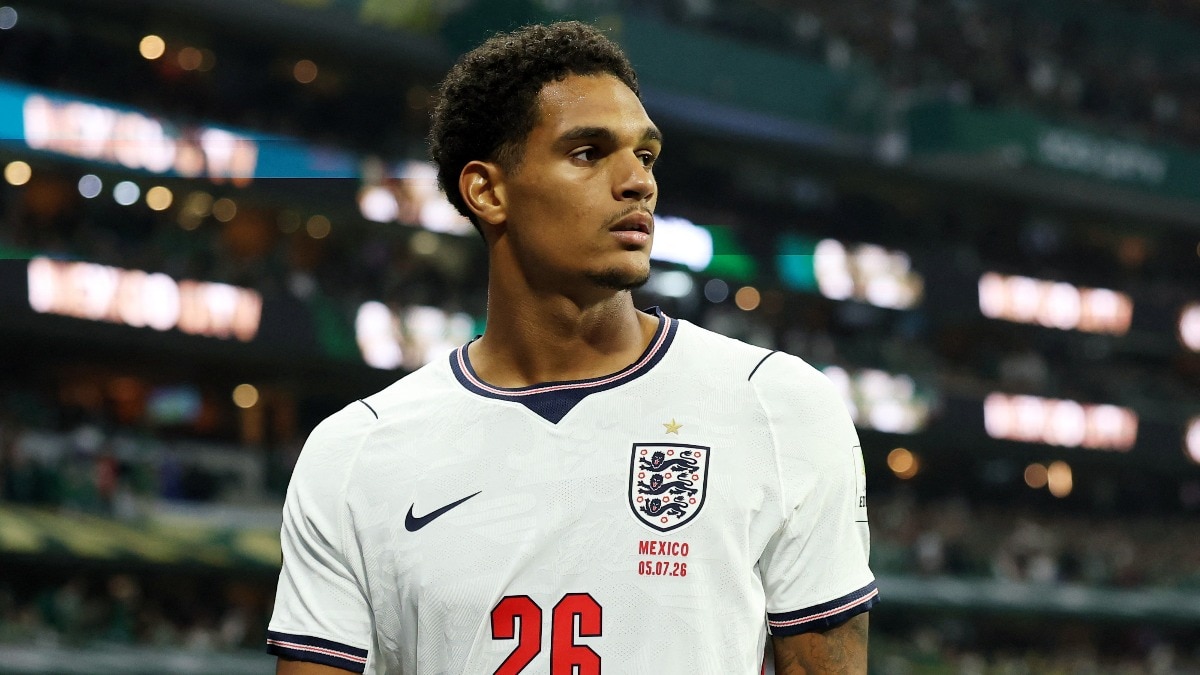
England’s Jarell Quansah received a two‑match ban, while US striker Folarin Balogun escaped immediate suspension for an identical challenge, sparking a heated debate over FIFA’s disciplinary consistency.
Key Takeaways (मुख्य बिंदु)
- Quansah was handed a two‑match suspension; Balogun received a probationary ban.
- FIFA applied different disciplinary articles to virtually identical incidents, raising transparency concerns.
- Former referees and analysts demand uniformity and clear communication from the governing body.
The latest FIFA disciplinary verdict has reignited a global conversation about fairness in football. England defender Jarell Quansah was shown a red card in the round‑of‑16 clash against Mexico, which VAR upgraded to “serious foul play.” The governing body’s Disciplinary Committee subsequently imposed a two‑match ban, ruling him out of the quarter‑final against Norway and, if England progresses, the semi‑final as well. In contrast, US striker Folarin Balogun received a red card for a similar studs‑up tackle against Bosnia, yet he remained eligible for the round‑of‑16 match against Belgium.
Chronology of the Incidents
Quansah’s dismissal was clear‑cut: after VAR reviewed the challenge, FIFA classified it as serious foul play and delivered a non‑appealable two‑match suspension. Balogun, however, was initially handed a one‑match ban, which FIFA then converted to a one‑year probationary suspension under Article 27 of its disciplinary code. This maneuver allowed him to line up against Belgium, prompting questions about the rationale behind the divergent treatment.
Political Overtones and Controversy
The controversy deepened when reports surfaced that former US President Donald Trump had personally urged FIFA President Gianni Infantino to revisit Balogun’s sanction. While FIFA publicly denied any influence from the conversation, the timing fed criticism that external pressure may be swaying disciplinary outcomes.
Voices from the Refereeing Community
Former FIFA referee Keith Hackett condemned the inconsistency, stating, “FIFA delayed Balogun’s ban, allowing outside interference to affect the game’s integrity.” Jonas Eriksson, another ex‑referee, emphasized that both challenges were comparable in intensity and aggression, insisting that “if Balogun got a one‑match suspension, Quansah should have received the same.” Both officials highlighted the need for predictable, consistent sanctions across nations.
Implications for Future Governance
As England prepares to compete without Quansah and the United States continues with Balogun, the spotlight remains on FIFA’s disciplinary framework. Experts argue that a transparent explanation of the Article 27 application, coupled with a uniform sanctioning policy, could restore confidence among players, fans, and national associations. Until then, the governing body risks eroding the perceived fairness that underpins the sport’s global appeal.